
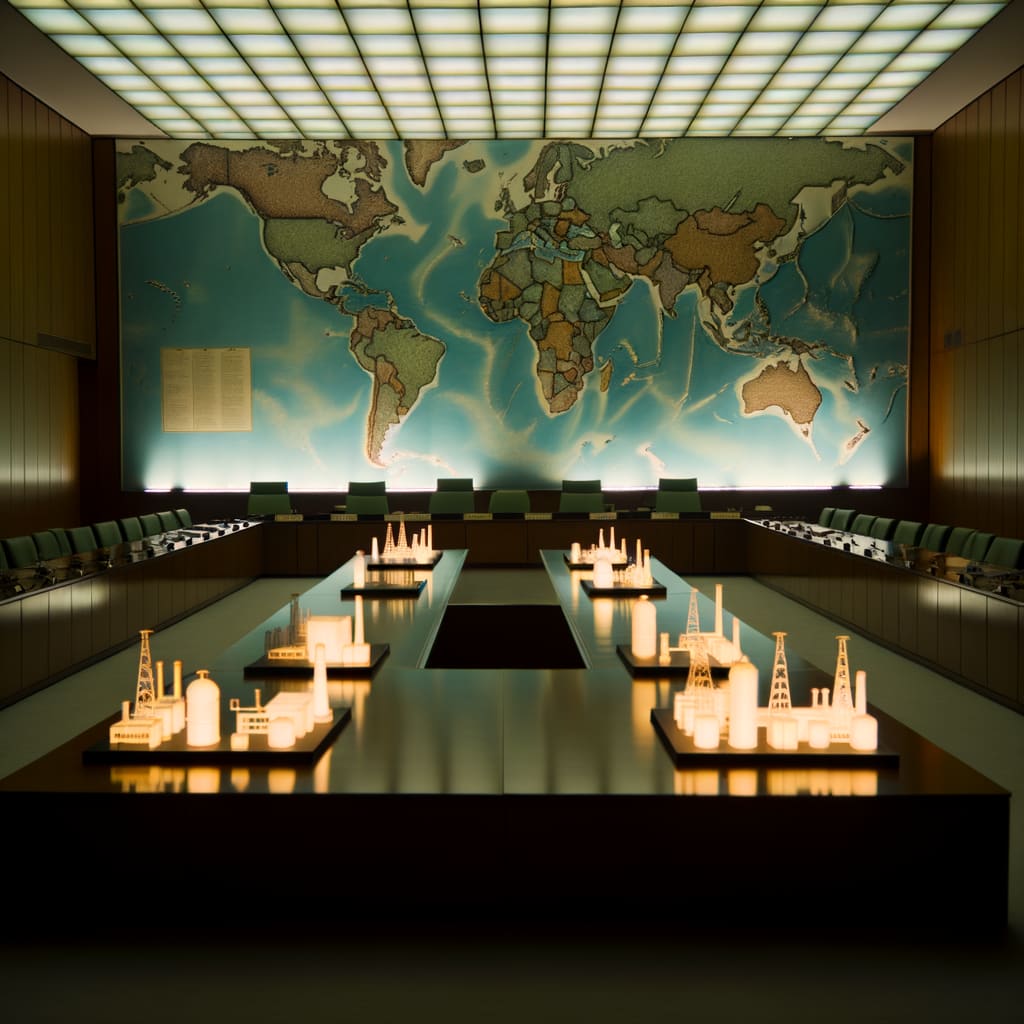
Unprecedented Escalation: Petrochemical Facilities in Crosshairs Amid Middle East Crisis
In a dramatic escalation of the Middle East crisis, Iran and a US-Israeli coalition have launched attacks on each other's strategic petrochemical facilities, marking a turning point in the conflict. The attacks have triggered widespread condemnation and concerns about potential environmental impacts.
Background and Context
The recent strikes follow a series of escalating tensions in the region. US President Donald Trump had issued an ultimatum to Iran, demanding they make a deal or face all hell
within 48 hours, threatening the nation with an attack on civilian infrastructure. Iran rejected this ultimatum, consequently inviting the wrath of the US-Israeli coalition.
Key Developments
A US-Israeli hit on a petrochemical plant in Mahshahr, Iran, resulted in one reported death and several injuries, according to the governor of Khuzestan. This attack was succeeded by Iran's strike on a petrochemical complex in Saudi Arabia's Jubail, as reported by Fars news agency.
Simultaneously, Israel carried out an attack on a petrochemical site in Shiraz, southwestern Iran, claiming it to be a critical component for explosives and ballistic missiles production. The Israeli Defence Minister, Israel Katz, later confirmed that Israel had also attacked Iran's largest petrochemical complex at Asaluyeh.
Iran, in response, targeted a passenger dock in Bandar Abbas, calling it a strike on civilian infrastructure. Ahmad Nafisi, a senior official in Hormozgan province, condemned the attack as criminal
.
Reactions and Implications
The unprecedented targeting of petrochemical facilities has raised concerns about possible environmental impacts. Iranian authorities, however, have reassured that there has been no pollutant leakage at the attacked sites and that the situation is under control.
The escalating attacks have led Iran to warn that any US or Israeli strike on its Bushehr nuclear power plant would constitute a war crime
under international law. On the other hand, Trump's threats to attack Iran's infrastructure have raised questions about potential war crimes and the dilemma faced by US military officers, whether to disobey orders or assist in committing war crimes.
Current Status
Despite the escalating violence, search and rescue efforts for the missing second crew member of the downed US F-15E Strike Eagle continue. Meanwhile, Iran and the US have reportedly received a new ceasefire proposal.
The recent attacks mark a significant shift in the nature of the conflict, with petrochemical facilities now being viewed as strategic targets. The consequences of these actions, both in terms of human life and environmental impact, remain to be seen.