
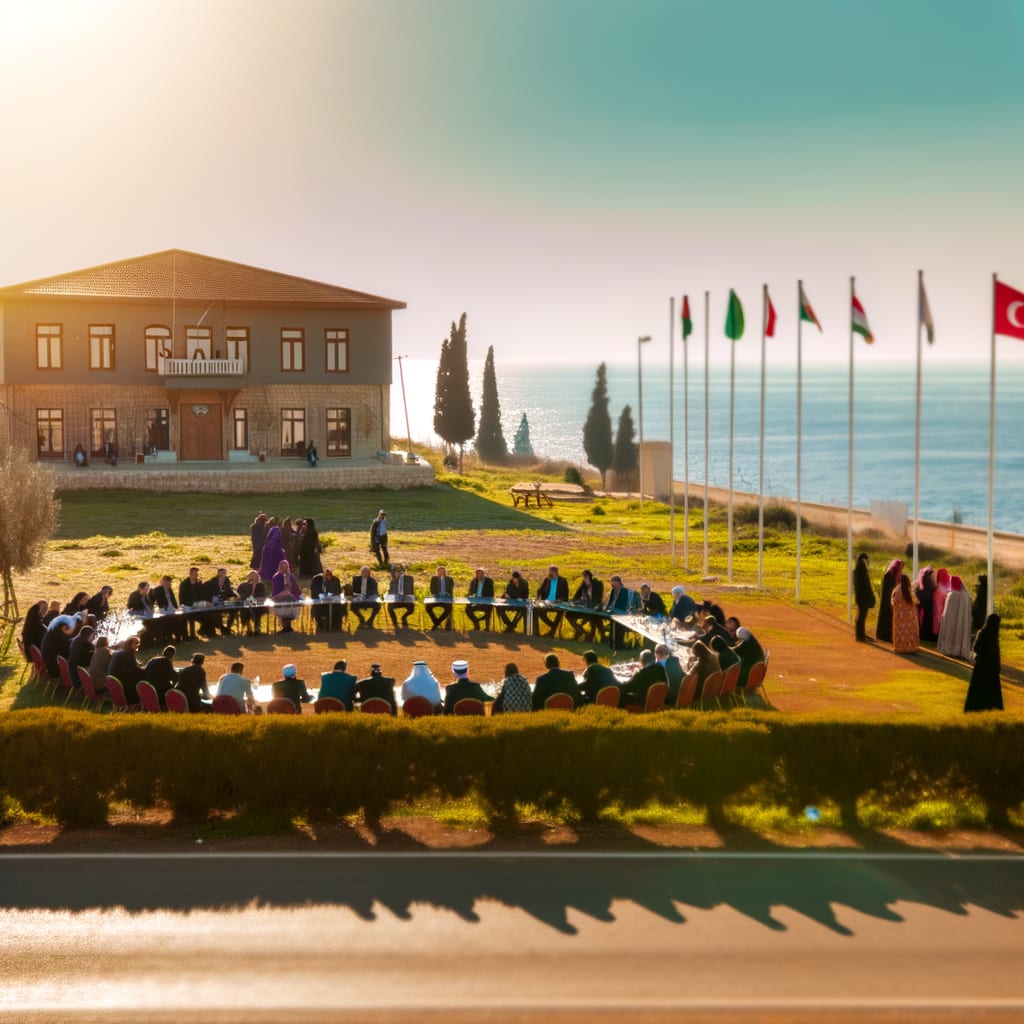
Lebanon and Israel hold first direct talks in decades, sparking hopes for peace
In a historic move aimed at establishing a basis for a relationship and economic cooperation, Lebanon and Israel have held their first direct talks in decades, taking place in Naqoura, a border town between the two countries. The talks were held under the auspices of the UN Security Council and the United States, and come at a critical time for both nations, just days before the anniversary of the fall of Bashar al-Assad, and amidst Lebanon's navigation of a ceasefire between Hezbollah and Israel.
A Ceasefire and a Fresh Start
According to reports from The Times of Israel and the Middle East Eye, both countries sent civilian representatives to the meeting, marking a departure from the past where discussions were primarily military-based. Prime Minister Benjamin Netanyahu has instructed the acting director of the National Security Council to send a representative on his behalf to a meeting with government-economic elements in Lebanon,
an Israeli official stated.
The South China Morning Post and Al Jazeera English reported that the discussions were part of a year-old ceasefire monitoring mechanism in the ongoing conflict with Hezbollah. The meeting took place at the UN peacekeeping force’s headquarters in Naqura, near the border with Israel.
U.S. Involvement and Mediation
Morgan Ortagus, the U.S. special envoy for Lebanon, also attended the meeting. The United States, which has been applying pressure on Lebanon to disarm Hezbollah swiftly, is viewed as a key player in these talks. Ortagus had met with Israeli Foreign Minister Gideon Saar and Prime Minister Benjamin Netanyahu in Jerusalem, a day before the Naqoura talks.
Controversy and Hope
These talks have sparked both hope and controversy. The Tehran Times critiqued the Lebanese government's decision to appoint former ambassador Simon Karam, a civilian with openly political positions, as a political landmine
. However, many see this step as a significant move towards peace and normalization of relations.
The New York Times described the situation as a 'crucial' time for both countries. The talks come days before the anniversary of the fall of Bashar al-Assad, adding to the significance of the event.
Conclusion
While the talks represent a significant step forward, the path to peace and normalization of relations between Lebanon and Israel remains fraught with geopolitical complexities. As these historic talks continue, the world watches closely, hoping for a peaceful resolution to a decades-long conflict.