
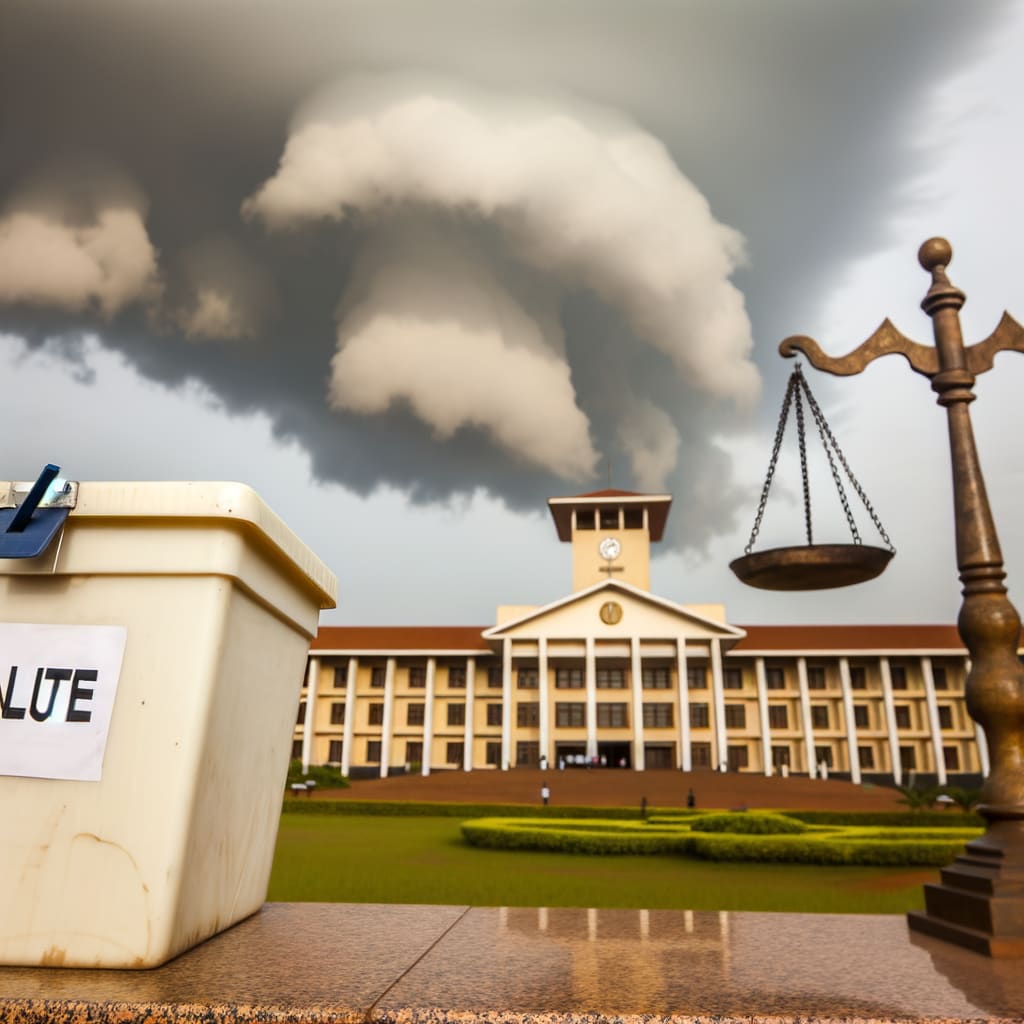
Ugandan President Yoweri Museveni Secures Seventh Term Amid Controversy
Ugandan President Yoweri Museveni has been declared the victor of the presidential elections, securing a seventh term in office. This result extends his rule beyond four decades, amid accusations of widespread malpractice, repression of opposition, and a nationwide internet shutdown.
Context and Background
Museveni, who has been in power since 1986, won 72% of the votes in an election marred by violence, allegations of vote-rigging, and an internet blackout. Despite the official declaration of the elections as peaceful
and successful
, observers and rights groups have criticized the poll and questioned its credibility due to the reported intimidation, arrests, and abductions of opposition members.
Key Developments
The opposition has rejected the results, with the main opposition candidate, Bobi Wine, accusing the government of vote-rigging. Wine has called for street protests and was reportedly under house arrest. Despite the tension, as of January 18, the security presence in Kampala, the capital, appeared to have significantly decreased.
The Uganda Communications Commission (UCC) has fully restored public internet access across the country but continues to restrict social media and over-the-top (OTT) applications until further notice. This move follows a nationwide internet shutdown in the days preceding the election, which critics argue was a measure to control information and suppress opposition voices.
Reactions and Implications
In his victory speech, Museveni referred to his opponents as terrorists
who had attempted to use violence to overturn the election results. The election has drawn international criticism. African observers have denounced the election for the alleged intimidation, arrests, and abductions targeting the opposition.
Internationally, a U.S.-based think tank had predicted that Museveni was likely to win the election by between 65 and 75 percent. Neighboring Rwanda's President, Paul Kagame, has congratulated Museveni on his re-election, expressing his anticipation for continued cooperation between the two countries.
Current Status and Conclusion
While Museveni's re-election extends his rule to close to 40 years, the opposition continues to contest the results. The situation remains tense, with the government maintaining social media restrictions and the opposition leader Bobi Wine reportedly under house arrest.
The controversial election and its aftermath have underscored the persisting democratic challenges in Uganda. Despite the official declaration of a successful election, the allegations of malpractice, repression of opposition, and the internet blackout cast a long shadow over the legitimacy of the results.