
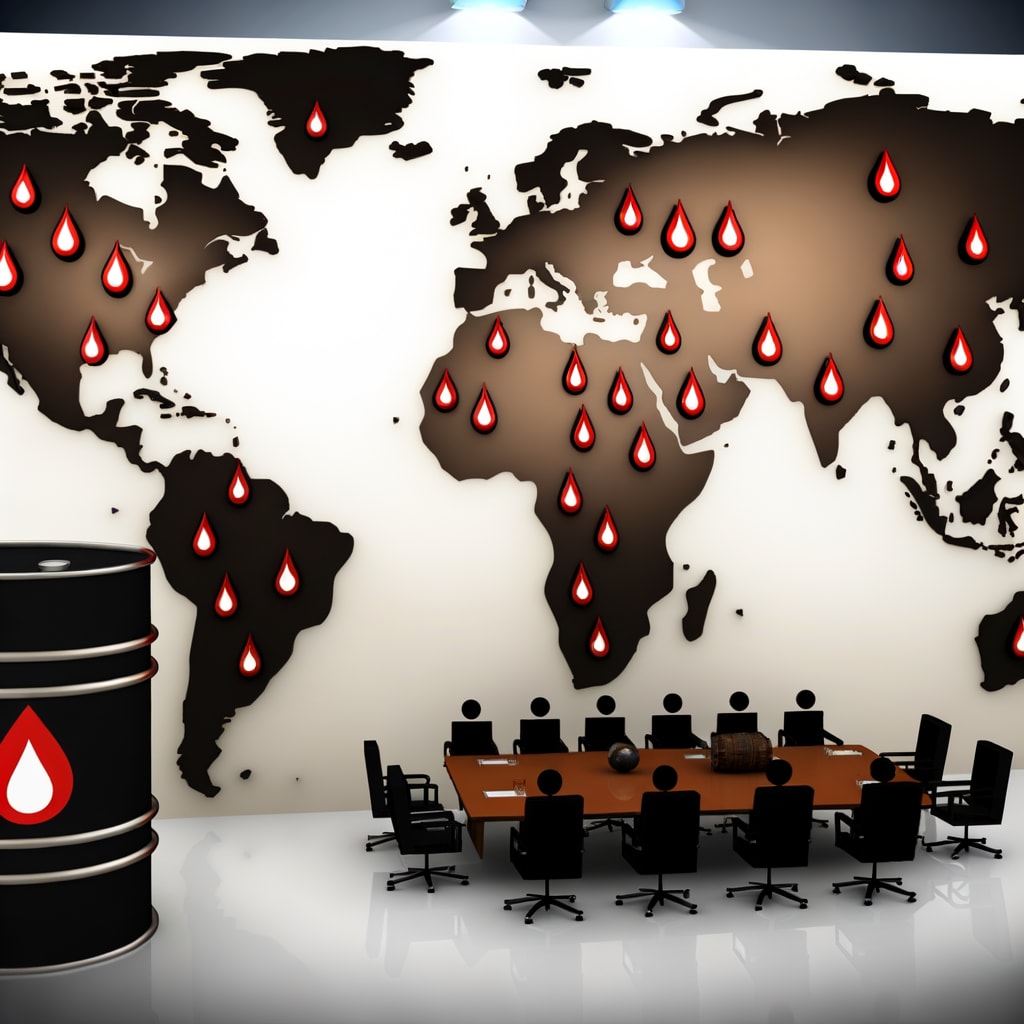
Oil Crisis Intensifies Amid Middle East Conflict Despite Record Release of Emergency Reserves
Global oil markets are on the brink as the conflict in the Middle East, primarily centered around the blockade of the Strait of Hormuz, continues to escalate. Even a record release of emergency crude reserves, led by the International Energy Agency (IEA), has failed to alleviate the mounting supply disruption and soaring oil prices.
Background and Context
The Strait of Hormuz, a critical waterway for global oil transportation, has been essentially shut down due to the ongoing conflict between Iran, the U.S., and Israel. This blockade has resulted in what the IEA has termed the 'largest supply disruption in history,' with oil prices exceeding $106 per barrel. Despite the IEA's unprecedented release of 400 million barrels from global strategic reserves, the crisis continues to deepen.
Key Developments
Countries worldwide, including Spain, Japan, and the U.S., have started releasing their strategic reserves to stabilize markets. Japan's attempt marks its largest-ever oil release. However, as quoted in Al Jazeera English, Strategic oil release may calm markets but cannot fix Hormuz disruption.
Furthermore, the U.S. has issued a 30-day waiver allowing countries to purchase sanctioned Russian oil currently stranded at sea. This measure, combined with the release of 172 million barrels from the U.S. Strategic Petroleum Reserve, is aimed at stabilizing the rattled global energy markets.
Iran, on the other hand, has suggested permitting a limited number of oil tankers to pass through the Strait of Hormuz on the condition that the oil cargo is traded in Chinese yuan. This move has been interpreted as Iran's strategy to manage tanker traffic through the strategic waterway amidst the crisis.
Implications and Reactions
The blockade has had a global impact. The U.S. oil companies fear a deepening crisis due to the conflict with Iran, as reported by TASS. In Canada, the blockade has impacted the cost of energy, as the country is indirectly affected by the Middle East oil blockage. Asian markets, the main buyers of Middle East oil, have been significantly disrupted, with governments taking measures to mitigate the effects of increasing pump prices.
IEA Executive Director Fatih Birol has emphasized that the global energy markets are at a critical turning point.
He also warned that it would take time for the markets to recover from the ongoing crisis.
Current Status
Despite these efforts to stabilize the oil markets, the situation remains precarious. The U.S. has targeted Iranian military sites on Kharg Island and threatened to target its oil infrastructure. In response, Iran has warned of retaliation against U.S.-linked oil sites if its energy sector is attacked. As the blockade continues and oil prices fluctuate, countries are urged to seek energy independence through renewables and nuclear energy, as suggested by former U.S. Secretary of State, John Kerry.
As the world grapples with this unprecedented oil crisis, the ultimate resolution lies in the reopening of the Strait of Hormuz. Until then, the ripple effects of this blockade continue to be felt globally, affecting economies and consumers alike.