
UN Security Council Calls on Iran to Halt Attacks on Gulf States
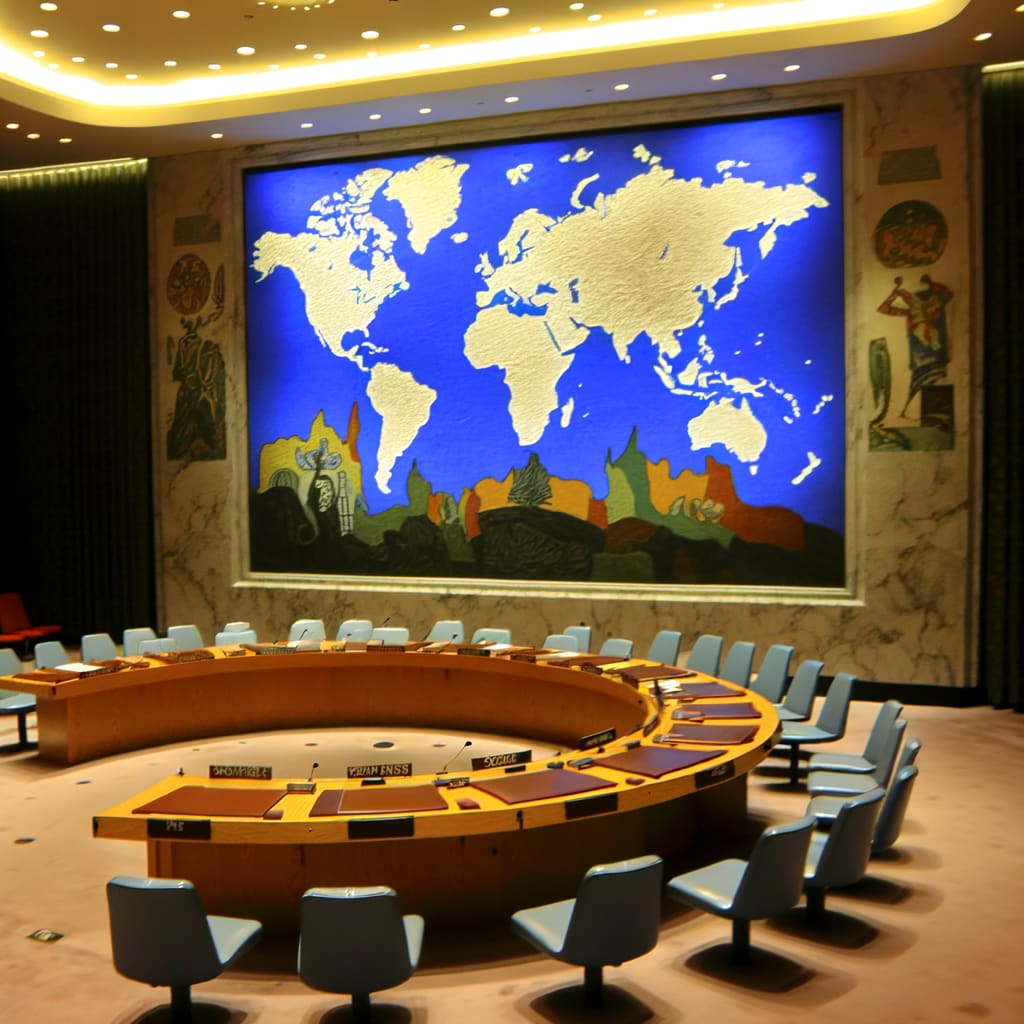
In a significant diplomatic move, the United Nations Security Council (UNSC) has passed a resolution demanding Iran to cease its attacks on Gulf states. The resolution, backed by Gulf Cooperation Council (GCC) members and co-sponsored by 135 countries, was approved with 13 votes in favor, while Russia and China abstained.
Rising Tensions in the Gulf Region
The resolution comes amidst escalating tensions in the Gulf region, with Iran accused of missile and drone strikes across the Gulf states, a move Qatar's envoy to the UN has condemned as a clear violation of international law.
The approved resolution calls for an immediate cessation of all attacks by the Islamic Republic of Iran against Bahrain, Kuwait, Oman, Qatar, Saudi Arabia, the United Arab Emirates, and Jordan.
Iran, however, has denied initiating any offensives towards other countries and warned of retaliation if foreign territories were used to launch attacks against it. Iran's foreign ministry spokesperson Ismail Baghaei insisted that Iran's actions were defensive and not meant to be interpreted as hostility towards its neighbors.
Consistent Denial and Diverging Narratives
Despite the international condemnation, Iran has maintained its stance. Tehran's ambassador at the UN decried the resolution as a blatant misuse
of the international body, asserting that Iran had not launched any attacks towards Turkey, Cyprus, or Azerbaijan. Baghaei suggested that some incidents could have been orchestrated by Iran’s adversaries to damage its relations with neighboring states.
On a related note, the South China Morning Post reported that ships in the Strait of Hormuz are claiming links to China to evade potential Iranian attacks following US-Israeli strikes in the region.
Reactions and Future Implications
The UNSC resolution has drawn mixed reactions. UAE billionaire Khalaf al-Habtoor criticized US President Donald Trump for instigating a war with Iran that Gulf partners did not anticipate and accused him of prioritizing war over peace.
Meanwhile, Iranian security chief Ali Larijani warned that the Strait of Hormuz, a vital oil transit route, could either be a Strait of peace and prosperity for all or will be a Strait of defeat and suffering for warmongers.
With the ongoing conflict and rising tensions, the situation in the Gulf region remains precarious. The possible implications of this escalating situation are global, affecting not only the involved countries but also international peace and stability. The resolution, while symbolic, marks a collective call for peace and stability in the region. However, with Iran maintaining its defensive stance and the US and Israel continuing their strikes, the path to de-escalation remains unclear.