
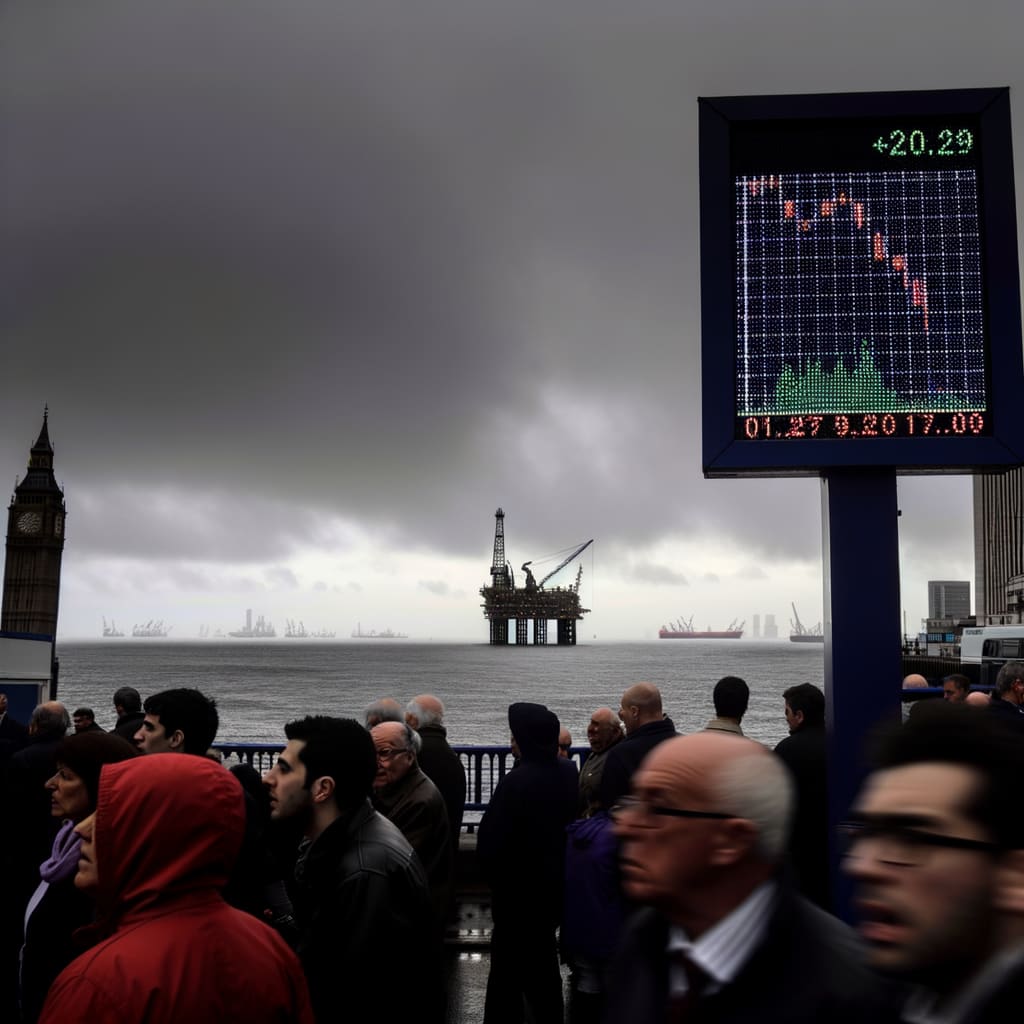
US Economic Growth Slumps Amid Global Inflation Concerns
The U.S. economic growth has fallen more sharply than initially estimated in Q4 of 2025, with a revised GDP increase of 0.7%, down from 1.4%, sparking concerns over inflation. This downward revision, coupled with volatility in oil prices due to the war in the Middle East, is shaking financial markets worldwide and affecting policies of central banks.
An Unexpected Slowdown
As per Folha de S.Paulo and the South China Morning Post, the revised GDP data, released by the Commerce Department on March 13, 2026, indicates that the United States' economic growth slowed down significantly more than initially thought. This comes amid downward revisions in consumer spending and business investments.
Rising Inflation and Cost-of-Living Pressures
Inflation concerns are becoming increasingly apparent. The New York Times reports a methodological change leading to a lower inflation reading than expected, raising questions among economists. In Australia, Treasurer Jim Chalmers confirmed to The Guardian that the government expects inflation to rise beyond 4.5% due to the war in the Middle East. Meanwhile, Clarin reports that the industry, along with trade and construction, has been suffering over the past two years, and the Consumer Price Index recorded a rise of 2.9% in February.
Impact of Oil Prices and the Middle East Conflict
The escalating tensions in the Middle East have caused significant disruptions in the energy supply, according to the International Energy Agency (IEA). As reported in Folha de S.Paulo, the closure of the Strait of Hormuz, through which 20% of global demand for hydrocarbons transit, is a significant factor.
These geopolitical tensions have led to a spike in oil prices, affecting markets globally. The Nikkei 225, as reported by the Japan Times, decreased by more than 6% as oil exceeded $100 per barrel. Iran's security chief, Ali Larijani, warned in a post reported by the Middle East Eye that the Strait of Hormuz will either be a Strait of peace and prosperity for all or will be a Strait of defeat and suffering for warmongers
.
Monetary Policies Under Pressure
Amid these developments, central banks are under pressure to adjust their monetary policies. Folha de S.Paulo reports that the volatility of oil prices has tempered expectations for the start of the cycle of interest rate reduction by the Copom (Monetary Policy Committee). There is a growing bet on a reduction of 0.25 percentage point of the Selic rate.
Conclusion
The revised GDP data and inflation pressures raise concerns about the global economy's trajectory. The impact of the Middle East conflict on oil prices adds an additional layer of uncertainty. As economies worldwide grapple with these challenges, central banks are finding themselves in a precarious position, needing to balance growth concerns with inflationary pressures.