
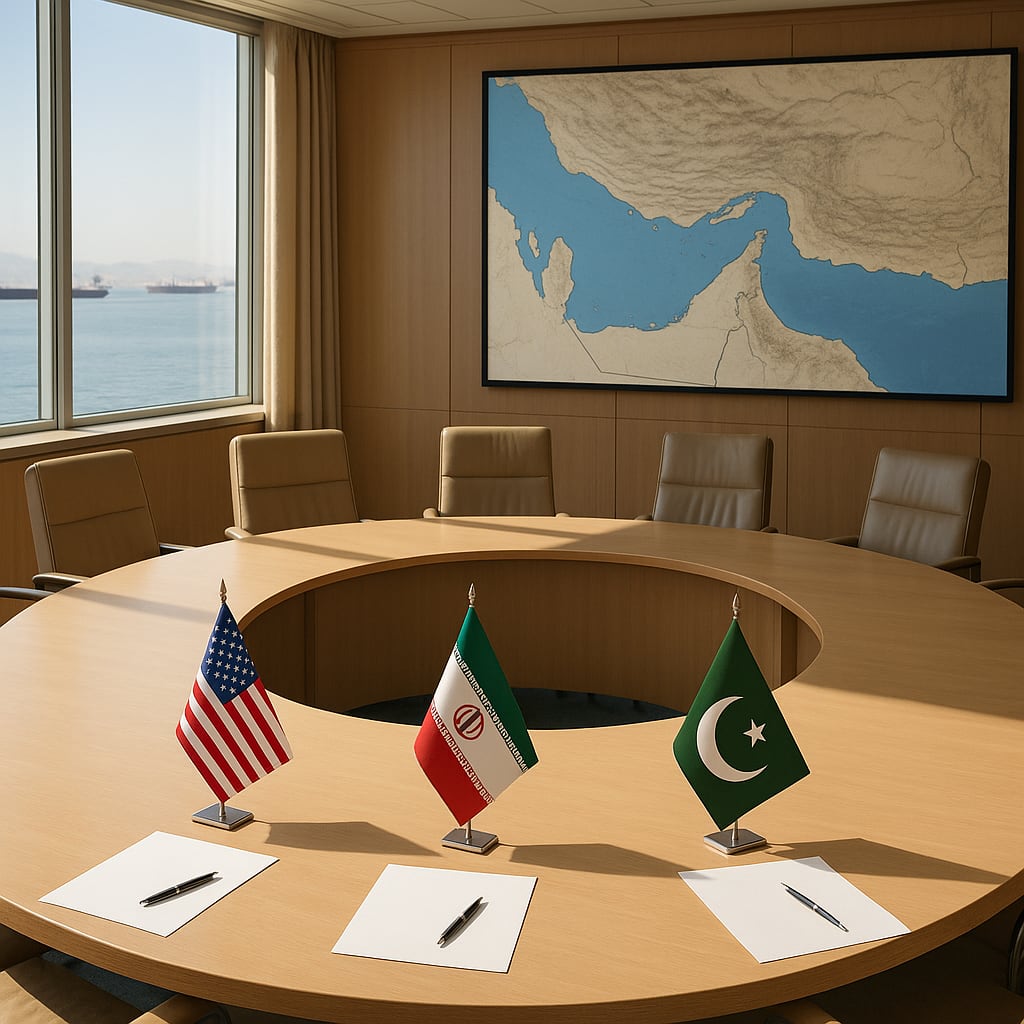
US and Iran unveil an interim deal to end 108 days of war, reopen the Strait of Hormuz, and defer nuclear talks
Narrative Snapshot
- European and US broadsheets focus on strategic outcomes. The Guardian describes an arrangement that largely restores prewar conditions—shipping and targeted sanctions relief first, with nuclear talks explicitly deferred and no new ballistic missile limits—while New York Times opinion pieces and Clarin’s summary of The Times characterize the episode as a strategic setback for Washington. Deutsche Welle frames the core question as whether Iran’s Hormuz closure exposed limits in US protection of global trade.
- Regional outlets emphasize implementation politics. Middle East Eye highlights Tehran’s insistence that it is not ceding control of Hormuz, Lebanon’s claim it was not briefed on timing or terms, and Iran’s warning that any attack on Lebanon would violate the deal. Iranian media elevate claims that the US was compelled to sign.
- US conservatives cast the agreement as conditional and reversible. Fox News underscores a 60‑day “probationary” period, continued US troop presence, and no upfront cash, while BBC flags the administration’s mixed messaging.
- Several sources highlight the maritime and humanitarian ledger: hundreds of ships still stranded, even as US Central Command claims some transits are possible; and a high‑profile civilian casualty incident in Iran still without public US acknowledgment or findings months later.
What Happened
Talks mediated with Pakistan produced a US‑Iran memorandum to end hostilities, reopen the Strait of Hormuz, and establish a 60‑day window to negotiate further terms (SCMP; Fox News; Middle East Eye, recap). The Guardian reports the framework centers on shipping access and calibrated sanctions relief, while deferring substantive nuclear negotiations; there are no missile restrictions. Trump and Pakistan’s prime minister publicly declared the deal “complete,” with a signing targeted for Geneva, though Iran’s foreign ministry at points denied imminent travel, and Tehran signaled it would not cede Hormuz control (SCMP; MEE, 13 Jun; MEE, 12 Jun). US officials say force posture will stay in place during the 60‑day period (Fox News). Maritime disruption remains acute, with more than 500 ships stranded and insurers weighing risk even as US Central Command claims limited transits are occurring (NYT, 12 Jun; RT/CENTCOM). The conflict’s toll includes a February strike on an Iranian school that US officials have not publicly acknowledged or explained (NYT, 16 Jun).
Why It Matters
The deal tests whether a major maritime chokepoint can be reliably reopened without resolving the underlying nuclear dispute. It highlights the efficacy—and limits—of US power projection when confronted by cost‑imposing denial tactics at sea (DW; NYT op‑eds; The Hindu editorial). Structurally, it revalidates crisis management via ad hoc memoranda and third‑party mediation (Pakistan) over formal multilateral frameworks, at least in the near term (SCMP; Guardian). For energy markets and global trade, the key issue is operational recovery, not just political agreement: insurers, naval risk, and port logistics will determine timelines for normal flows (NYT; Clarin). Regionally, ambiguity persists: Lebanon was not briefed; Iran equates Israeli actions with US obligations under the memorandum; and ballistic missiles are untouched (MEE; Guardian; MEE, 16 Jun). Politically, the episode reinforces assessments—across ideological lines—that coercion alone could not compel Tehran, and that Washington will condition any benefits on verified behavior (Tehran Times citing Obama; Fox News).
Diverging Narratives
- Outcome framing: Multiple editorials and analyses argue the US suffered a strategic defeat or at minimum exposed limits of power (NYT op‑eds, Clarin’s The Times, The Hindu editorial, DW). Iranian state media and officials depict the memorandum as compelling US acquiescence and a victory for Tehran (Fox News; Tehran Times). Fox‑aligned sources stress it is a tactical pause with strict conditionality and retained US military leverage (Fox News).
- Nuclear file: Trump has said Iran agreed not only to stop developing but also to refrain from acquiring nuclear weapons (MEE, 12 Jun). The Guardian, by contrast, says nuclear talks are deferred and return essentially to their prewar state, with no new ballistic‑missile constraints (Guardian, 15 Jun). Folha’s column suggests even a “good” outcome may be no better than 2015 (Folha).
- Implementation and parties: Iran insists it is not relinquishing management of Hormuz (MEE, 12 Jun). Tehran’s foreign minister claims any Israeli action in Lebanon would violate the US‑Iran memorandum and treats Israel as a party alongside the US, a framing not echoed in US readouts (MEE, 16 Jun; Fox News).
- Sequencing and transparency: Announcements of imminent signing varied—some projecting a Geneva ceremony, others denied by Tehran at points (SCMP; RT; MEE, 13 Jun; MEE recap). On accountability, the New York Times reports no public US acknowledgment or findings on the February school strike, contrasting with broader claims of restored order at sea (NYT, 16 Jun; RT/CENTCOM; NYT shipping).
What Happens Next
- Proof of passage through Hormuz: Watch verified commercial transits, insurance reactivation, and port clearances. Clarin and the NYT note weeks or months may be needed to unwind a 500‑plus ship backlog even if access is restored; CENTCOM claims limited transits are already occurring (Clarin; NYT, 12 Jun; RT/CENTCOM). Sustained, insured flows would indicate implementation traction; persistent bottlenecks would signal residual coercive leverage at sea.
- Formalization and text release: Multiple reports point to a Geneva signing and public details (MEE recap; Fox News). Iran’s earlier denials of imminent travel suggest slippage risk (MEE, 13 Jun). Publication of the memorandum’s terms will clarify parties, enforcement, and linkage to sanctions relief.
- The 60‑day window: US officials say force levels stay in place pending performance (Fox News). Fox reports a “probationary” design; compliance signals would be reduced attacks, verifiable nuclear restraint steps, and maritime normalization. Violations could trigger force‑posture hardening.
- Nuclear negotiations: The Guardian says talks can resume once the memorandum is signed, essentially from prewar baselines; scope will test Trump’s claims of stronger non‑acquisition language versus prior frameworks (Guardian; MEE, 12 Jun; Folha).
- Regional spillovers: Lebanon’s exclusion from briefings and Iran’s warning that Israeli actions would breach the deal create a tripwire. Any cross‑border escalation would quickly test the memorandum’s durability (MEE, 15 Jun; MEE, 16 Jun).