
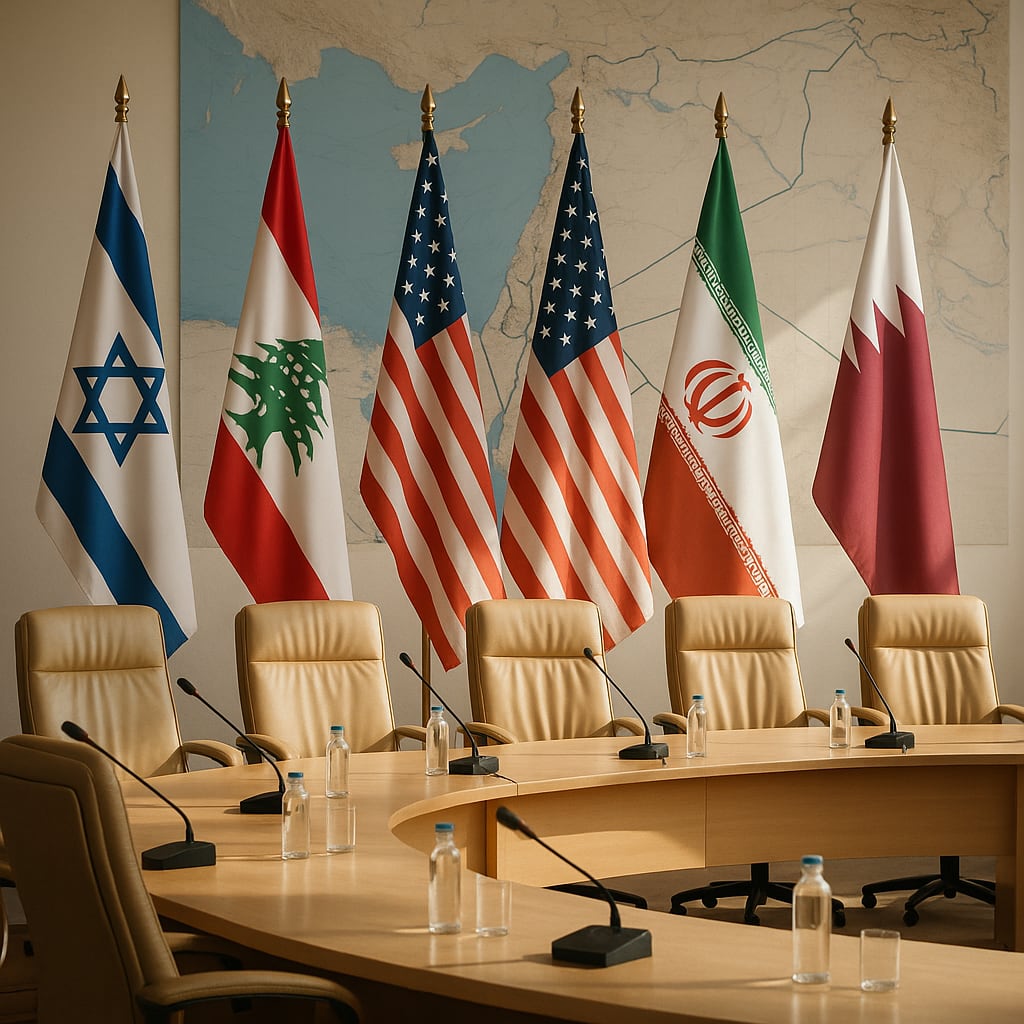
Israel and Hezbollah renew a fragile ceasefire as US–Iran framework meets its first Lebanon test
Narrative Snapshot
- Most outlets agree a ceasefire between Israel and Hezbollah was reactivated on 19 June after a deadly flare-up, but they diverge on whether it took effect and what it covers. The Guardian reports both sides renewed a “fragile” truce after clashes canceled US–Iran implementation talks in Switzerland, while Al Jazeera and Fox News highlight continued Israeli strikes minutes after the announced start and ambiguity over whether the ceasefire actually held.
- Coverage splits on whether Lebanon is formally inside the US–Iran memorandum. Middle East Eye cites conflicting US signals, and Lebanon’s president saying Beirut’s own talks with Israel are “independent” of the deal; The Times of Israel emphasizes that Washington and Doha brokered the truce via Tehran, not Beirut, reflecting Iran’s leverage over Hezbollah.
- Framing diverges on who benefits. Hezbollah hails a “great victory” (Middle East Eye; Times of Israel), while Deutsche Welle questions what, concretely, has been won given Israel’s insistence on keeping forces in southern Lebanon and the renewed violence.
- What is most at stake varies by source: US outlets foreground whether the ceasefire stabilizes the broader US–Iran framework and shipping (Times of Israel; Fox News), while regional media stress civilian tolls in Lebanon and local skepticism that calm will last (Middle East Eye; Al Jazeera).
What Happened
After Washington and Tehran signed a memorandum of understanding, US officials said they expect a “complete ceasefire on all fronts,” including Lebanon (Times of Israel, 18 Jun; Middle East Eye, 18 Jun). Hezbollah paused operations contingent on Israeli adherence (Middle East Eye, 15 Jun). Israeli Prime Minister Benjamin Netanyahu reportedly told President Donald Trump Israel is not bound by any Lebanon withdrawal clause (Middle East Eye, 15 Jun). On 19 June, Hezbollah killed four Israeli soldiers; Israel responded with airstrikes that The Guardian said killed at least 47 people, prompting cancellation of US–Iran implementation talks planned in Switzerland. Later that day, Israel and Hezbollah agreed to renew a ceasefire (The Guardian, 19 Jun). The truce was brokered through Tehran by the US and Qatar (The Times of Israel, 19 Jun). Trump said he urged Israel to accept it (Middle East Eye, 19 Jun; TASS, 19 Jun). Reports differed on immediate compliance, with continued explosions observed in southern Lebanon (Al Jazeera, 19 Jun; Fox News, 19 Jun).
Why It Matters
The episode tests whether a US–Iran framework can discipline proxy violence where central governments have limited sway. Multiple reports note the Lebanon track is being handled via Tehran rather than Beirut, underscoring Iran’s operational leverage over Hezbollah and the constraints on the Lebanese state (The Times of Israel, 19 Jun; South China Morning Post, 17 Jun). Washington’s enforcement lever—threatening to reimpose the maritime blockade if Iran fails to deliver—links battlefield behavior to energy and shipping normalization (The Times of Israel, 18 Jun). Israel’s position that its forces will remain in southern Lebanon, despite Iranian demands and ceasefire talk, highlights a structural gap between political understandings and facts on the ground (The Times of Israel, 16 & 19 Jun). For decision-makers, the case illuminates a broader trend: de facto arrangements negotiated through external patrons can move faster than state-to-state mechanisms, but they are brittle, contested, and casualty-heavy, with Lebanon emerging as the “weak link” in ending the wider war (New York Times, 19 Jun).
Diverging Narratives
- Scope of the deal: US messaging has been inconsistent on whether Lebanon is explicitly covered. Middle East Eye cites a senior US official telling the BBC the agreement does not include Lebanon, even as other officials maintained the MoU envisions a ceasefire there (Middle East Eye, 15 Jun; 15 Jun). Iran and Pakistan have said Lebanon is included (Middle East Eye, 17 Jun). Lebanon’s president stressed that Beirut’s direct talks with Israel in Washington are independent (South China Morning Post, 17 Jun).
- Ceasefire compliance and enforcement: The Guardian reported a renewed truce, but Al Jazeera observed Israeli strikes within minutes of its start, and Fox News quoted Hezbollah as saying it would abide if Israel does, while reserving the right to respond—reflecting contested implementation (The Guardian, 19 Jun; Al Jazeera, 19 Jun; Fox News, 19 Jun). The Times of Israel noted the US and Qatar brokered through Tehran, implying enforcement flows via Iran, while Washington threatened to reimpose a blockade if Tehran fails to deliver (The Times of Israel, 19 Jun; 18 Jun).
- Winners and leverage: Hezbollah framed the outcome as a “great victory” linking Lebanon to the US–Iran accord (Middle East Eye, 17 Jun; The Times of Israel, 17 Jun). Deutsche Welle questioned that assessment, given Israel’s refusal to withdraw and the human cost (DW, 19 Jun). A former Israeli negotiator emphasized Israel’s “existential” dependence on US aid, underscoring Washington’s leverage over Jerusalem (Middle East Eye, 17 Jun), even as Netanyahu reportedly told Trump Israel is not bound by a Lebanon withdrawal clause (Middle East Eye, 15 Jun).
- Human impact and local expectations: Middle East Eye reports thousands killed in Lebanon since March and extensive displacement (13 Jun), while Al Jazeera documents residents’ skepticism that any US–Iran understanding will bring lasting calm (18 Jun). Hardline Israeli rhetoric (“All of Lebanon must burn”; a call to “open the gates of hell”) further clouds expectations for restraint (Middle East Eye, 19 Jun; 19 Jun).
What Happens Next
- Implementing the ceasefire in Lebanon: Watch whether reported exchanges of fire cease and whether parties issue congruent, formal confirmations. Hezbollah has tied restraint to Israeli adherence (Middle East Eye, 15 Jun); Israel signals it will keep forces in southern Lebanon (The Times of Israel, 16 & 19 Jun). Sustained quiet would validate enforcement via Tehran; renewed incidents would test Washington’s threat to reimpose the blockade on Iran (The Times of Israel, 18 Jun).
- US–Iran talks resumption: The Guardian noted Switzerland talks were canceled amid clashes (19 Jun). Both SCMP and Middle East Eye report preparations to reconvene, with Tehran saying Washington must ensure Israeli compliance “particularly in Lebanon” (SCMP, 20 Jun; Middle East Eye, 20 Jun). Indicators: travel by US envoy Steve Witkoff and FM Abbas Araqchi; agenda linkage to Lebanon enforcement.
- Israel–Lebanon channel: Beirut says its Washington talks are independent (SCMP, 17 Jun). If that track yields a “lasting ceasefire” architecture, as reported earlier (The Times of Israel, 16 Jun), it could reduce reliance on Tehran-mediated understandings. Signals to watch: any text on force dispositions in southern Lebanon, and whether Netanyahu modifies his reported refusal to be bound on withdrawal (Middle East Eye, 15 Jun).