
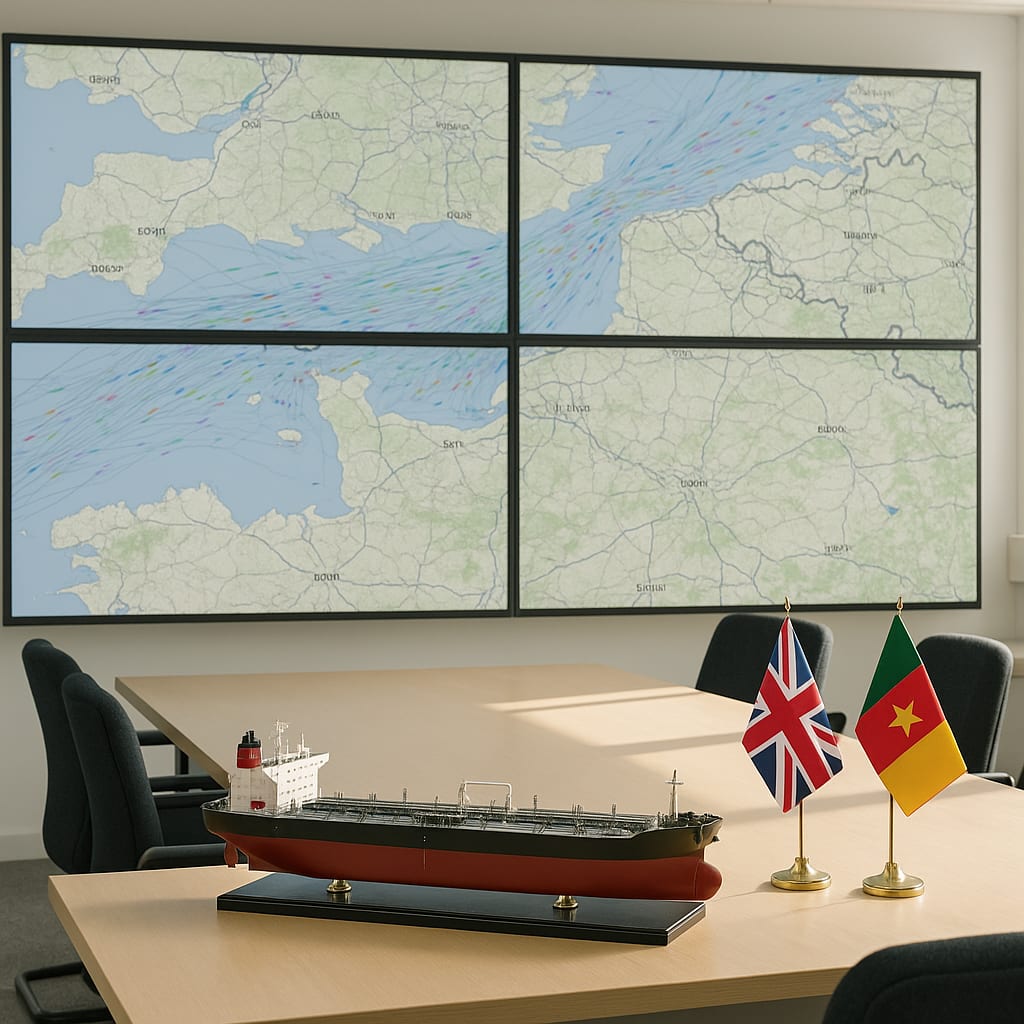
UK forces seize Cameroon-flagged tanker ‘Smyrtos’ linked to Russia’s shadow fleet in the English Channel
Narrative Snapshot
- Broad alignment on operational facts: a six-hour, UK-led interdiction with Royal Marine Commandos and National Crime Agency (NCA) officers boarding the Cameroon-flagged Smyrtos, supported by Chinook helicopters, aircraft, and Royal Navy assets including HMS Sutherland and a minehunter.
- UK, European, and North American outlets emphasize sanctions enforcement and revenue denial to Russia; Ukraine publicly welcomes the move. Japan-focused coverage contextualizes the “shadow fleet” as aging, opaquely owned tankers barred from UK ports and services.
- Russian state media acknowledge the seizure but label the ship “so‑called” or “supposed” shadow-fleet–linked and highlight criticism that the UK is diverting attention from domestic issues.
- Continental European coverage also stresses the operation’s unprecedented, UK-led character and the visuals of the boarding, while most reports do not detail cargo, ownership chain, or legal process beyond immediate control of the vessel.
What Happened
In the early hours of June 14, UK forces conducted a six-hour operation to intercept and seize the tanker Smyrtos in the English Channel. Royal Marine Commandos and specially trained NCA officers boarded and took control of the Cameroon‑flagged vessel associated with Russia’s “shadow fleet,” which Western officials say is used to move fuel and evade sanctions. The British Ministry of Defence described it as the first operation of this type led by the UK, and US reporting noted it was the first time British forces acted alone to stop a ship from the fleet. The boarding was supported by Chinook helicopters and other aircraft, along with Royal Navy units including the frigate HMS Sutherland and a minehunter. UK leaders framed the action as a blow to Russia’s war financing; Ukraine publicly thanked the UK.
Why It Matters
The operation tests the enforceability of maritime sanctions intended to limit Russia’s oil revenues. By interdicting a “shadow fleet” tanker in the Channel—rather than relying solely on port denials—the UK demonstrated an ability to combine military and law‑enforcement tools to disrupt logistics tied to sanctions evasion. Coverage links the fleet to aging, opaquely owned tankers and notes such vessels are barred from UK ports and services, situating the action within broader compliance regimes. The “first of its kind” UK‑led interdiction signals greater operational ambition and capacity among sanctioning states, while messaging to partners and adversaries about sustained enforcement. For decision-makers, the case highlights the practical interface between defense ministries and crime agencies in sanctions implementation, and the potential for repeatable models that pressure circumvention networks and constrain revenue streams used to fund Russia’s war.
Diverging Narratives
Most UK, European, and North American outlets present the interdiction as a concrete enforcement step against sanctions evasion and a denial of oil revenue to Russia, with UK officials calling it a “blow” and Ukrainian leaders expressing gratitude. French and Italian coverage amplifies the UK defence ministry’s framing and the unprecedented, UK-led character. Japan-focused reporting contextualizes the “shadow fleet” and the UK’s existing port-and-services bans.
Russian state media acknowledge the boarding but contest the framing: TASS refers to the Smyrtos as a “so‑called” shadow‑fleet tanker, and RT platforms a Kremlin envoy criticizing Prime Minister Keir Starmer for prioritizing such actions over domestic issues. RT also reports, citing the UK defence ministry, that the ship would be held and monitored off the south coast while its operations are investigated—details not widely echoed elsewhere. Across outlets, several operational and legal specifics remain unspecified in public reporting, including the cargo status, ownership chain, and the precise legal pathway for post-boarding proceedings.
What Happens Next
- Disposition of the Smyrtos: RT reports the UK defence ministry plans to hold and monitor the vessel off the south coast pending investigation. Analysts should watch for any official UK statements on custody, inspection outcomes, and legal process, which will clarify enforcement pathways after interdiction.
- Enforcement posture: Multiple outlets call this the first UK-led action of its kind/first time acting alone against the fleet. Future UK MoD/NCA guidance, naval tasking, or additional Channel operations will indicate whether this becomes a standing enforcement model.
- International signaling and responses: Ukraine’s public support is clear; Russian state media carry criticism. Monitor for formal Russian diplomatic steps or maritime advisories, and for allied statements or analogous actions that could signal coordinated enforcement.
- Compliance effects: Given existing UK bans on port access/services for such ships, watch for changes in routing, flagging, and service provision patterns reported by authorities or industry as indicators of whether interdictions are shifting “shadow fleet” behavior.