
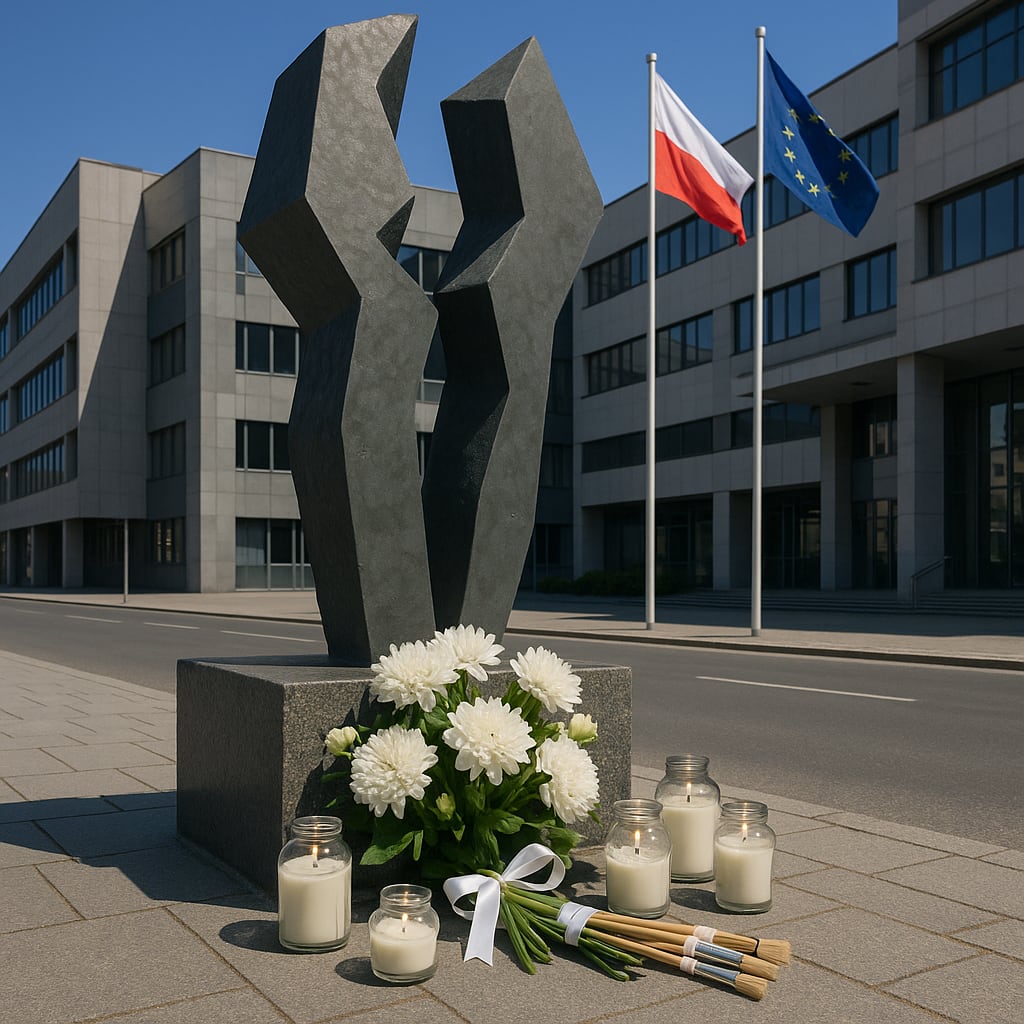
Russian artist and Putin critic Semyon Skrepetsky shot dead in eastern Poland; Polish PM calls it likely political murder
Narrative Snapshot
- Common ground: outlets agree the victim is the Russian artist known as Semyon Skrepetsky (real name Robert Kuzovkov), a critic of Vladimir Putin, shot in Biała Podlaska in eastern Poland; coverage consistently notes his recent public protests and satirical work (BBC; DW; Folha; Sky; La Repubblica; ANSA).
- Emphasis splits: Italian reporting highlights his participation in protests against reopening Russia’s pavilion at the Venice Biennale (La Repubblica; ANSA), while DW underscores a Berlin embassy protest three days prior with an icon-like caricature of Putin and Stalin. Anglo outlets foreground forensic and procedural details (The Guardian; Sky; BBC).
- Investigative status varies by outlet and time: The Guardian reports two Belarusian detainees; Corriere della Sera cites the arrest of one Belarusian; Clarin places the detentions near the Belarusian consulate and adds he had declined offered protection.
- Stakes: Poland’s leadership publicly frames the case as likely political murder with potential international ramifications if commissioned by Russia (SCMP), while an Italian MEP calls for an EU-wide protection network for dissidents (ANSA).
What Happened
Semyon Skrepetsky (Robert Kuzovkov), a Russian artist known for political caricatures, was shot dead on Monday in Biała Podlaska, eastern Poland. The Guardian cites a Polish prosecutor’s spokesperson, Marcin Kozak, saying five shots were fired, including one to the head. Sky News reports the attack occurred near his home; Corriere della Sera specifies a parking lot. The Guardian reports two Belarusian citizens were detained; Corriere says a Belarusian suspect was arrested in connection with the killing. DW notes that three days earlier Skrepetsky protested outside the Russian Embassy in Berlin, holding an icon-like depiction of Putin with Stalin. Italian outlets highlight his protests at the Venice Biennale against reopening Russia’s pavilion (La Repubblica; ANSA). BBC identifies him by both pseudonym and real name. Poland’s prime minister later said indications point to a political murder (SCMP).
Why It Matters
The case sits at the intersection of European internal security and transnational repression concerns. Polish authorities are handling a high-profile killing in a border region, with suspects identified as Belarusian nationals (The Guardian; Corriere della Sera), while the prime minister publicly raised a potential political motive and, conditionally, an international dimension if Russian commissioning were proven (SCMP). For EU institutions, the incident reanimates debates over safeguarding exiled dissidents and artists; ANSA reports a call by Italian MEP Pina Picierno for a Europe-wide protection network. The victim’s recent activism in Berlin and at the Venice Biennale (DW; La Repubblica; ANSA) underscores how cultural spaces and protests are entwined with geopolitical contestation. Outcomes here will inform member states’ protective practices, judicial cooperation with neighbors, and the EU’s posture on extraterritorial intimidation and violence within its borders.
Diverging Narratives
- Motive and framing: Poland’s prime minister said “all indications are that this is a political murder” and noted that if it was commissioned by Russia, the case has an international dimension (SCMP). ANSA similarly reports a “political execution” line of inquiry. Other outlets stay closer to procedural facts without characterizing motive (BBC; Folha; Sky).
- Suspect handling and locus: The Guardian reports two Belarusians detained, while Corriere della Sera states one Belarusian was arrested for the killing; Clarin reports detentions occurred near the Belarusian consulate. These differences likely reflect timing and sourcing but leave open questions about the suspects’ roles and networks.
- Security posture: Clarin adds that protection had been offered to Skrepetsky and declined, a detail not echoed elsewhere in this set. If accurate, it raises operational questions; absent corroboration in other reports, it remains a single-outlet claim.
- Contextual emphasis: Italian outlets tie the victim to Venice Biennale protests (La Repubblica; ANSA), while DW highlights a Berlin protest days earlier. The coverage does not establish causation between these protests and the killing.
What Happens Next
- Polish investigation trajectory: Watch for formal charges against the detained/arrested Belarusian suspects (The Guardian; Corriere della Sera). Indicators include prosecutorial filings and public briefings clarifying roles, evidence, and whether investigators adopt the “political murder” frame cited by the prime minister (SCMP).
- International attribution and response: If Polish authorities present evidence of commissioning by a foreign state, the government has signaled the case would take on an “international dimension” (SCMP). Key signals: statements from Warsaw on external involvement, requests for cooperation, and any moves affecting relations with Russia or Belarus.
- EU protection policy: ANSA reports a call for a European network to protect dissidents and political opponents. Analysts should monitor whether this prompts debate in EU institutions, guidance to member states, or pilot mechanisms for at-risk activists and artists.
- Consular/diplomatic angle: Given reports that suspects are Belarusian (The Guardian; Corriere) and a claim they were detained near their consulate (Clarin), watch for Polish-Belarusian diplomatic exchanges and any law enforcement cooperation or friction.