
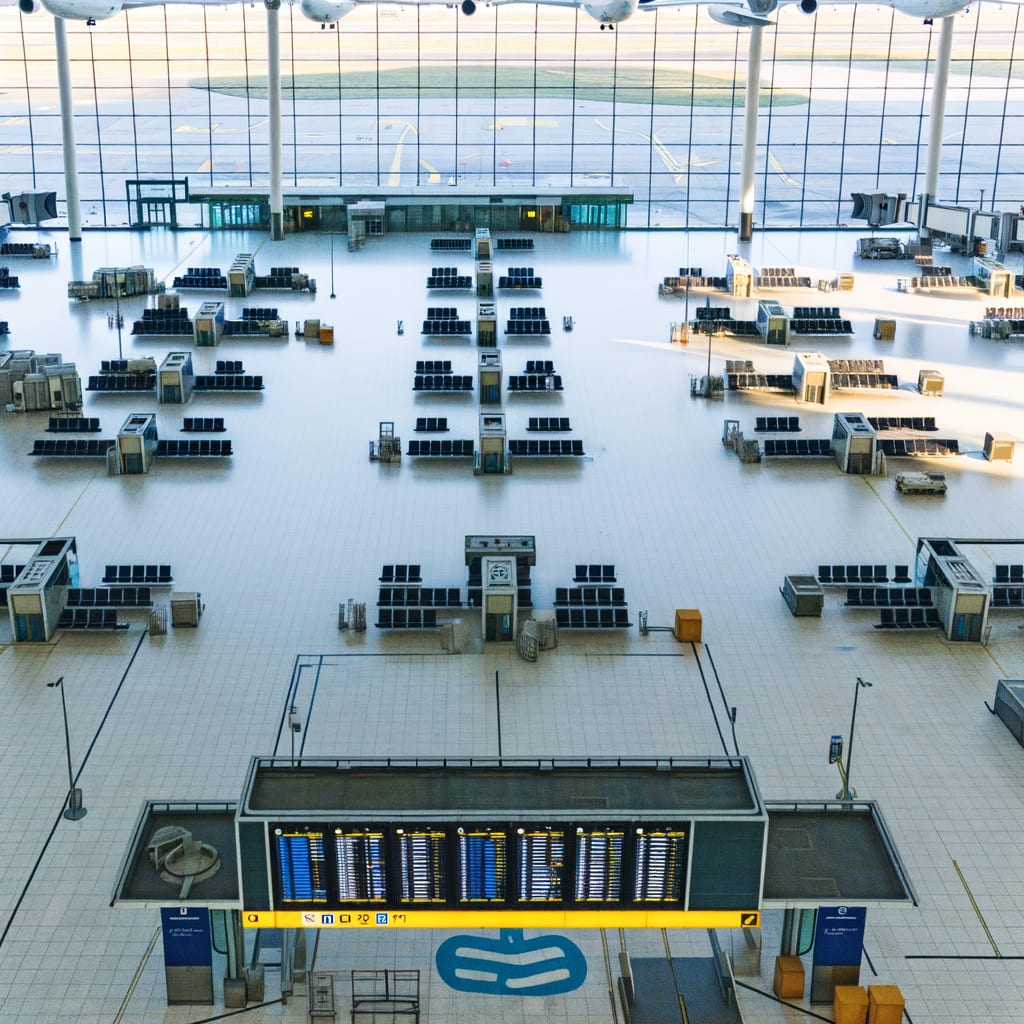
Middle East Conflict Disrupts Global Aviation and Travel, Strands Thousands
The escalating conflict involving the US, Israel, and Iran has severely disrupted global aviation and travel, closing major transit hubs, canceling thousands of flights, and stranding hundreds of thousands of passengers across the Middle East and Asia. The crisis comes as the world's largest ever disruption to global air travel since the COVID-19 pandemic, with experts warning of a potential domino effect
slowdown on the fragile recovery in Asia's tourism and aviation sectors.
Background and Context
The conflict began with unprovoked US-Israeli strikes on Iran that started on February 28, killing top Iranian officials and hundreds of civilians. Iran retaliated with numerous missile and drone attacks on US and Israeli bases across the Middle East. The escalating tensions have led to airspace closures across the Middle East, including key transit hubs like Dubai, Doha, and Bahrain, as well as the suspension of over 25,000 flights.
Key Developments
Amid the turmoil, passengers, including many Europeans and Hong Kong residents, have been left stranded, scrambling to find alternative routes home. Some have opted for more expensive direct Asia-Europe routes, causing a sharp surge in airfares. Others have flocked to neighboring countries like Oman or Saudi Arabia to secure seats on the few available flights.
Thousands of cruise passengers are also stranded, with vessels such as Celestyal Journey, Celestyal Discovery, and MSC Euribia grounded due to the conflict. The situation has created chaos, with MSC Cruises stating that the highly limited number of flights is creating another layer of issues.
Even cargo shipments are in limbo, with the conflict reducing the world's air cargo capacity and pushing up freight rates. Backlogs of goods are expected as the conflict continues.
Reactions and Implications
The crisis has triggered a scramble for repatriation flights, with governments around the world ramping up efforts to bring their citizens home. However, this process has been complicated by confusing advice, on-again-off-again airport closures, and occasional technical issues.
The crisis has also led to a surge in demand for private jets, with UK-based global company Air Charter Service reporting that demand has outstripped supply, and calls for the creation of air bridges to evacuate people from the Middle East.
Meanwhile, passengers flying with Cathay Pacific Airways have criticized the carrier over its compensation and rebooking policies after flights to the Middle East were cancelled.
Current Status
As of now, partial resumption of flights has begun in the UAE and Dubai, with over 100 flights scheduled to depart and return on March 5 and 6. However, the skies of Bahrain, Israel, Iraq, Iran, Qatar, and Kuwait remain closed.
The situation remains fluid, with the prospect of further disruptions and cancellations looming. As the conflict continues to unfold, the global aviation industry braces for further turmoil and uncertainty.