
Louvre Museum Faces Crisis Following Water Leak Damage
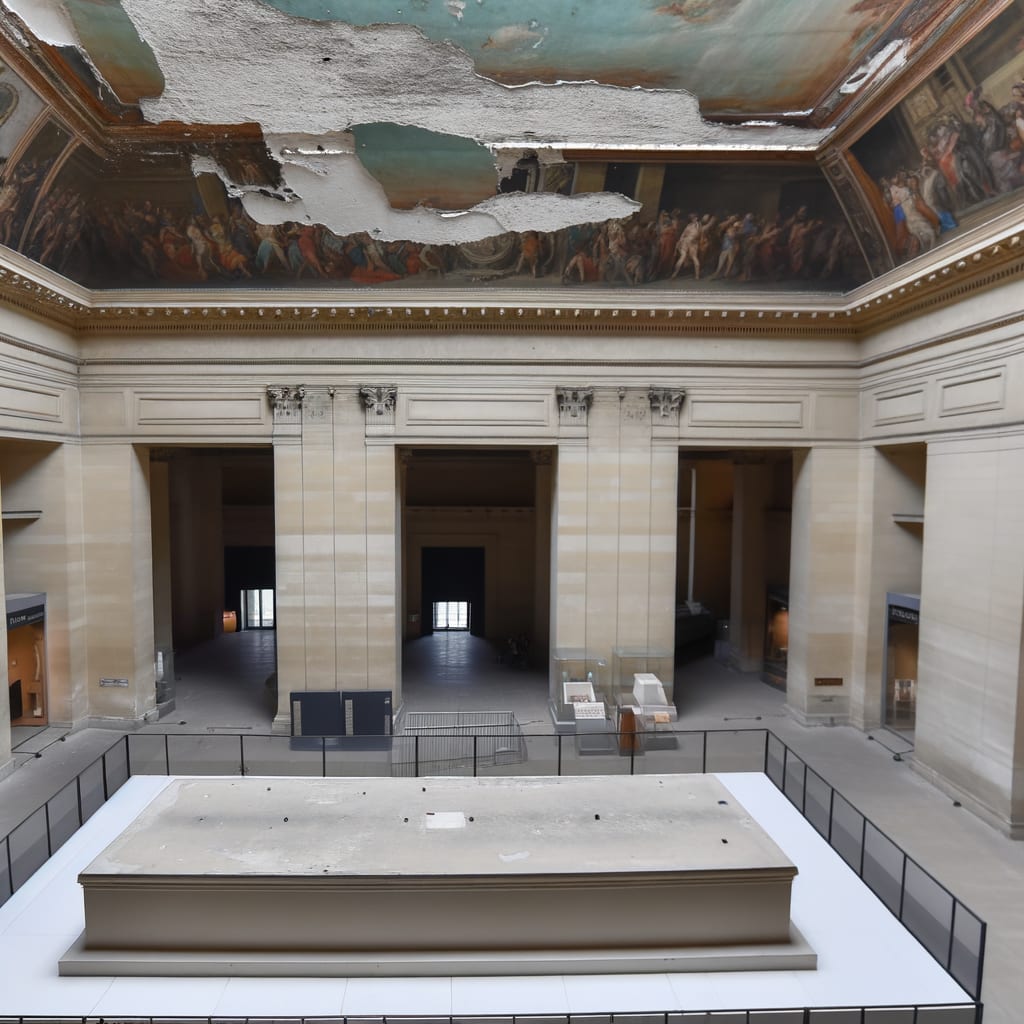
The Louvre Museum in Paris, the world's most visited museum, has been hit by a series of setbacks after a water leak in the Denon wing caused significant damage, including harm to a 19th-century painted ceiling by Charles Meynier, as per multiple sources. The incidents have led to growing scrutiny of the museum's management, further weakened due to the crisis that ensued post the theft of the Crown Jewels in October last year.
A String of Incidents
The water leak reportedly occurred on Friday, 12th, damaging the Denon gallery, where the museum's most valuable paintings are displayed. Although the area containing Leonardo Da Vinci's famous Mona Lisa remained unaffected, the rupture of a boiler pipe heavily damaged the ceiling of room 707, housing the fresco painted by Charles Meynier in 1819, according to Folha de S.Paulo and Corriere della Sera.
The water loss at the Louvre marks another problem for the world's largest museum, already reeling from the theft of the Crown Jewels on October 19, as reported by Le Monde. This latest incident fuels the growing criticism of the museum's management, with the direction of the Parisian museum under significant pressure.
Consequences and Reactions
The series of unfortunate events has not only damaged precious art but has also stoked political controversy. The leader of the French political party Les Patriotes has publicly criticised the Louvre's director, Laurence des Cars, calling it a shame
for France that she is still in her position, according to TASS.
Amidst the crisis, a band defrauding the museum on tickets was also apprehended, thus adding to the institution's woes. The band had reportedly defrauded the museum of 10 million, as highlighted by Corriere della Sera.
The Road Ahead
The Louvre, already dealing with the aftermath of the theft of the Crown Jewels, is now faced with the task of repairing the damage caused by the water leak. The extent of the damage to the 19th-century fresco and other potential art pieces remains unclear, and the museum has yet to announce any restorative plans.
The museum's management, already under scrutiny, faces a challenging road ahead. While dealing with the current crisis, they must also work on preventive measures to avoid such incidents in the future. The recent events have undoubtedly tarnished the reputation of this world-renowned institution, making the task of regaining public confidence even more crucial.
In conclusion, the Louvre Museum, a symbol of France's rich cultural heritage, finds itself at a critical junction. How the management navigates through this crisis will significantly shape the future of this venerable institution.