
Lead
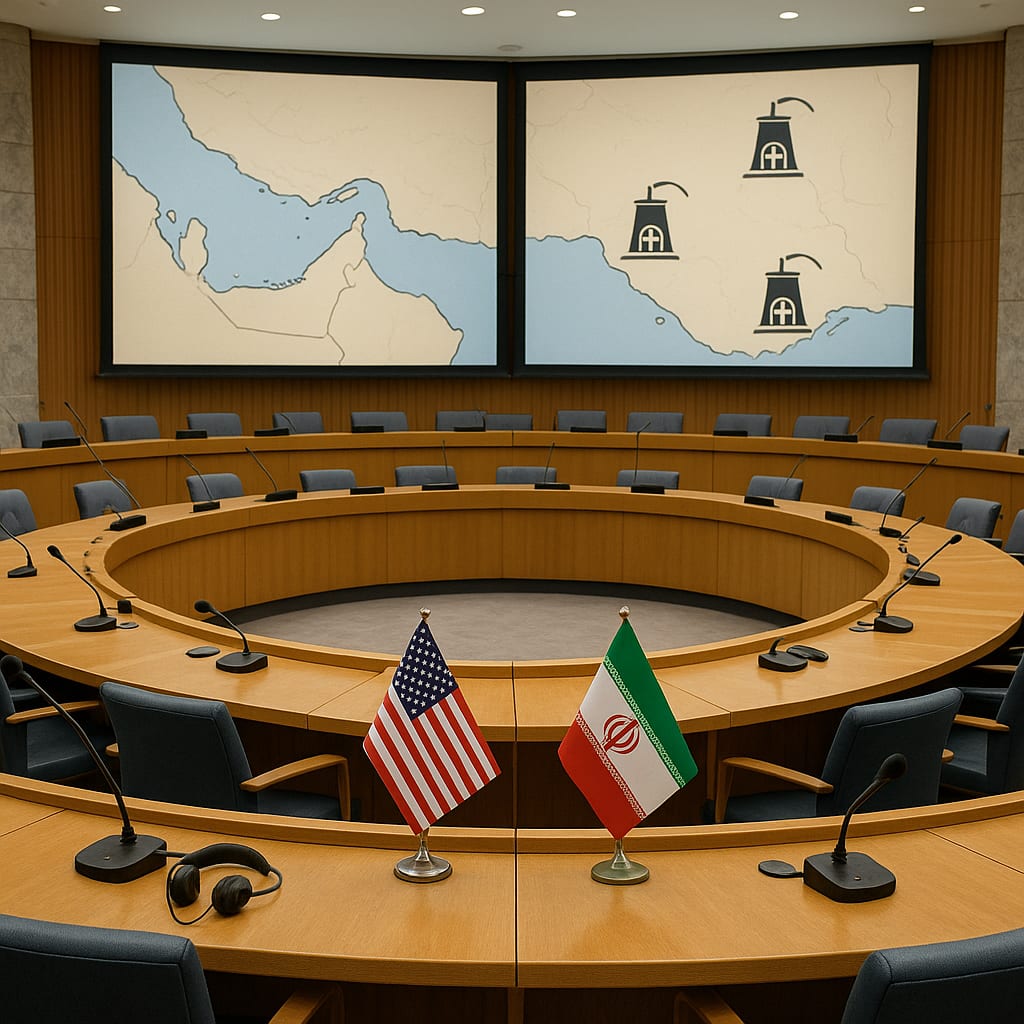
A US–Iran negotiating track that began as crisis management around the Strait of Hormuz is now being publicly rebranded—by Washington, Tehran and international monitors—as something closer to a high-stakes rewrite of the nuclear file itself. In the past week, US officials have insisted that sanctions relief will come only in exchange for verifiable nuclear concessions, rejecting the idea of upfront financial “bonuses,” while President Donald Trump has described the talks as “continuous” and nearing a “very good agreement.” Iran, meanwhile, has pushed back against claims that a final deal is at hand and has accused Washington of shifting demands. Hovering over the diplomacy is a blunt reality: the 2015 nuclear deal is no longer seen by key actors as a workable template, and any new arrangement would have to grapple with Iran’s existing program and stockpiles under far more contentious regional conditions.
What Happened
The immediate backdrop is a cycle of regional military tension and maritime coercion centered on Hormuz. Multiple outlets converge on the idea that reopening or normalizing passage through the Strait—after threats, blockades, or the imposition of fees—became intertwined with broader US–Iran talks that are also addressing nuclear constraints and sanctions.
Public messaging from Washington has been unusually explicit about sequencing. The US secretary of state, Marco Rubio, told lawmakers that sanctions relief would be contingent on nuclear concessions and that the United States would not unfreeze Iranian funds as an upfront inducement. In parallel, Rubio also rejected the notion that Washington had offered sanctions relief simply for reopening Hormuz, framing any economic benefit as tied to nuclear steps rather than maritime de-escalation alone. These points are echoed across coverage that cites State Department-style language: no “signing bonus,” no good-faith front-loading of cash, and no decoupling of sanctions relief from the nuclear file.
Trump’s own framing has leaned toward imminent progress—he has said the sides are close and that Iran has agreed to refrain from developing nuclear weapons. In Russian state coverage, Trump’s claim is described in more precise terms: Iran promised not to develop or buy nuclear weapons, with an added note that earlier Iranian language focused on development rather than purchase. US conservative coverage pairs the claim of an Iranian concession with threats of military action if diplomacy fails, underscoring a coercive edge even as negotiations continue.
Iranian and Iran-aligned messaging has been less categorical about breakthroughs. Iranian statements carried in regional coverage emphasize that no final deal has been reached despite ongoing talks, and Tehran has characterized American public statements as contradictory or tactically designed. An Iranian diplomat, quoted in Russian coverage, accused Washington of dragging out negotiations by changing demands or adding new ones, presenting the inconsistency itself as part of a negotiating strategy. Iranian domestic political voices have also paired diplomacy with deterrence; an Iranian parliamentarian was quoted as saying the blockade would end either through talks or military action, signaling that Tehran wants leverage preserved even while it negotiates.
International nuclear oversight has added a third axis to the story. The head of the International Atomic Energy Agency, Rafael Grossi, has said the 2015 deal is no longer a workable model and that any next agreement would look “very different.” The comment does not outline terms, but it anchors a broad consensus across outlets: whatever is being discussed now is not simply a revival of the old framework.
The dispute has also spilled into the regional diplomatic environment. Coverage in Europe highlighted Iranian warnings to the United States tied to Israel’s regional actions, linking the fate of talks to wider escalation dynamics and to threats to extend maritime pressure beyond Hormuz. While details vary, the common thread is that the negotiations are occurring amid overlapping crises—nuclear, maritime, and regional security—each capable of derailing the others.
Why It Matters
First, the sanctions-for-nuclear-concessions posture signals that Washington is trying to avoid a politically vulnerable repeat of earlier deal-making: giving Iran early economic relief in return for promises that are difficult to verify quickly. By rejecting an upfront unfreezing of funds, the US position also seeks to keep maximum leverage while testing Iranian willingness to accept intrusive monitoring or tangible rollbacks.
Second, the Strait of Hormuz remains a global economic choke point. Any linkage between shipping access and nuclear diplomacy increases the risk of rapid spillover: a negotiating impasse can become a maritime crisis, and a maritime incident can harden nuclear demands. Markets, insurers, and regional governments treat Hormuz not as a symbolic arena but as a direct conduit for energy supply and shipping stability.
Third, Grossi’s statement that a new deal would have to look very different is a tacit admission of the changed technical and political landscape. The 2015 accord was built around limiting enrichment and stockpiles under a defined inspection regime while providing phased sanctions relief. Years of subsequent developments—combined with current regional conflict dynamics—mean negotiators are no longer discussing a return to an earlier baseline. Even without detailed terms made public, the shared framing across outlets points to a more complicated package: what happens to enriched uranium, what monitoring the IAEA can realistically execute, and what sanctions relief can be delivered and sustained.
Finally, domestic politics and deterrence signaling are shaping diplomacy in real time. Trump’s public threats of military escalation, and Iranian officials’ insistence that outcomes could come “through talks or military action,” create parallel audiences at home and in the region. That rhetorical escalation can narrow room for compromise, especially on visible issues like nuclear stockpiles or the control and “fees” structure for Hormuz transit.
Diverging Narratives
How close the sides are to a deal. US presidential messaging emphasizes momentum and near-term success, describing talks as continuous and suggesting Iran has already conceded key principles. Iranian messaging, by contrast, stresses that no final deal has been reached and highlights shifting American demands. This divergence is not just optimism versus caution; it reflects different incentives. Washington’s narrative foregrounds progress and pressure, while Tehran’s underscores resistance and the avoidance of appearing to yield under coercion.
What the “deal” is actually about. Some coverage treats the talks primarily as an arrangement to reopen or normalize Hormuz, with nuclear issues as part of the broader package. Other reporting places the nuclear file at the center, with Hormuz framed as leverage rather than the endpoint. Rubio’s statements push strongly toward the latter interpretation: sanctions relief is for nuclear concessions, not merely for maritime steps. Iranian-linked reporting that discusses Hormuz control arrangements (including claims that the strait would remain under Iranian authority under proposed terms) suggests Tehran is keen to preserve sovereignty language and avoid any impression of internationalization or external control.
Coercion versus diplomacy. US conservative coverage foregrounds threats—warnings that the United States would use military force if a deal fails—casting negotiations as backed by overwhelming power. Regional and international outlets more often highlight the fragility of the ceasefire environment and the dangers of miscalculation, emphasizing the exchange of strikes and accusations of violations. The same events are thus framed either as effective pressure or as destabilizing brinkmanship.
The 2015 model: revival or replacement. Nuclear-focused coverage citing the IAEA emphasizes structural change: the old deal is not a template to be dusted off. Other outlets, especially those emphasizing the negotiation mechanics, implicitly measure progress against earlier frameworks—debating stockpiles, enrichment limits, and inspection as familiar sticking points. The difference is subtle but important: one framing suggests a fundamentally new architecture; the other suggests a modified version of known parameters.
External actors and destinations for nuclear material. Russian coverage has highlighted discussion of solutions such as removing enriched uranium from Iran to Russia or downblending it inside Iran, presenting these as plausible technical fixes. Western political coverage tends to focus less on where material might go and more on the political trade—sanctions relief, verification, and compliance. This difference reflects divergent national interests: Moscow is positioned as a potential logistical or diplomatic node, while Washington-centered narratives prioritize leverage and conditionality.
Current Situation
As of early June, negotiations have not been publicly declared concluded by both sides, and Iranian messaging continues to reject claims of a finalized agreement. The US position, articulated by Rubio, is that sanctions relief will be strictly conditioned on nuclear concessions and that there will be no upfront unfreezing of funds merely for signatures or for reopening Hormuz. Trump continues to project confidence that talks are ongoing and productive, even as his public rhetoric includes explicit military warnings.
On the technical and oversight side, the IAEA leadership has signaled that any new agreement would depart substantially from the 2015 framework, implying that verification demands and nuclear rollbacks will have to address realities on the ground rather than restore an older equilibrium.
The immediate outlook is defined less by a formal deadline than by the interaction of three pressures: the need to stabilize Hormuz shipping, the political requirement in Washington to avoid appearing to pay for promises, and Iran’s insistence that it will not accept terms portrayed domestically as capitulation. The central unresolved question across coverage is not whether talks exist, but whether the parties can align on enforceable nuclear steps substantial enough to unlock sanctions relief—without triggering new maritime or regional escalations that derail the process.