
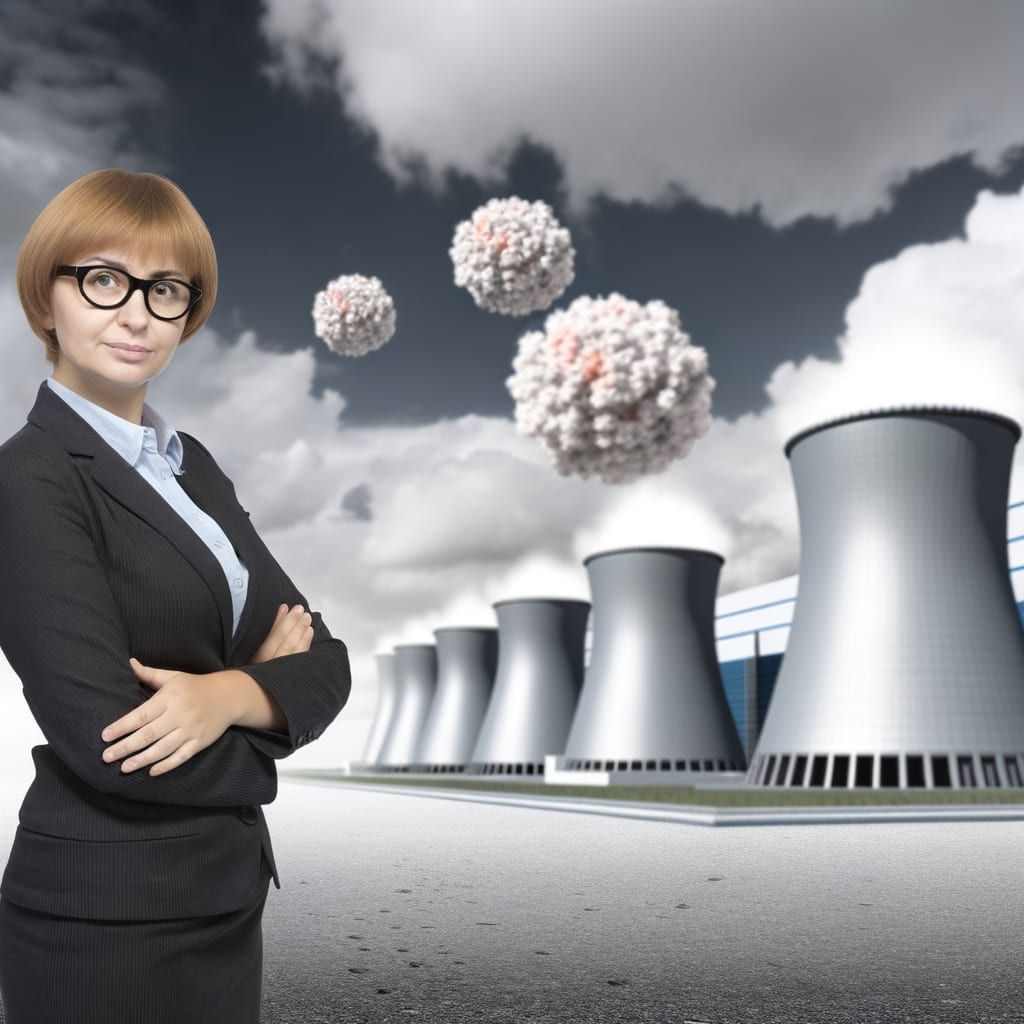
EU Chief Calls Europe's Move Away from Nuclear Energy a 'Strategic Mistake'
The president of the European Commission, Ursula von der Leyen, has called Europe's move away from nuclear energy a strategic mistake
as the conflicts in the Middle East expose the region's energy vulnerability. While speaking at a nuclear energy summit in Paris, she expressed Europe's dependence on costly and volatile fossil fuel imports, prompting a renewed interest in atomic energy.
A Strategic Mistake
Von der Leyen highlighted the EU's energy vulnerability amidst the escalating Middle East conflicts, emphasizing that Europe's turn away from nuclear power was a strategic error. For fossil fuels, we are completely dependent on expensive and volatile imports. They are putting us at a structural disadvantage to other regions,
she stated, according to Middle East Eye and Deutsche Welle.
The retreat from nuclear energy has resulted in the EU's electricity production from nuclear sources collapsing from a third in 1990 to just 15% today, as reported by Russia Today.
Turning Back to Nuclear Power
In a bid to strengthen Europe's energy independence, von der Leyen has announced a strategy favoring the development of small modular reactors (SMRs). As Le Monde reports, she is expected to unveil a plan involving a €200 million ($230 million) guarantee fund to support these reactors, aiming for operational deployment by 2030.
During a meeting with Slovak Prime Minister Robert Fico in Paris, they discussed the affordability of energy prices, as reported by Ukrinform. This move, coupled with the rising oil prices, has led to a renewed focus on atomic energy as a reliable, low-emission power source, according to the South China Morning Post.
Global Energy Market Instability
The International Energy Agency (IEA) warns that the ongoing Israeli-US war on Iran, which has halted the latter's gas exports, raises concerns about global energy supplies. If the crisis continues this way, the Asian buyers and the European buyers will need to compete for the LNG which will get scarcer and scarcer,
warned Fatih Birol, the IEA Executive Director, according to Middle East Eye.
The escalating tensions in the Middle East have caused a sharp rise in global oil markets, as reported by AllAfrica.com. The war has cost the EU 3 billion for energy in just ten days, highlighting the price of their dependence, according to ANSA.
Mixed Reactions and Future Directions
The renewed interest in nuclear power has stirred mixed reactions. AllAfrica.com reports that President Paul Kagame of Rwanda argued that nuclear energy is neither too complex nor too risky for developing countries, given clear international standards and stronger technology cooperation.
Meanwhile, the energy crisis has led many energy-intensive companies to experience a shock due to the rapid increase in fuel prices, as reported by Le Monde. Experts, however, argue that abolishing the North Sea windfall tax would not lower UK energy bills and would only increase the profits of oil and gas companies, according to The Guardian.
As Europe grapples with these energy challenges, von der Leyen's call to reinvest in nuclear power signals a potential strategic shift in the region's approach to achieving energy security. However, whether this renewed focus on nuclear energy will alleviate Europe's energy vulnerability remains to be seen.