
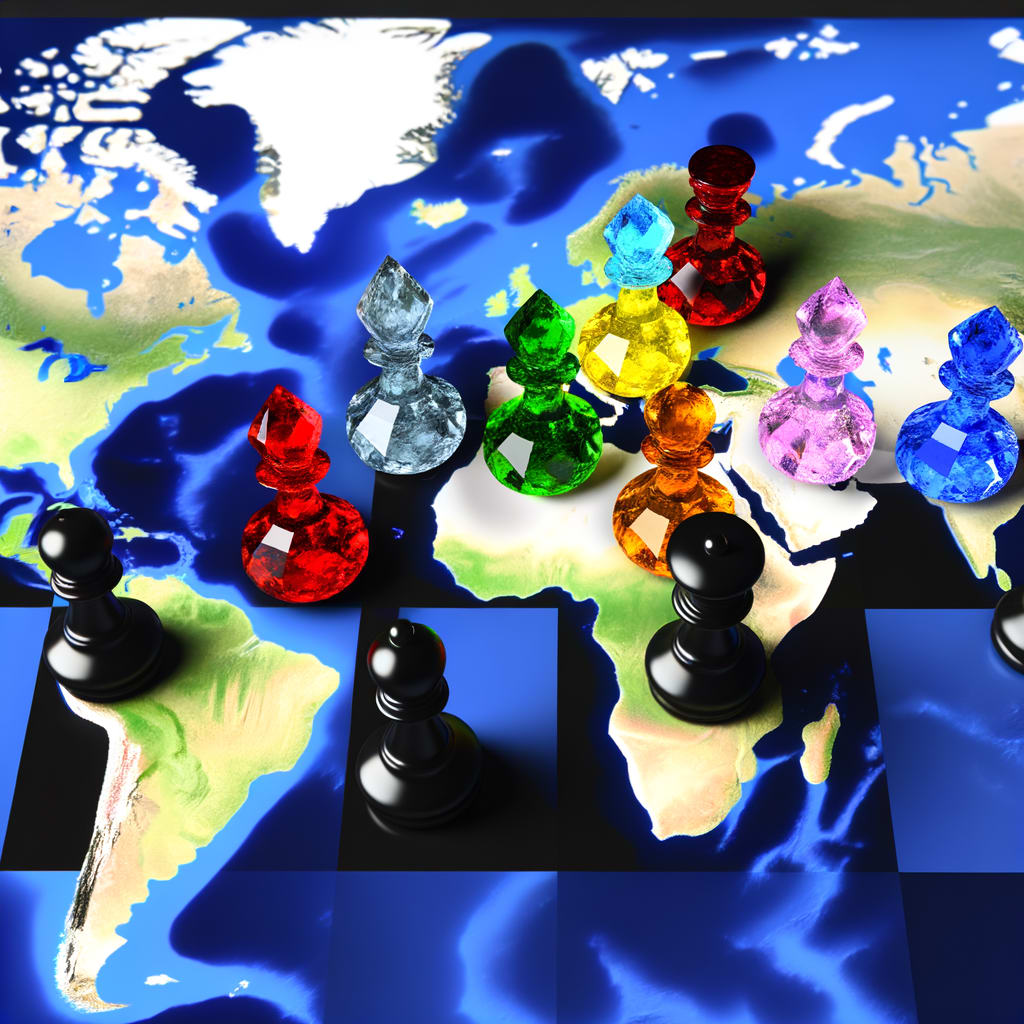
The Global Race for Rare Earths: U.S., Europe, and China in Strategic Moves
The international game of chess over the control of rare earth minerals takes a new turn as the United States, Europe, and China make strategic moves to secure their supplies. Amidst the increasing demand for these critical minerals, the question of who benefits remains unresolved.
Background and Context
Rare earth minerals, essential for high-tech industries and renewable energy technologies, have become a geopolitical pivot point. China, the world's largest producer, weaponized its control over these critical resources during the U.S.-China trade war last year. In response, the United States and Europe are keen on reducing their reliance on China, seeking alternative sources and exploring recycling projects.
Key Developments
EU industry chief Stephane Sejourne recently secured a commitment
to work towards a memorandum on critical minerals with the United States1. This memorandum, expected within 30 days, aims to identify joint mining, refining, processing, and recycling projects.
In a parallel development, Serra Verde, Brazil's only operating rare earth miner, announced an increase in financing by a U.S. state bank to $565 million2. This funding agreement gives the U.S. government the option to acquire minority shareholding in the mining company.
Simultaneously, the Trump administration is considering a $225m (£166m) investment in reopening the South Crofty tin mine in Cornwall, potentially creating 300 jobs3.
Implications and Reactions
Critics argue that the U.S.'s critical minerals summit will burden the Global South with most costs4. Furthermore, amidst the power competition for Africa's critical minerals, uncertainty looms over whether the U.S. or Chinese strategies would advance Africa's vision for its mining sector5.
Despite these international machinations, the export value of rare earths from Brazil has tripled from 2024 to 2025, although remaining a small portion of China's total6. The New York Times points out that the real threat to a secure and sustainable supply of rare earths is not their scarcity, but the wastage7.
In response to claims that it targets China, a senior U.S. official defended the new critical minerals push as a national security measure aimed at diversification of supply chains8.
Conclusion
As the global race for control over rare earth minerals intensifies, the strategies and alliances formed in this game of geopolitical chess will have far-reaching implications for economies and industries worldwide. The question remains: will the benefits be shared equally or will some players bear the brunt of the costs?