
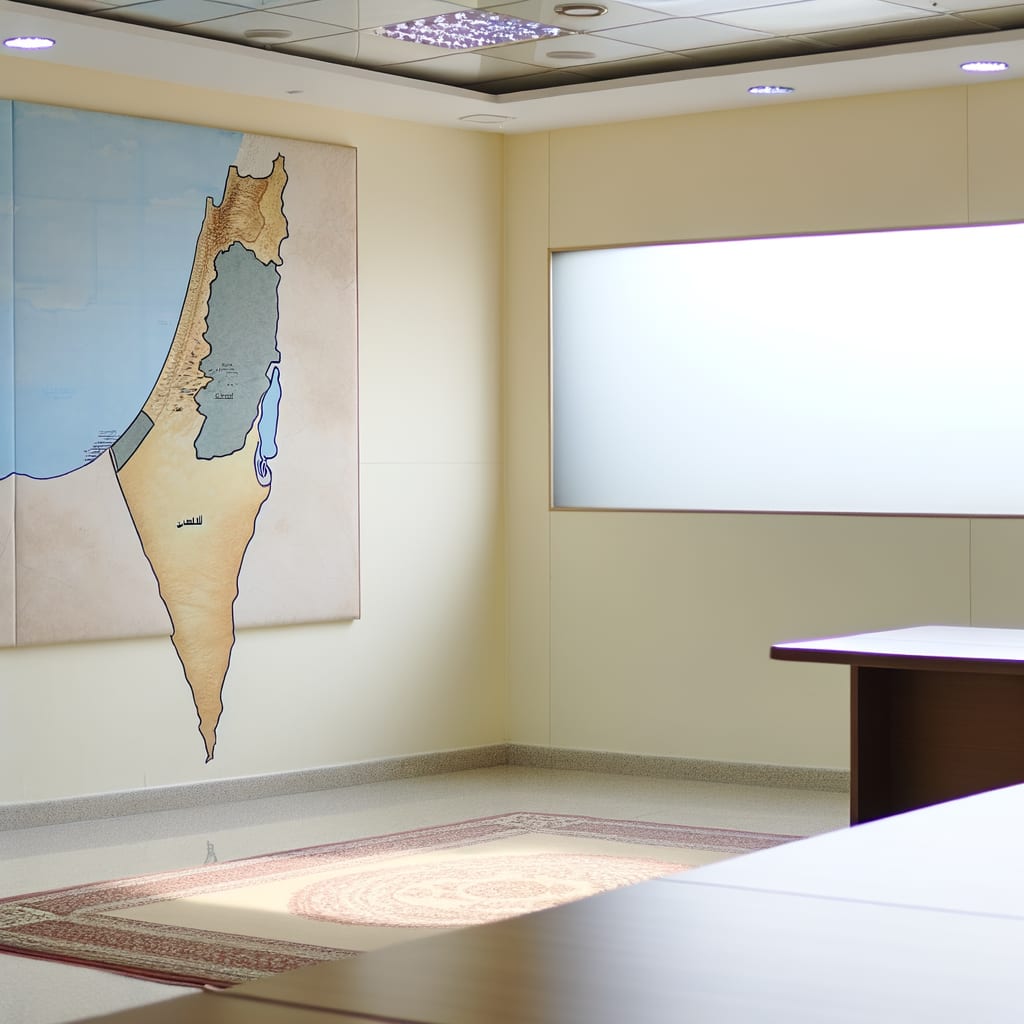
Israel Advances Measures to Increase Control Over West Bank Amidst International Criticism
Israel has initiated a series of controversial measures aimed at strengthening its control over the occupied West Bank, eliciting strong condemnations from Muslim countries, the European Union, the United States and the United Nations. The measures, which critics argue amount to a de facto annexation, have been described by Israeli Energy and Infrastructure Minister Eli Cohen as an allegiance to Israel as a Jewish state.
Background and Context
The West Bank, a territory rich in history and conflict, is currently divided into Areas A, B, and C, with Areas A and B containing major Palestinian cities and towns. Israel maintains military control over most of Area C, where the majority of settlements are located.
Israel's security cabinet approved on Sunday new legislations that would simplify the process for Jewish Israelis to purchase land in the West Bank, and extend Israel's civil control over areas currently under the jurisdiction of the Palestinian Authority (PA). These changes are seen as a significant step in Israel's ongoing efforts to deepen its hold on the disputed territory.
Key Developments
Israeli Energy and Infrastructure Minister Eli Cohen announced that the new legislation would require all members of the Israeli parliament to pledge allegiance to Israel as a Jewish state during their swearing-in ceremony. According to Cohen, Palestinian ministers who oppose Israel as a 'Jewish and democratic state' have no place in the Knesset, Israel's parliament.
Meanwhile, the Israeli government has also approved plans to expand its power across the West Bank, a move that critics argue will make it easier to seize Palestinian land illegally.
International Reactions and Implications
The international community has largely condemned Israel's recent moves. Muslim countries have urged the international community to compel Israel to halt its actions, describing them as a dangerous escalation. The European Union has also voiced its disapproval, calling the actions a 'step in the wrong direction'.
The United States and United Kingdom have also expressed opposition to the annexation. A White House official reiterated President Donald Trump's stance against the annexation, stating that stability in the Palestinian territory aligns with the goal of achieving peace in the region.
Analysts have warned that these changes would cement de facto annexation and could potentially end the Oslo Accords, an agreement intended to establish a framework for future relations between Israel and Palestine. Critics argue that these measures violate the Oslo Accords and international law, and accelerate attempts to annex the territory.
Current Status
As the international outcry grows, the situation remains tense and uncertain. Palestinians have voiced their concerns that these changes essentially legalise settlements, and have further marginalised their hopes for a Palestinian state. As the international community grapples with these developments, the future of the West Bank and its people hangs in the balance.