
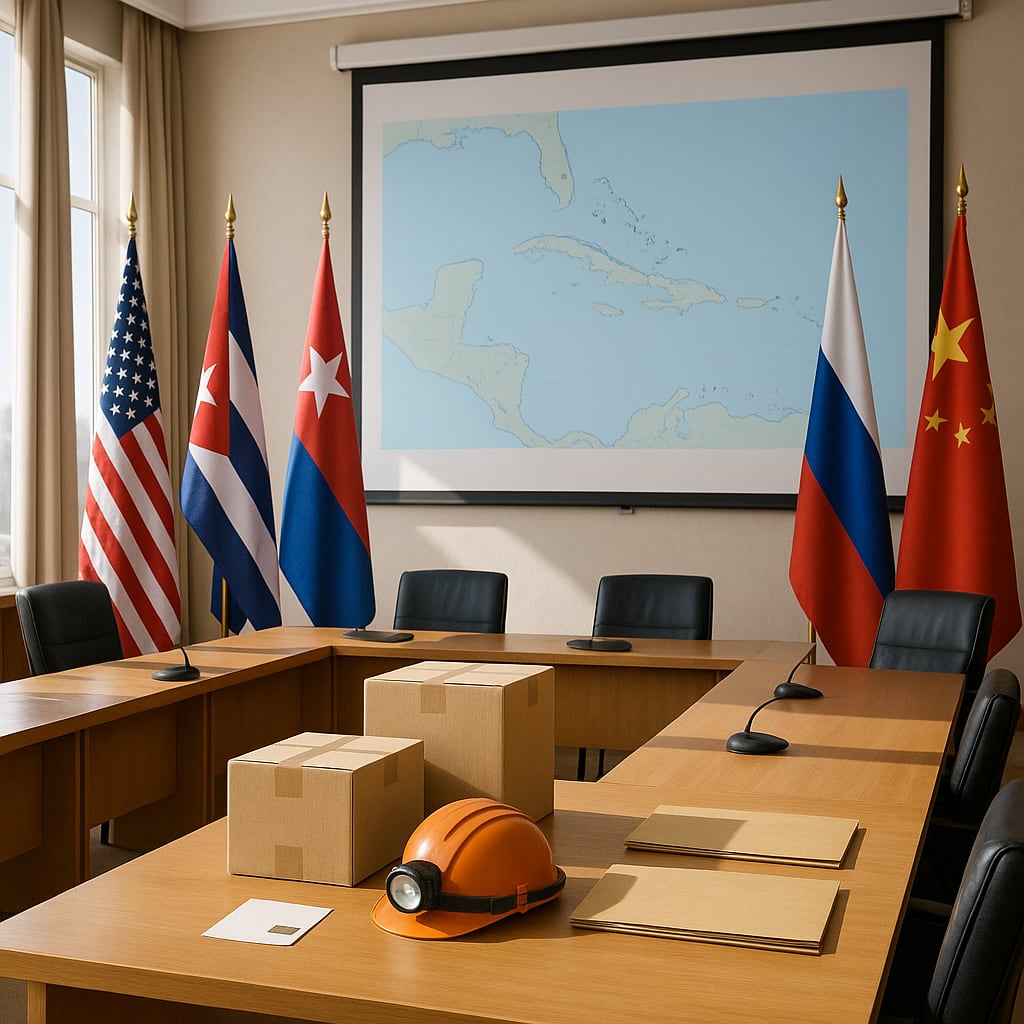
US tightens sanctions on Cuba and GAESA; foreign firms retreat as international pushback grows
Narrative Snapshot
- Multiple outlets link Washington’s latest measures to an already severe domestic crunch in Cuba, with shortages, blackouts and a weakening tourism sector foregrounded by Al Jazeera, Sky News and CBC. Business-focused reporting in Le Monde, Clarín and CBC tracks how enforcement around the military-run conglomerate GAESA is driving rapid corporate exits.
- Russian and Chinese-linked sources cast the moves as coercive or escalatory: TASS characterizes a “blockade” and “blackmail,” while the South China Morning Post relays a Chinese defence firm’s assessment of a possible US military strike window and situates the squeeze within US–China competition in the Americas.
- Regional and societal responses appear in Latin outlets: ANSA highlights Colombian humanitarian relief and Clarín spotlights novelist Leonardo Padura’s public rejection of any military intervention alongside calls for deep reforms.
What Happened
The United States imposed new sanctions on Cuban President Miguel Díaz-Canel, an escalation Al Jazeera reports amid ongoing food shortages and power cuts on the island. Le Monde details a parallel clampdown on GAESA, the military’s sprawling holding company, saying the Trump administration warned foreign firms to end dealings with it by June 5 or face penalties. Clarín reported days earlier that miners and hotel operators were already unwinding ties, and CBC said Spain’s Meliá was shuttering some Cuban properties as tourism falters. In Moscow, TASS covered draft State Duma resolutions urging the UN to condemn US policy, calling the measures interference and “blackmail,” and pledging deeper Russian–Cuban cooperation. ANSA reported Colombia dispatched 100 tons of humanitarian aid, citing the US embargo and Hurricane Melissa. Al Jazeera noted Raúl Castro’s first public appearance since a US indictment, and SCMP relayed a Chinese defence tech firm’s warning about a potential US attack window this summer.
Why It Matters
For Cubans, the policy shift lands atop an acute crisis marked by blackouts, long queues for essentials and empty state stores, as described by Al Jazeera and Sky News; a shrinking tourism sector compounds the strain, with CBC reporting closures by a major Spanish hotel chain. The enforcement focus on GAESA, described by Le Monde as opaque and tentacular, touches a central artery of Cuba’s state-dominated economy, hastening foreign retrenchment that Clarín says spans mining and hospitality. Abroad, the moves reverberate through great‑power politics. TASS frames them as a blockade warranting UN attention and vows closer Russian alignment with Havana, while SCMP ties Washington’s pressure to contested Chinese interests in Cuba and across the region. Regional actors are already responding in practical terms, with ANSA reporting Colombian humanitarian shipments intended to blunt immediate hardship.
Diverging Narratives
Coverage splits sharply on intent and legitimacy. Western and Latin American outlets emphasize domestic distress and commercial fallout: Al Jazeera foregrounds shortages and blackouts alongside new US sanctions, Le Monde highlights the US deadline forcing companies to sever GAESA ties, and CBC documents tourism retrenchment. Russian state media presents a normative challenge, with TASS labeling US measures an illegal “blockade,” “blackmail,” and interference, and announcing a push for UN condemnation and intensified Russian–Cuban partnership. The SCMP introduces two further frames: a security warning from a Chinese defence technology firm that a US attack is most likely in summer, and an economic‑strategic reading that situates Cuba within a broader US effort squeezing Chinese interests in the hemisphere. Within Cuban society, Clarín quotes novelist Leonardo Padura rejecting any military intervention even as he calls for deep transformations, while Al Jazeera underscores elite defiance with Raúl Castro’s post‑indictment appearance. These accounts differ less on the severity of Cuba’s crisis than on attribution of cause and the acceptable means of response.
What Happens Next
Several tracks remain open in the reporting. Le Monde’s June 5 cutoff for GAESA‑linked dealings suggests continued corporate unwinding, as already indicated by Clarín and CBC. In Moscow, TASS says the State Duma may press the UN to condemn US policy and signals expanded Russian–Cuban cooperation. SCMP reports analysts see Nicaragua as a possible next focus of US pressure on China’s regional footprint, and separately relays a Chinese defence firm’s claim of a summer attack window, a scenario not echoed elsewhere in the cited coverage. Al Jazeera notes Raúl Castro’s reemergence after a US indictment; ensuing legal and diplomatic repercussions are not detailed. On the humanitarian front, ANSA reports Colombia’s aid shipment, raising the question of whether more regional relief will follow as shortages and blackouts persist.