
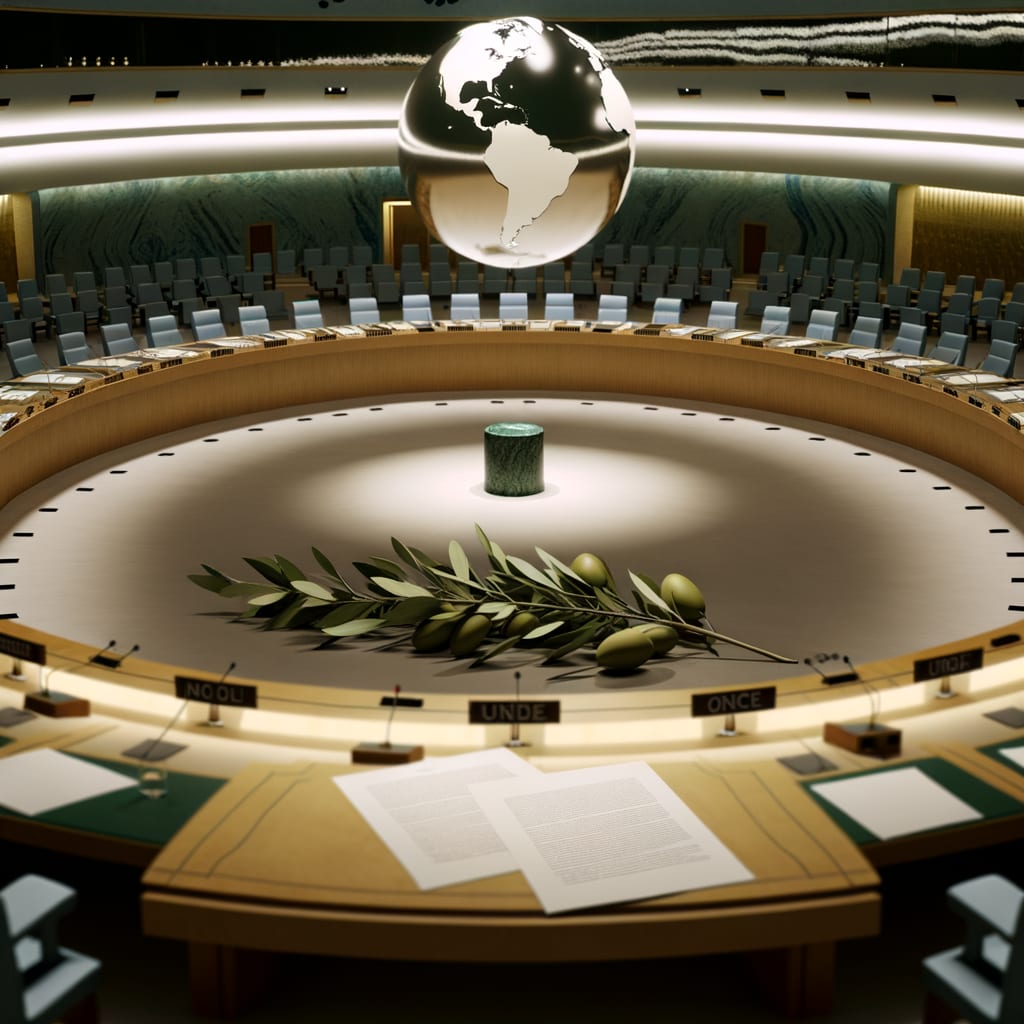
UN Security Council Approves Trump's Gaza Peace Plan
The United Nations Security Council (UNSC) has adopted a resolution endorsing US President Donald Trump’s peace plan for Gaza, which includes the deployment of an international stabilization force and a potential path to a sovereign Palestinian state. The resolution received 13 votes in favor, with Russia and China abstaining.
Background
The Trump administration’s vision to resolve the conflict in Gaza has been in development for several years. According to Mike Waltz, the US envoy to the UN, the approved resolution charts a new course in the Middle East for Israelis and Palestinians and all the people of the region alike
. The resolution endorses the Board of Peace, sets parameters for Gaza’s transitional governance, and initiates the International Stabilization Force outlined in the president’s twenty-point Gaza peace plan.
Key Developments
The resolution authorizes an international stabilization force to provide security in the devastated territory, and prompts a possible future path to an independent Palestinian state. The second phase of President Donald Trump’s Gaza plan was advanced by the resolution, calling for a multinational force and outlining a path toward Palestinian statehood, but provides no timeline or assurances.
In contrast to the US resolution, Russia had proposed its own draft that called on the UN Secretary-General to explore options for an international stabilization force in Gaza, but made no mention of the “Board of Peace,” the transitional administration proposed by Washington.
Reactions and Implications
The adoption of the resolution has received mixed reactions. While US Ambassador Mike Waltz has posited this peace plan as the only way forward
and a once-in-a-generation opportunity
for peace, Palestinian factions have expressed concern. They warn that the resolution threatens Palestinian national authority and “shifts Gaza’s administration and reconstruction to an international body with broad powers, stripping Palestinians of their right to manage their own affairs.”
The resolution has also faced criticism from other quarters. A former UN official has termed the move a “day of shame,” and Palestinians have decried it as stripping them of their right to manage their own affairs.
The international stabilization force is expected to be multinational, including contingents from Arab countries and beyond to help provide security and train a new Palestinian police force in Gaza.
Conclusion
Despite the US resolution's adoption and the proposed path towards peace, it faces significant challenges. With Russia and China abstaining, and Palestinian factions expressing concern, the implementation of this ambitious plan will require continued negotiation and compromise. The future of Gaza, and the potential for a sovereign Palestinian state, hangs in the balance.