
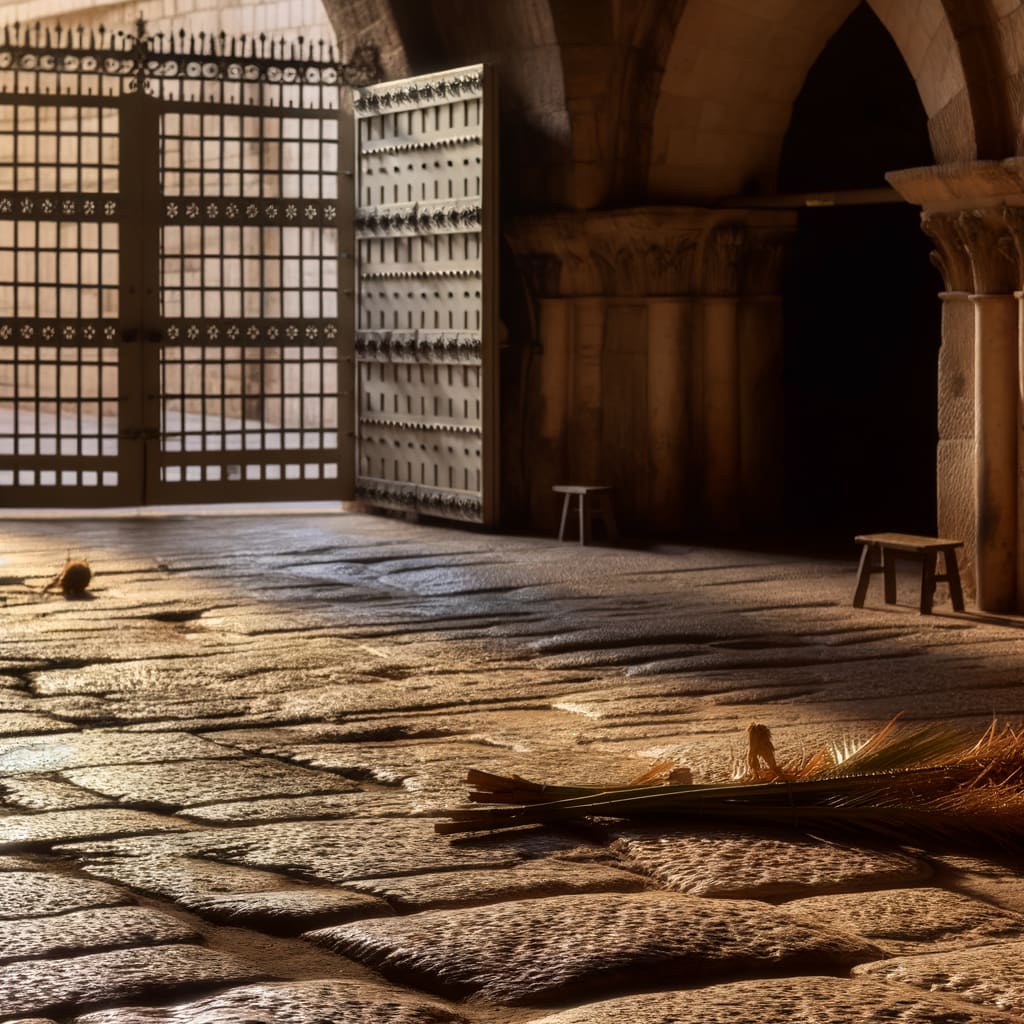
Israeli Forces Block Access to Church of the Holy Sepulchre, Sparking International Backlash
In an unprecedented move, Israeli forces restricted access to the Church of the Holy Sepulchre in Jerusalem during Palm Sunday, causing international condemnation and raising concerns about religious freedoms in the city. The Latin Patriarch of Jerusalem, Cardinal Pierbattista Pizzaballa, and Father Francesco Ielpo, custos of the Holy Land, were denied entry to the church, marking the first time in centuries that the heads of the Catholic Church have been prevented from celebrating Palm Sunday Mass at the Holy Sepulchre.
Background and Context
The Old City in occupied East Jerusalem is home to some of the world's most important religious sites for Muslims, Christians, and Jews. The internationally recognized arrangement known as the Status Quo has governed access and control of these sites. However, recent actions by Israeli authorities, including settler attacks, East Jerusalem evictions, and closures of sacred sites, have been seen as undermining this delicate balance.
Key Developments
Israeli forces' decision to block access to the Church of the Holy Sepulchre, the site for commemorating the crucifixion and resurrection of Jesus Christ, has been perceived as a potent symbolic act. Cardinal Pizzaballa was forced to celebrate the Palm Sunday Mass at the Church of All Nations instead, following the cancellation of the traditional Palm Sunday procession.
In response to the widespread criticism, Israeli Prime Minister Benjamin Netanyahu instructed authorities to grant full and immediate access
to Cardinal Pizzaballa. Israeli police said they reached an agreement with Christian leaders to allow limited prayer at the Church of the Holy Sepulchre, stating that all Christian denominations would be able to worship under a new framework during the ongoing conflict. The details of this agreement are expected to be finalized following further discussions with church representatives.
Reactions and Implications
The blockade has drawn criticism from various quarters. The Vatican expressed irritation, with Cardinal Zuppi expressing solidarity with his colleague and described the act as disgust for a painful event for the many Christians of those lands
. Father Poquillon, director of the École biblique et archéologique française in Jerusalem, suggested that this might be a retaliation against Catholics who criticize war.
Spain's foreign minister summoned the Israeli envoy to Madrid, stating that Catholic worship must be able to be celebrated normally
. The move was also seen as a method to deflect global criticism, with observers noting that granting access to the Latin Patriarch does not address the fundamental issue of a colonial system designed to erase the Palestinian Christian presence.
Conclusion
The current situation represents a significant breach of the Status Quo agreement and has potential implications for interfaith relations in Jerusalem. While limited access has been reinstated, the incident underscores the ongoing tensions surrounding control and access to holy sites in the city. As the conflict continues, it remains to be seen how religious freedoms will be upheld in the face of growing international scrutiny.