
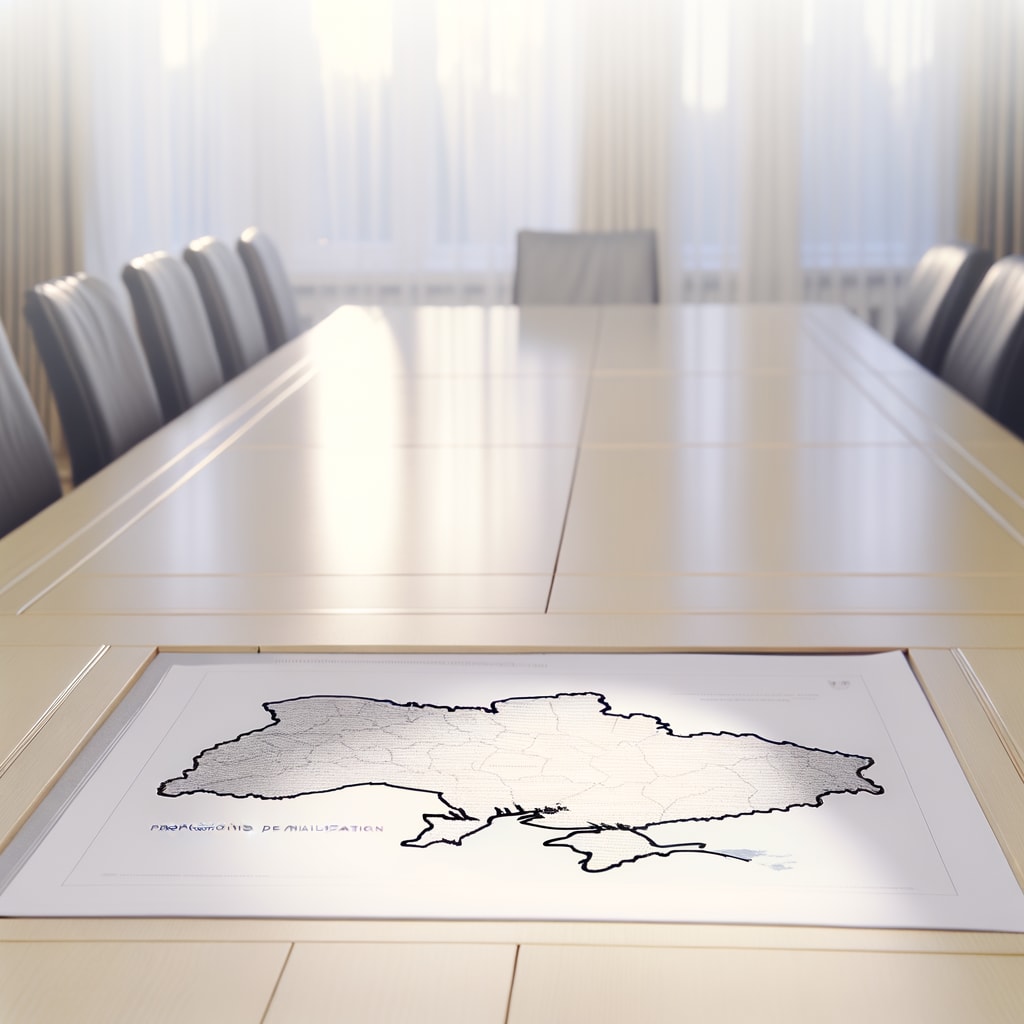
US Proposes Creation of Demilitarized Zone in Ukraine Amid Tensions
Amid ongoing tensions in Eastern Europe, the United States has proposed the creation of a demilitarized zone in Ukraine's Donbas region, according to reports. The controversial plan, which envisions Ukraine and Russia withdrawing their respective forces, has sparked fierce debate and resistance within the Ukrainian political class and society.
Background and Context
Since 2014, Ukraine has been embroiled in a conflict with Russia over the eastern territories of Donetsk and Luhansk, collectively known as the Donbas region. The US's peace proposal, reportedly calling for Ukraine to withdraw its troops from the region in exchange for vague security guarantees, has drawn criticism from Ukraine, which fears it may expose the country to a new attack.
The US Proposal
The proposed demilitarized zone would be established along the entire ceasefire line with a deeper zone behind it where heavy weapons would be excluded, as per TASS. The US plan envisages the Donbas buffer zone as Russian territory, with the specification that Russian forces would not enter this demilitarized area.
President Zelensky revealed that the US has offered to create a free economic zone
in the contested Donbas region. However, he also stressed that any changes in control of these regions should be validated either by an 'election' or a 'referendum'.
Responses and Reactions
In response to the proposal, the Ukrainian President, Volodymyr Zelensky, has floated the idea of a referendum on territorial control, arguing any compromise on territorial issues should be determined by the Ukrainian people.
However, the plan's critics argue that it fundamentally fails to address Ukraine's primary concern: assurance against further Russian aggression. They argue that without firm guarantees that Russia will not simply take over the zone, the plan leaves Ukraine vulnerable.
Current Status and Next Steps
Despite the contentious nature of the proposal, Ukraine appears ready to accept a demilitarized zone as a major concession to end the war. Ukrainian negotiator Mykhaïlo Podoliak told Le Monde that the proposed zone, agreed upon by the United States and Volodymyr Zelensky, would require Ukrainian and Russian forces to retreat from both sides of the front line.
As the negotiations continue, the question of territorial control remains a sticking point. As the war continues, Ukraine and the international community grapple with the difficult task of finding a solution that both ends the conflict and respects the sovereignty and security of Ukraine.