
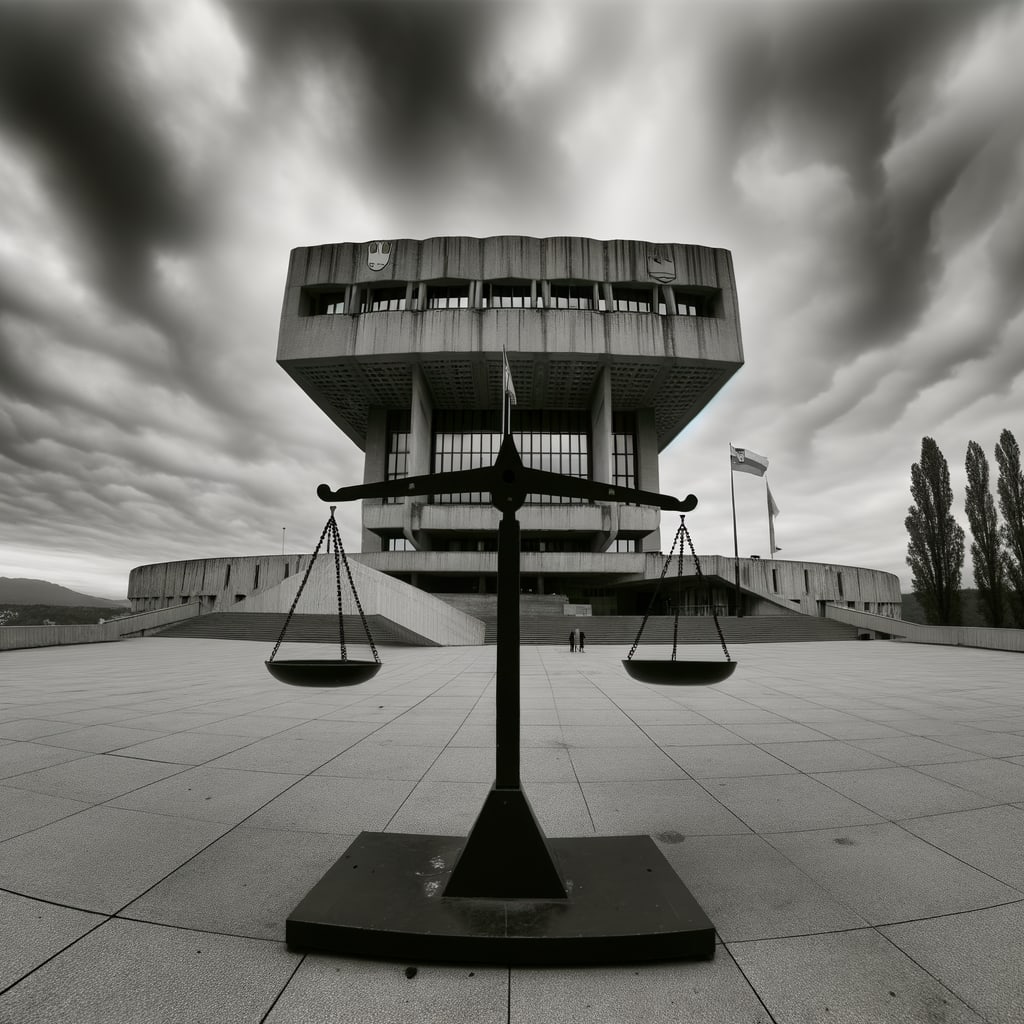
Slovenia's Election: A Struggle for National Identity and Human Rights
In a closely contested parliamentary election, Slovenia has witnessed a battle over the country's identity, with the governing liberal party, Freedom Movement, and the right-wing SDS party at the forefront. The election, held on Sunday, March 22, was marked by allegations of anti-Romany rhetoric and an undercurrent of foreign interference.
The Players in the Race
Incumbent Prime Minister Robert Golob of the Freedom Movement party competed against the right-wing populist Janez Janša, an ally of Donald Trump. The election was seen as a vote on the country's treatment of its marginalized people, particularly the Roma community, as well as its domestic and foreign agenda. With neither party likely to win a majority, smaller coalition partners were predicted to play a crucial role in the formation of the government.
The Campaign and Election Day
Throughout the campaign, there was a surge in anti-Romany rhetoric, leading many to brace for the outcome of the election. While the left-wing government of Robert Golob emphasized its support for Gaza, the right-wing opposition led by Janša favored the policy of the Israeli government. This divergence in views led the government to denounce an 'operation of foreign interference' conducted by an Israeli company just before the elections.
On election day, nearly 1.7 million Slovenians were able to cast their votes. The polling stations opened at 7 am across the Alpine country and closed at 7 pm, with the preliminary election results expected to be announced shortly after.
Election Results and Reactions
Exit polls showed the Freedom Movement party taking a narrow lead over the opposition conservatives in a race that was too close to determine. The ruling liberal party received 29.9% of the votes according to one exit poll. Despite the lack of a clear majority, Prime Minister Robert Golob claimed victory in the legislative elections against former Prime Minister Janez Jansa and his right-wing SDS party.
The Road Ahead
The election results raise questions about the future of Slovenia's domestic and foreign agenda. The outgoing government had focused on social and health reforms but delivered mixed results. The tight race also reflects the struggle for the 'soul' of the country, with both parties laying out starkly different visions for Slovenia's future.
In conclusion, Slovenia's parliamentary election has been a battle for the nation's identity, marked by issues of human rights, foreign interference, and a struggle between liberal and populist ideologies. The role of smaller parties in the formation of the government is yet to be seen, but their influence is likely to be crucial in shaping the country's future direction.