
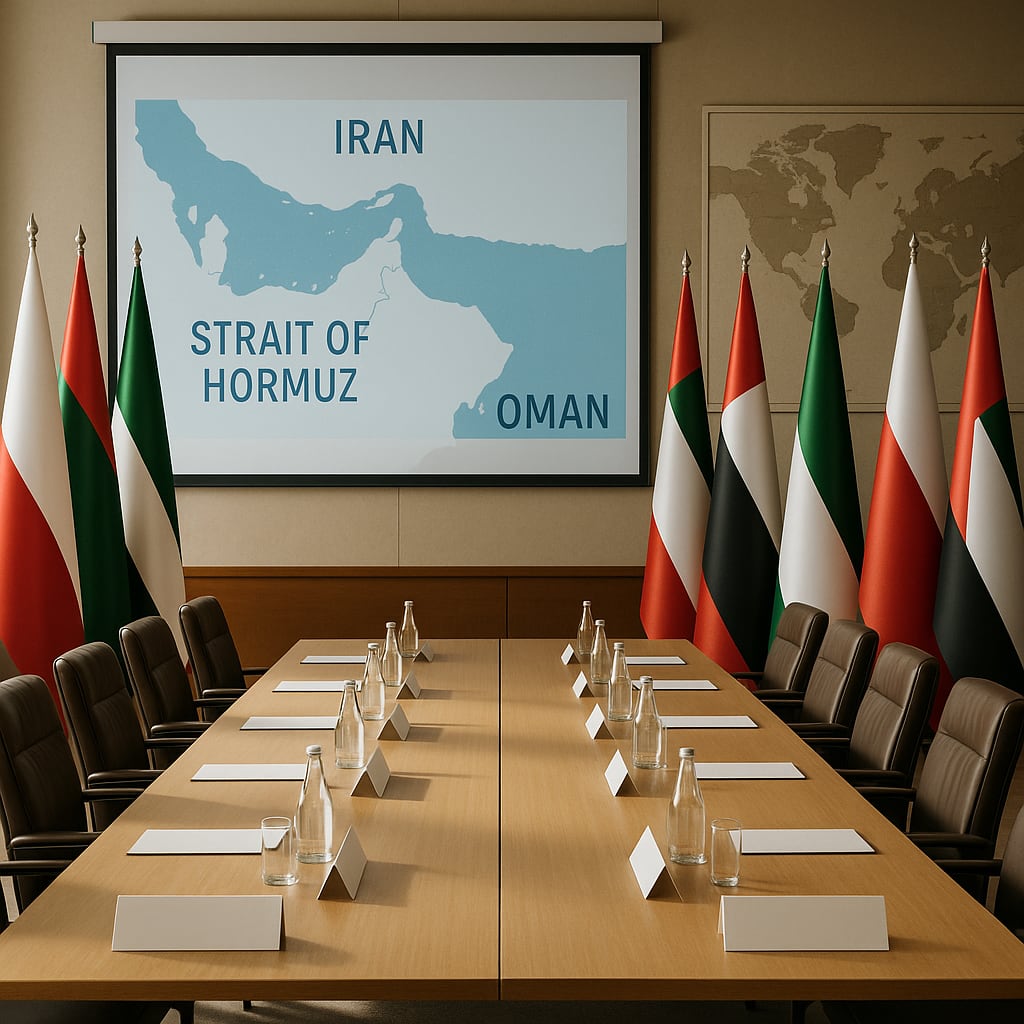
Iran accuses US of breaching ceasefire after strikes in south; US cites self-defence as tensions flare over Hormuz
Iran and the United States traded sharp accusations on 26 May after new US strikes in southern Iran that Tehran described as a “gross violation” of a ceasefire, while Washington said the attacks were carried out in self-defence. Iran’s Islamic Revolutionary Guard Corps (IRGC) said it shot down a US MQ-9 drone and forced another drone and an F-35 fighter jet to retreat after what it called airspace violations, as negotiators were reported to be pursuing talks in Doha.
Background: fragile truce amid Hormuz crisis and talks in Doha
The latest exchange came against the backdrop of a wider crisis centred on the Strait of Hormuz, a vital global shipping chokepoint. In recent days, reporting has pointed to mounting economic and political pressure from disrupted energy flows and elevated oil prices (Deutsche Welle, 22 May; Japan Times, 27 May).
Diplomatic signals earlier suggested an agreement could be within reach. The Times of Israel reported on 23 May that the US and Iran had indicated a deal might be near, quoting then-US President Donald Trump as saying he was “50/50” on an agreement or strikes. The BBC said the 26 May attacks occurred while Iranian and Qatari negotiators were in Doha for peace talks.
Key developments: strikes, drone downing, and competing accounts
Iranian state-linked outlets reported overnight blasts in the southern port city of Bandar Abbas, near the Strait of Hormuz (The Hindu). Al Jazeera said the US stated it struck boats and missile sites in Iran shortly after both sides had indicated progress in peace talks. ANSA similarly reported that the US hit targets in southern Iran, including missiles and minelaying vessels, and that Washington framed the action as self-defence.
Iran, however, said the strikes amounted to ceasefire violations. The BBC reported Tehran condemned the US strikes as a “gross violation” of the truce, a phrase echoed in Al Jazeera’s coverage. RT also reported Tehran’s condemnation, describing the strikes as a “gross ceasefire violation” while officials were meeting mediators in Qatar.
Separately, the IRGC said it shot down a US MQ-9 drone and compelled another drone and an F-35 to retreat after alleged violations of Iranian airspace, warning of a “definite response” to any new ceasefire breach (IRNA). Clarín likewise reported that Tehran downed a US drone, while noting the US said it attacked Iran “in self-defence.”
Reactions and rhetoric: warnings, blame, and civilian impact claims
Iran’s Foreign Ministry spokesperson Esmaeil Baqaei was quoted by IRNA as saying Iran “will neither forget nor forgive” what he described as a US “crime” of targeting civilians in the southern city of Lamerd. Another IRNA report said the Foreign Ministry condemned “aggressive actions” and ceasefire violations by the US and warned Iran would continue defending the country.
Middle East Eye reported Iranian officials vowed not to “leave any act of mischief unanswered,” and separately reported warnings of stronger retaliation if the US and Israel resume attacks. Folha de S.Paulo also described IRGC threats of retaliation following what Iran said were US ceasefire violations.
In contrast, The Times of Israel reported the US said it attacked missile sites despite the ceasefire to defend troops, and that US officials maintained a deal was still possible even after the strikes.
Current status: ceasefire contested as incidents multiply
By 27 May, Al Jazeera published a timeline describing multiple attacks during the ceasefire, including US strikes on southern Iran and Iran’s reported downing of a drone and firing at a fighter jet. With both sides disputing who violated the truce first—and with sharply different framings of “self-defence” versus “aggression”—the ceasefire’s durability appeared uncertain as diplomatic efforts continued in parallel.