
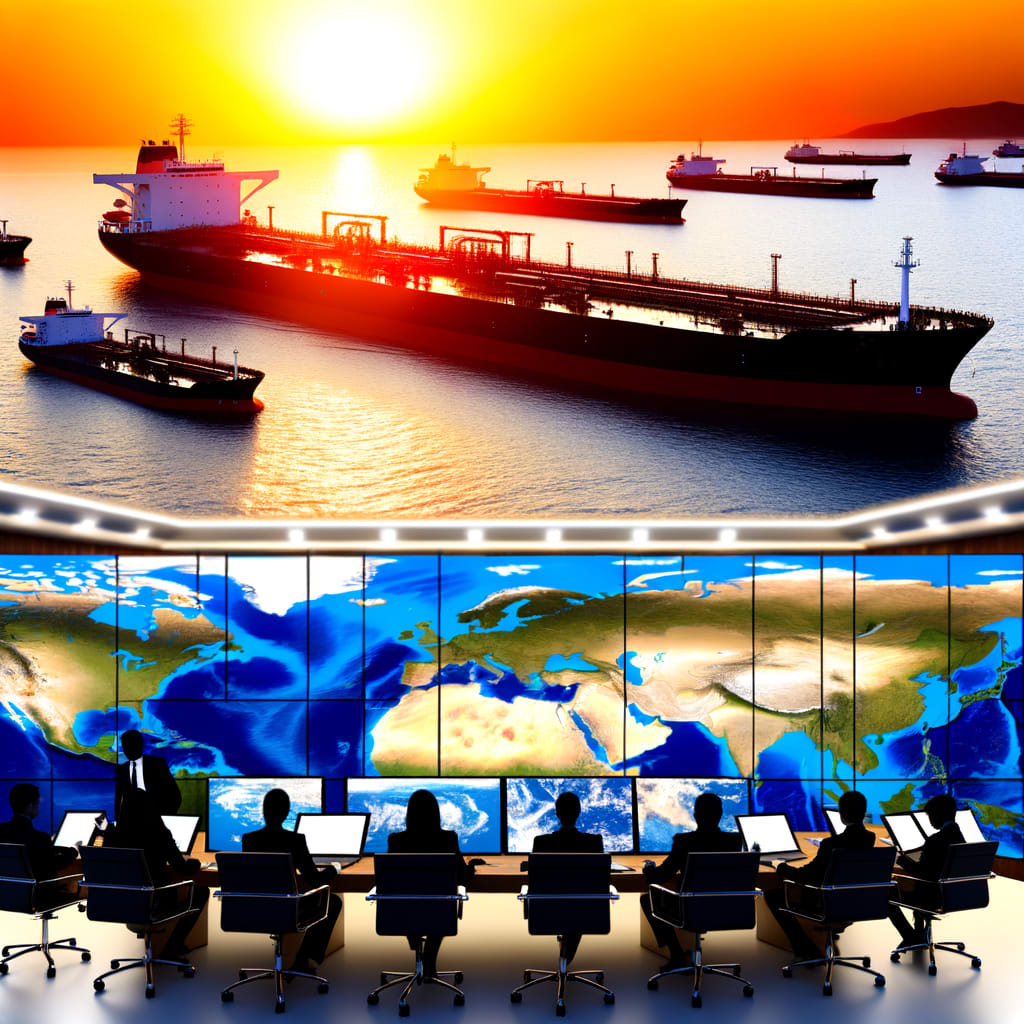
Strait of Hormuz Crisis: Escalating Middle East Conflict Threatens Global Energy Supply
In the wake of escalating US-Israeli conflict with Iran, a blockade of the Strait of Hormuz, one of the world's most strategic waterways, is causing increasing disruption to global energy markets. This escalating conflict has seen oil prices rising and a significant downturn in maritime traffic through the Strait.
Background
The Strait of Hormuz is a key oil and gas export route linking the Persian Gulf with the Gulf of Oman and further with the Indian Ocean. This narrow shipping route carries one fifth of global seaborne crude oil, one fifth of LNG shipments and one third of the most widely used fertiliser. As previously reported, around 20% of global LNG supplies pass through the Strait of Hormuz, and after its closure, they were effectively blocked. This has led to fears of a looming gas market crisis, reminiscent of the crisis in 2022.
Key Developments
An escalating US-Israeli war on Iran has resulted in the Strait of Hormuz being effectively closed to maritime traffic. The Iranian Revolutionary Guard Corps (IRGC) has threatened to set any ship ablaze that attempts to pass through the Strait, an assertion repeated by Ebrahim Jabari, a senior adviser to the IRGC's commander-in-chief. This has had a profound impact on global shipping, with major maritime operators like Maersk and Norden halting their operations in the region. Vessel traffic through the Strait has reportedly dropped significantly, with cargo forced to avoid the strait.
Implications and Reactions
The blockade of the Strait is expected to have significant global implications. Oil prices have begun to rise, and there are fears of soaring prices if the situation continues to escalate. The US has said it will announce measures to mitigate the rising energy prices as Persian Gulf becomes a no-go zone for tankers. Meanwhile, experts also predict a rise in demand for Russian LNG in Asia if the Strait remains closed.
The situation in Iran is also expected to disrupt the logistics structure for major economies such as China, India, and Europe. Maritime insurers have cancelled war risk cover for vessels operating in the Gulf, as the escalating Iran conflict disrupted shipping and sent some freight costs surging.
The head of the Russian Direct Investment Fund, Dmitriev, has expressed concern that the closure of the Strait of Hormuz will cause a significant upheaval in the fertilizer market, putting pressure on the global agricultural sector.
Current Status
The situation remains tense with the Strait of Hormuz effectively closed and global maritime traffic disrupted. Global trade faces fresh disruption as key shipping routes remain suspended. The conflict continues to spill into global supply chains, potentially leading to a new wave of cost-of-living pressures and market disruptions. As the world watches the escalating conflict, the future of global energy supply hangs in the balance.