
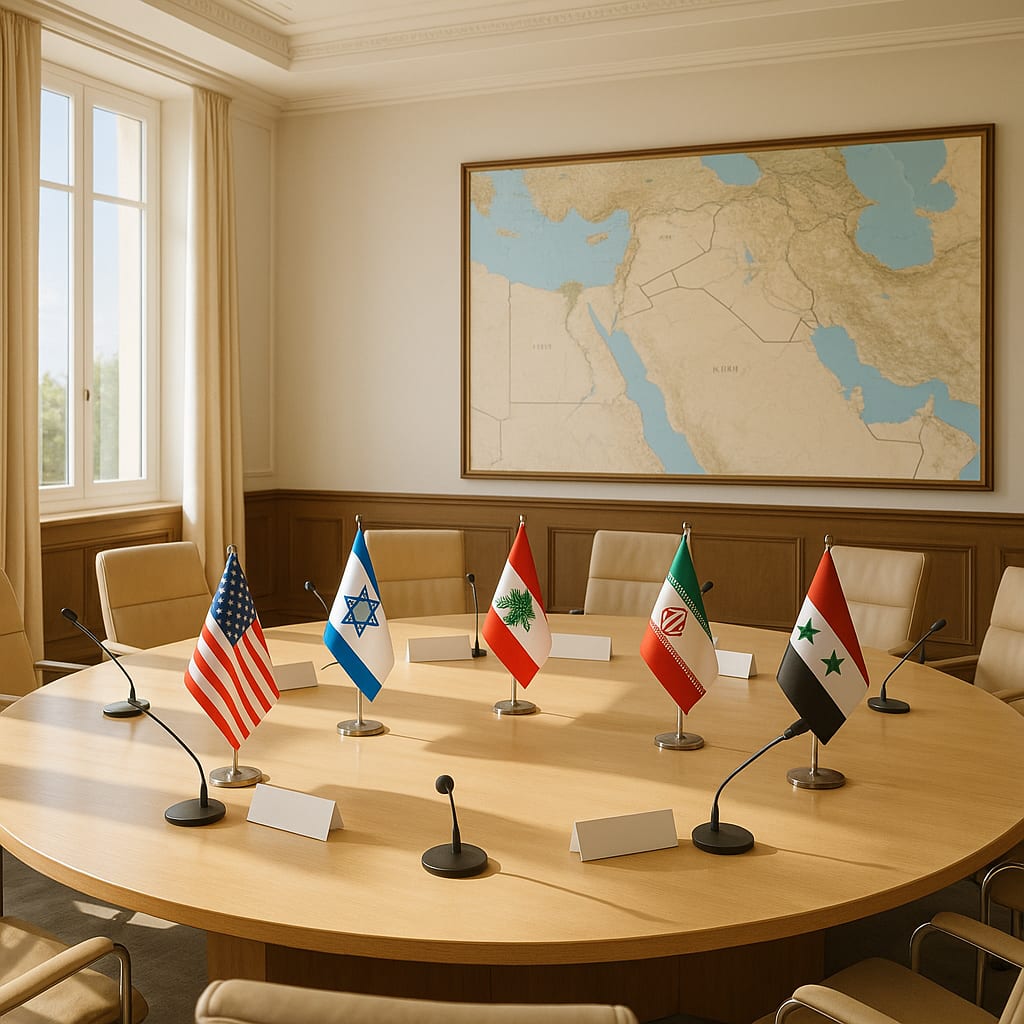
At G7, Trump rebukes Israeli strikes in Lebanon and suggests Syria should confront Hezbollah
Narrative Snapshot
- Russian state outlets spotlight Trump’s praise of Syrian President Ahmed al-Sharaa and his claim that Damascus is “very good with Hezbollah,” elevating Syria as a putative interlocutor or enforcer (TASS; RT). Israeli and Western outlets instead foreground Trump’s assertion of US leverage over Israel and his warning to Iran (Times of Israel; Middle East Eye).
- Regional coverage emphasizes civilian harm and operational conduct in Lebanon. Trump’s line “they’re not all Hezbollah” is highlighted to underscore concerns over Israeli targeting practices (Middle East Eye; Al Jazeera English).
- Implementation gaps loom: reporting says a US–Iran accord could be signed Friday, yet Lebanon was not briefed on terms or ceasefire timing, and disputes over the Lebanon track persist (Middle East Eye; Times of Israel).
- European context frames the moment but does not constrain it: Macron’s G7 choreography contrasts with Israel’s continued strikes despite Trump’s criticism, suggesting limited immediate effect on battlefield decisions (The Guardian; BBC News).
What Happened
At the G7 in France, US President Donald Trump publicly criticized Israel’s recent strikes in Lebanon, including an attack on Beirut’s southern suburbs, saying they “should not have happened” and urging Prime Minister Benjamin Netanyahu to act “more responsibly” (Al Jazeera English; Middle East Eye; BBC News). He said Israel’s campaign against Hezbollah had become “too long, too deadly,” adding that “without the US there’d be no Israel,” and threatened “ultimate consequences” if Iran seeks nuclear weapons (Times of Israel; Middle East Eye). Trump proposed that Syria could “take care of Hezbollah,” praising Syrian President Ahmed al‑Sharaa’s handling of the country and ties to Hezbollah (TASS; RT; Le Monde). In parallel, US and Iranian officials signaled a peace agreement was near, with an accord or MOU expected to be signed Friday in Switzerland, though Lebanon was reportedly not informed of terms or timing (Middle East Eye; Times of Israel). Israel launched fresh strikes on Lebanon the next day (BBC News).
Why It Matters
Trump’s public censure of Israeli operations and his proposal to outsource pressure on Hezbollah to Damascus mark an unusual reframing of who might police the Lebanon front, intersecting with a near-term US–Iran accord (Al Jazeera English; TASS; Times of Israel; Middle East Eye). The episode tests core alliance dynamics: Trump asserts decisive US leverage over Israel even as Israeli strikes continue, while Iranian officials depict US commitments as either unwilling or unable to restrain Israeli action (BBC News; IRNA). Civilian protection is elevated as an explicit criterion for US tolerance of Israeli operations, introducing a conditionality-like signal (Middle East Eye; Le Monde; RT). Procedurally, Lebanon’s reported exclusion from briefings on a prospective deal underscores implementation risk for any ceasefire architecture touching Hezbollah and southern Lebanon (Middle East Eye). The G7 setting highlights Europe’s convening power but limited direct sway over immediate combat decisions (The Guardian; BBC News).
Diverging Narratives
- Role of Syria: TASS and RT amplify Trump’s praise of President Ahmed al‑Sharaa and argue Syria could handle Hezbollah “without killing everybody,” implicitly presenting Damascus as a stabilizing actor (TASS; RT). Western and Israeli outlets report the suggestion but emphasize its novelty and Trump’s simultaneous claim of singular US support for Israel (Times of Israel; Middle East Eye), without endorsing a Syrian role.
- US leverage and credibility: Trump’s “there’d be no Israel” remark projects maximal leverage (Middle East Eye; Times of Israel). In contrast, Iran’s IRNA cites the Beirut strike to argue Washington is unwilling or unable to enforce commitments (IRNA). The BBC notes Israel’s continued strikes despite Trump’s comments, questioning near‑term impact (BBC News).
- Conduct of operations: Middle East Eye and Al Jazeera center civilian harm (“they’re not all Hezbollah”) and Trump’s rebukes (Middle East Eye; Al Jazeera English). Israeli coverage pairs his criticism with his hard‑line warning to Iran and the war’s duration and lethality (Times of Israel).
- Policy coherence: The BBC highlights Trump’s mixed messaging on Iran policy (BBC News video). Times of Israel points to a volatile Trump–Netanyahu dynamic as elections approach (Times of Israel), while The Guardian situates the remarks within a G7 agenda calibrated to keep Trump engaged (The Guardian).
What Happens Next
- US–Iran accord/MOU: Sources anticipate a signing on Friday in Switzerland (Middle East Eye; Times of Israel). Analysts should watch for explicit Lebanon provisions, enforcement mechanisms on Hezbollah-linked fronts, and whether Beirut is formally brought into implementation channels given reports it was not briefed (Middle East Eye).
- Israeli operational adjustments: Trump tied US tolerance to civilian harm, yet Israel continued strikes (BBC News). Indicators to track include any Israeli changes in rules of engagement, public messaging about targeting, or de‑escalatory steps in dense areas (Middle East Eye; Le Monde).
- Syrian involvement: Trump proposed letting Syria “take care of Hezbollah” (TASS; Middle East Eye). Watch for any acknowledgment or rejection from Jerusalem or Damascus, and whether international forums react to or discourage a Syrian role in Lebanon.
- US leverage signals: Trump’s assertion of decisive support and threat of “ultimate consequences” for Iran create space for pressure or inducements (Times of Israel). Look for follow‑on US statements at or after the G7, alignment with European partners, and any linkage between the Iran accord and constraints on Israeli operations (The Guardian; Al Jazeera English).