
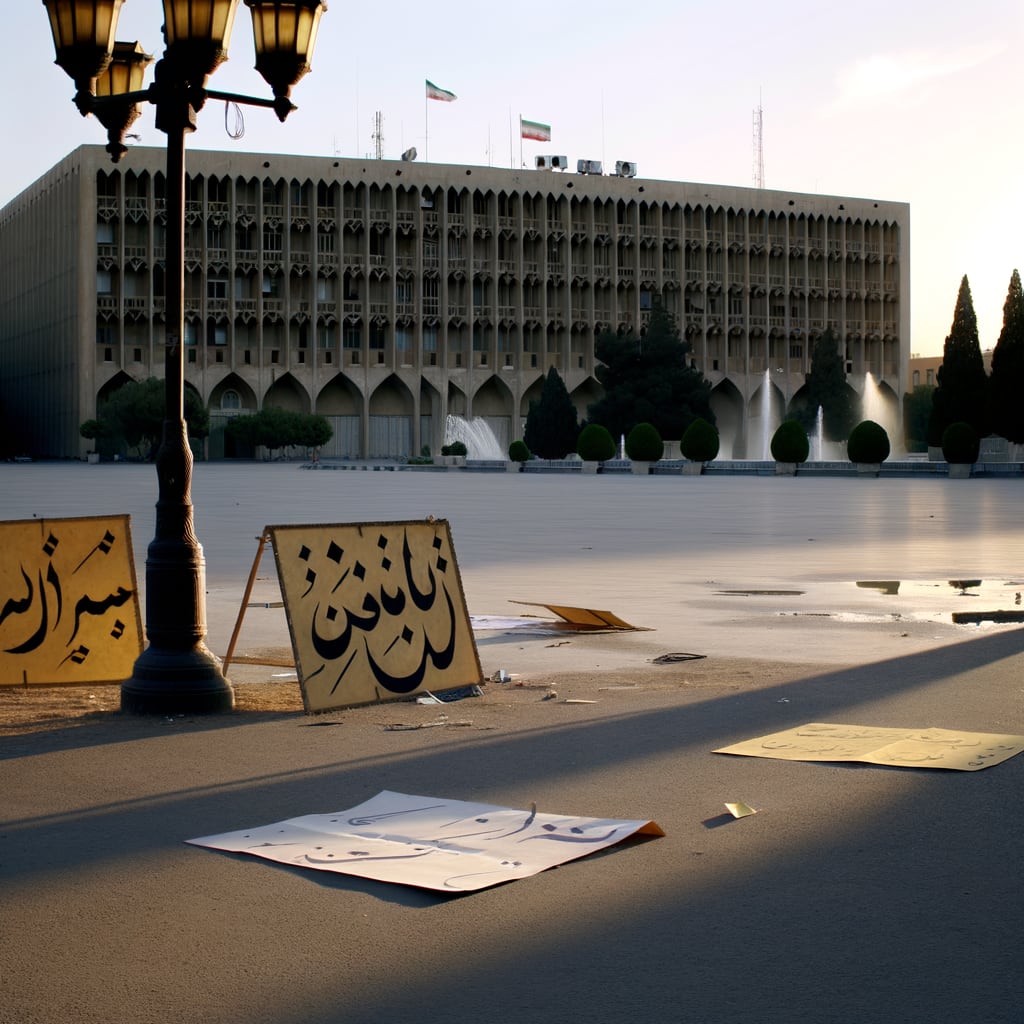
Iran Protests Surge with Echoes of 1979, Amid International Concerns and Reactions
In a wave of civil unrest that is drawing comparisons to the chaos surrounding the 1979 Islamic Revolution, Iran is witnessing a surge of protests and violence. Iran's state television has even recalled the violence that led to the ouster of the shah, indicating the regime's concern over the current uprising and its efforts to recharacterize the unrest1. The international community, from Europe to Brazil, is voicing support for the protesters and expressing alarm at the brutal crackdown by the Iranian regime23.
Echoes of 1979 Revolution and a Nation's Hope
The recent protests in Iran are seen as a continuation of a decades-long struggle for freedom and democracy, with echoes of the 1979 Islamic Revolution. The uprising has evoked memories of similar protests and violence that led to the ouster of the shah and the establishment of the Islamic Republic145.
Among the Iranian diaspora, there is a sense of hope and solidarity with the protesters. Many Iran's exiles in Europe are rallying together against the regime, expressing hope for an end to theocratic rule and the creation of a democracy6. These sentiments are shared by those who have experienced the suppression of protests firsthand, like Mahyar, an Iranian student in Italy7.
Brutal Crackdown and International Outrage
The Iranian regime's response to the protests has been marked by brutal force, resulting in numerous reported deaths8. Images of protesters' bodies have provoked shock and outrage around the world, including among Iranian women living in Germany910. There are also concerns about the activities of Iranian secret services, believed to have targeted Iranians in exile11.
Internationally, support for the Iranian protesters has been widespread. In France, thousands marched in solidarity with the Iranian people, showing their support for the protests12. Similar reactions were observed in other countries, although the Brazilian left's response has been divided between silence and criticism of the regime3.
The Future of Iran: War or Dialogue?
The protests in Iran have also triggered debates on possible international responses. The U.S. has been considering various options, including cyberattacks and military strikes2. Meanwhile, Iran's Foreign Minister Abbas Araghchi stated that his country is ready for war but also for dialogue, in response to U.S. threats13.
Conclusion
As Iran grapples with its most significant civil unrest since the 1979 revolution, the international community is closely watching the developments. The hope for a democratic Iran is being matched by concerns over the brutal crackdown on protesters. The future of Iran now hangs in a delicate balance between international pressures, the resilience of its people, and the responses of a regime under siege.