
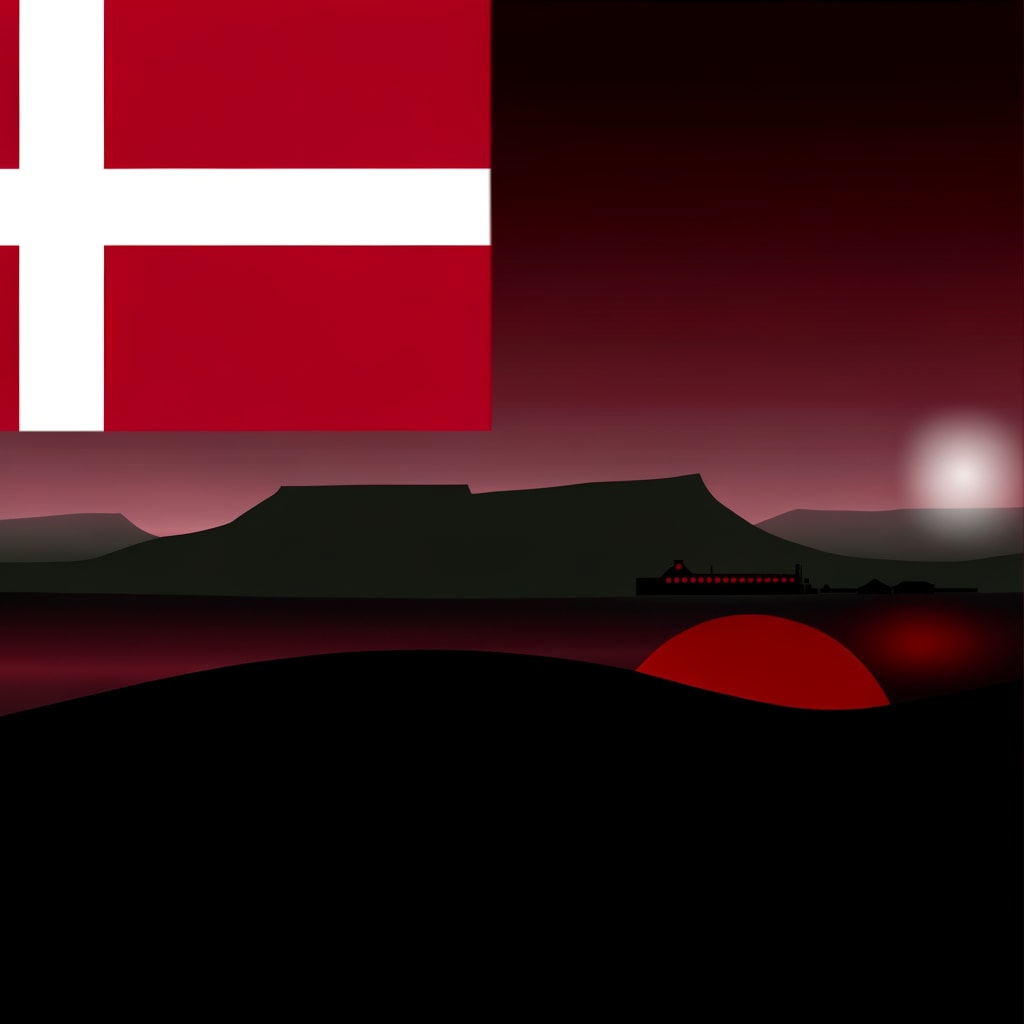
Tensions Rise Over Greenland as European Forces Arrive Amid US Takeover Threats
As President Donald Trump aggressively pursues his ambition to acquire Greenland, international tensions are escalating. European forces, led by Germany, have begun to arrive in the island territory, a move seen as a counter to Trump's threats. The President's assertive stance has triggered a media frenzy and sparked reactions from all corners of the globe, raising questions about the future of the transatlantic alliance and the international balance of power in the Arctic region.
Background
Trump's interest in Greenland, a semi-autonomous Danish territory, has been an open secret for years. The US President has repeatedly stated that controlling the mineral-rich island is essential for US national security, given the rising military activity from Russia and China in the Arctic. Despite Greenland's repeated insistence that it is not for sale, Trump has declared that the US will acquire the territory one way or the other.
European Involvement and Growing Tensions
In response to Trump's threats, European countries, including France, Germany, and Norway, have begun deploying military forces to Greenland. According to the German Defense Ministry, 13 troops were sent to the island last Wednesday to study potential military contributions to support Denmark in maintaining regional security. The move, however, has not been without criticism. Experts warn that the European military presence could provoke the Pentagon to strengthen its foothold in the region.
Global Reactions and Political Implications
Trump's assertive stance on Greenland has drawn a mixed bag of reactions from the international community. While some countries and political factions are siding with the US, others are standing firmly against Trump's threats. French Finance Minister Roland Lescure, for example, has warned the US that any attempt to seize Greenland would cross a red line and jeopardize economic ties with the EU. On the other hand, Denmark's Foreign Minister Lars Løkke Rasmussen has admitted shared concerns over Greenland's vulnerability to Chinese and Russian influence.
The situation has put the transatlantic alliance under considerable strain. Some European officials believe that a US attempt to annex Greenland could shatter the NATO alliance. Meanwhile, others, including former British ambassador to Washington Peter Mandelson, have criticized EU leaders for their hysterical
reaction to Trump's plan.
Greenland's Position
Despite the mounting international pressure, Greenland has remained firm in its decision. Its Prime Minister, Jens-Frederik Nielsen, has stated that given a choice between Denmark and the US, Greenland would choose Denmark. Greenland and Denmark have also announced a new diplomatic channel for their fundamental
disagreements over the territory with the US, thereby showing a united front against the US threats.
Conclusion
With the situation in Greenland testing Western unity, the future of the Arctic island remains uncertain. As the US, Denmark, and Greenlandic officials fail to defuse tensions, the world watches on, waiting to see how far Europe will go to defend Greenland from Trump's ambitions, and what the potential implications could be for the transatlantic alliance and international law.