
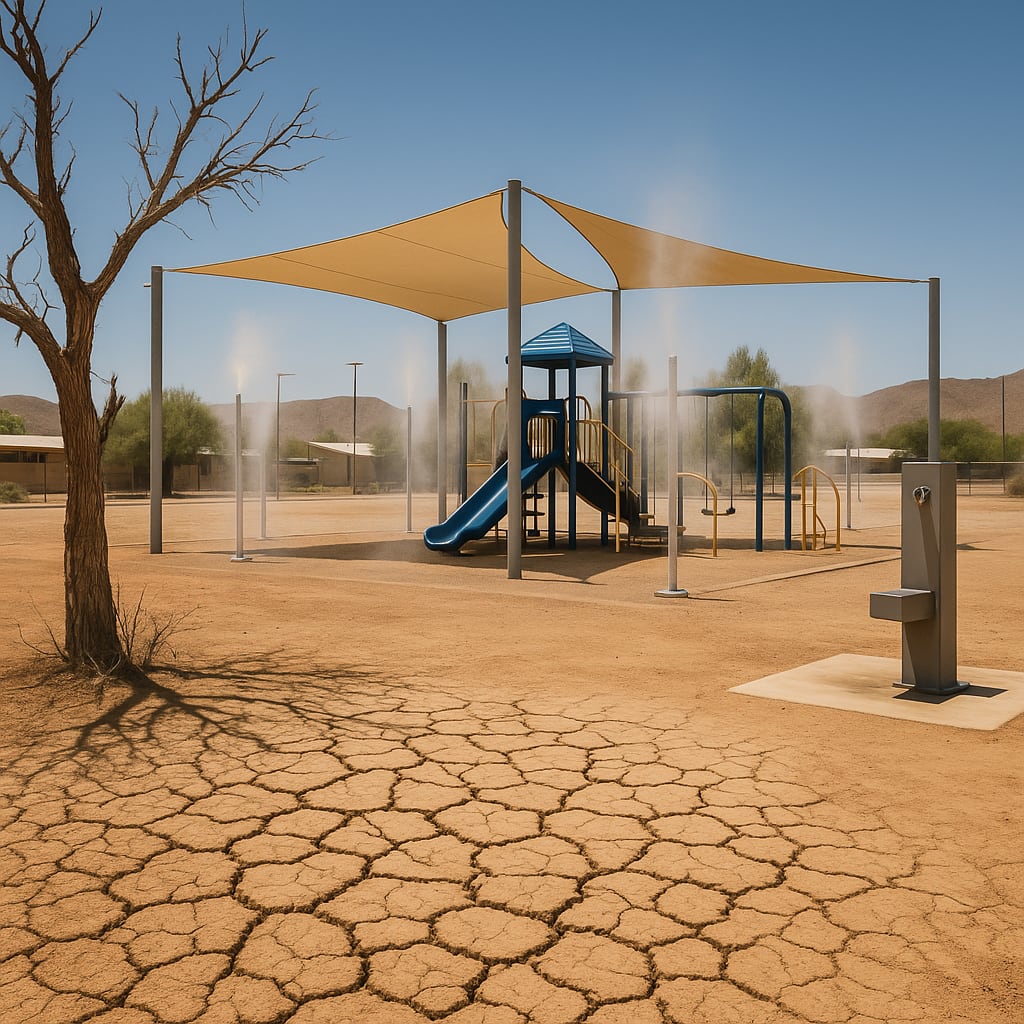
UNICEF warns that about half of the world’s children face three or more overlapping climate hazards
Narrative Snapshot
- Convergence on scale, divergence on lenses: Global outlets align on UNICEF’s finding that roughly half of children face at least three hazards, but emphasize different entry points—exposure counts (Japan Times, Guardian), country spotlights (Le Monde on Chad; Folha on Brazil), and sectoral impacts (AllAfrica on health systems; Japan Times on labor).
- Regional asymmetries are foregrounded differently: Le Monde highlights extreme concentration in Chad (>95% of children facing drought, extreme heat and heat waves), while Folha reports a lower—yet significant—Brazilian figure (3 in 10). The Guardian underscores near-universal exposure to at least one hazard, including in high‑income countries.
- Immediate risk amplifier: The Guardian’s El Niño reporting situates the UNICEF findings in a near-term context of likely intensified extremes.
- Policy fault line: Fox News frames U.S. climate policy through energy affordability and opposes the “climate change agenda,” contrasting sharply with health- and child‑risk framings elsewhere.
What Happened
UNICEF released a report mid‑June 2026 finding that about half of the world’s children are exposed to at least three overlapping climate hazards (The Guardian; Japan Times). The agency identifies drought, extreme heat and heat waves as the most common combination, affecting 296 million children; in Chad, more than 95% of children face that trio (Japan Times; Le Monde). National snapshots vary: in Brazil, three in ten children and adolescents already face three or more climate threats (Folha de S.Paulo). The Guardian reports that almost every child worldwide is exposed to at least one hazard. Parallel coverage points to intensifying near-term drivers: meteorologists confirmed a strong El Niño, expected to turbocharge extremes on top of human‑driven warming (The Guardian, June 11). Reporting links these exposures to concrete impacts—strained health systems in Africa (AllAfrica) and dangerous heat‑work tradeoffs in Delhi (Japan Times, June 14).
Why It Matters
The findings sharpen policy salience across multiple arenas. With Africa positioning health as a strategic frontline ahead of the Bonn Climate Conference, the UNICEF exposure lens reinforces arguments to integrate child health, disease burdens, and heat stress into climate planning and finance (AllAfrica). The Guardian’s and Japan Times’ framing of near-universal exposure, including in high‑income countries, underscores that adaptation and risk reduction are no longer peripheral but core social policy. Le Monde’s focus on Chad’s extreme concentration of risk highlights where humanitarian systems may intersect with climate policy. The emergence of a strong El Niño (The Guardian, June 11) adds urgency for contingency planning in heat, drought, and flood management. In the United States, Fox News’ emphasis on energy affordability and opposition to climate policy points to domestic political constraints that can shape international commitments and resourcing for adaptation and child‑focused measures.
Diverging Narratives
- Scale and specificity: Headlines vary between “half” and “nearly half,” while UNICEF’s subset figure—296 million children facing the drought/heat/heat‑wave trio—offers precision without contradicting the larger exposure estimate (Japan Times; The Guardian). Le Monde’s Chad example illustrates concentration, whereas Folha emphasizes a lower national share in Brazil.
- Who is most at risk—and how: AllAfrica frames climate change primarily as a public‑health emergency with system‑level strain from heatwaves, floods, droughts, and storms. Japan Times’ Delhi reporting foregrounds labor vulnerability and income–health tradeoffs in extreme heat. The Guardian stresses that exposure spans income levels, countering an assumption that risk is confined to low‑income countries.
- Drivers and near‑term amplifiers: The Guardian links a newly formed El Niño to likely surges in extremes atop fossil‑fuel‑driven warming, situating UNICEF’s findings in a worsening short‑run risk environment.
- Policy framing and tradeoffs: Fox News advances an affordability‑first argument in U.S. politics, endorsing dismantling climate policy to lower energy costs and citing fossil fuels’ dominant share of U.S. energy use. This stands apart from child‑risk and health‑system framings elsewhere and signals contested domestic mandates for mitigation and adaptation spending.
What Happens Next
- Health at Bonn: African stakeholders are elevating health as a strategic priority ahead of the Bonn Climate Conference (AllAfrica). Watch for whether negotiations and side processes explicitly integrate child health, heat preparedness, and disease surveillance into adaptation planning and support.
- Heat and labor protections: With Delhi’s workers facing longer, hotter summers and stark wage–health choices (Japan Times, June 14), track municipal and national moves on heat standards, work‑rest cycles, and income protection during heat alerts.
- El Niño trajectory: Meteorologists expect a strong event likely to intensify extremes (The Guardian, June 11). Monitor seasonal outlooks, heatwave early warnings, drought management measures, and flood preparedness to gauge near‑term child‑risk mitigation.
- U.S. energy–climate posture: The Fox News op‑ed signals domestic political arguments prioritizing affordability and opposing climate policy. Watch budget signals, regulatory shifts, and international positioning that could affect adaptation finance and cooperation relevant to child exposure.
- Country risk targeting: UNICEF’s highlighted hotspots—e.g., Chad’s >95% exposure to the drought/heat/heat‑wave trio and Brazil’s 3‑in‑10 figure (Le Monde; Folha)—create benchmarks. Track whether national plans, donor programs, or UN agency initiatives reference these metrics in allocating resources.