
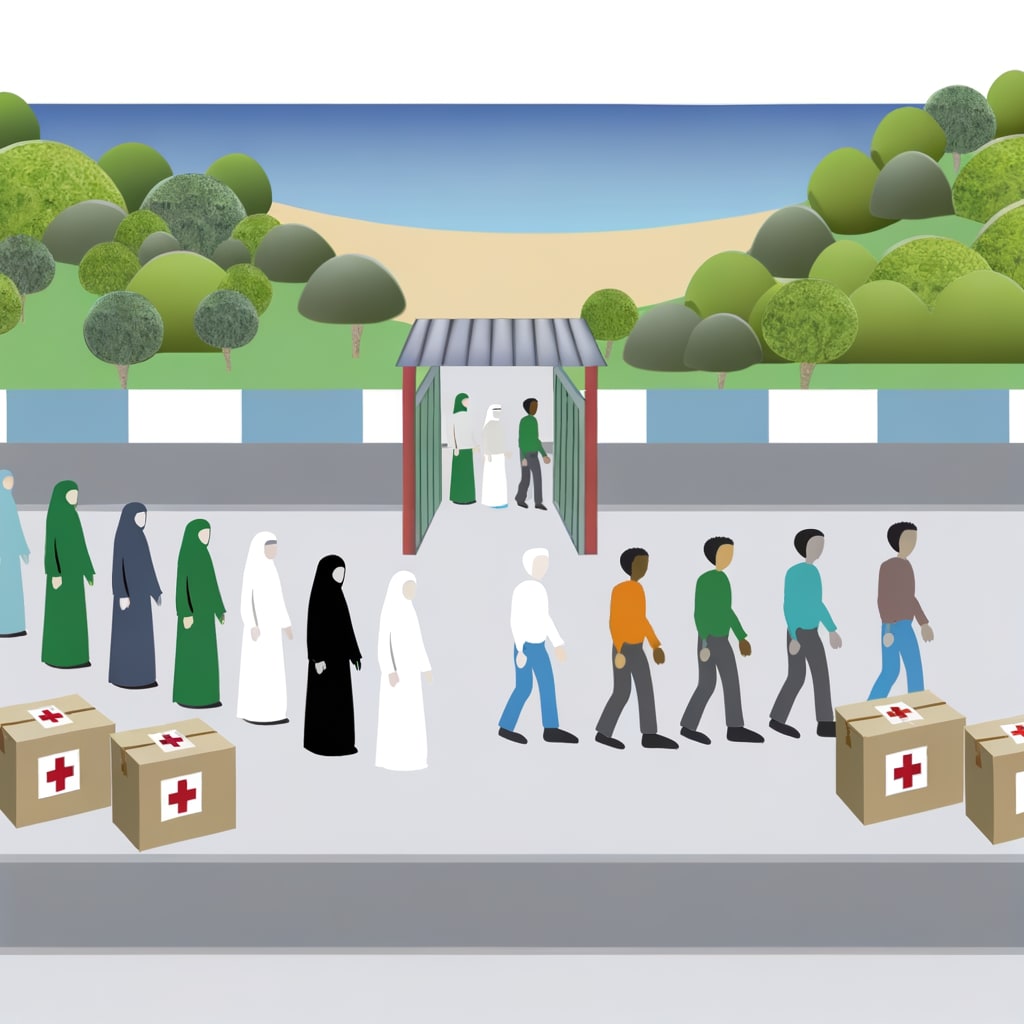
Israel Reopens Rafah Border Crossing Amid Controversy
In the midst of escalating tension, Israel has partially reopened the Rafah border crossing with Egypt, a significant development under the terms of the US-brokered Israeli-Hamas ceasefire agreement. Simultaneously, Israel has banned international medical charity Doctors Without Borders (MSF) from operating in Gaza and the occupied West Bank, sparking controversy.
Background and Context
The Rafah border crossing, Gaza's gateway to the world, was seized by Israel in May 2024 and remained largely closed until its recent partial reopening. According to multiple sources, including Sky News World, Al Jazeera English, and Fox News, this reopening has been far from straightforward, with only limited numbers of individuals permitted to cross and no goods allowed to enter the war-torn territory.
Key Developments
The Rafah border crossing is now operational for foot traffic only, with the operation coordinated with Egypt. However, the Israeli military agency COGAT, which controls aid to Gaza, has placed strict restrictions on the crossing. According to Fox News, only a small number of people are permitted to travel in either direction, and commercial goods will not be allowed to pass through the crossing.
Meanwhile, Doctors Without Borders (MSF) has been banned from operating in Gaza and the occupied West Bank by Israel, as reported by Tehran Times. The ban was enacted after MSF refused to hand over a list of its Palestinian and international staff.
Implications and Reactions
The partial reopening of the Rafah border crossing is largely symbolic, given the restrictions in place and the low numbers of individuals permitted to cross. Health officials in Gaza have reported that tens of thousands of residents with urgent medical needs are seeking evacuation through Rafah, highlighting the pressure on the crossing even as access remains tightly controlled.
The ban on MSF has raised concerns over the medical treatment of Palestinians, particularly those in prison. Middle East Eye reports that Palestinians detained in Israeli prisons are dying in unprecedented numbers due to medical neglect. This situation has been exacerbated by the recent death of a young Palestinian man in Israel’s Megiddo prison, further highlighting the critical need for medical aid in the region.
Egyptian authorities have expressed readiness to deliver humanitarian aid to Gaza and receive wounded Palestinians once the Rafah border crossing is fully reopened, as reported by Middle East Eye. However, the current restrictions on the crossing and the ban on MSF have created significant obstacles to this plan.
Conclusion
The partial reopening of the Rafah border crossing represents a significant development in the Israeli-Hamas ceasefire agreement. However, the current restrictions on the crossing and the ban on MSF have sparked controversy and raised concerns about the access of Palestinians to medical care. The situation remains fluid, with the potential for further developments in the coming days and weeks.