
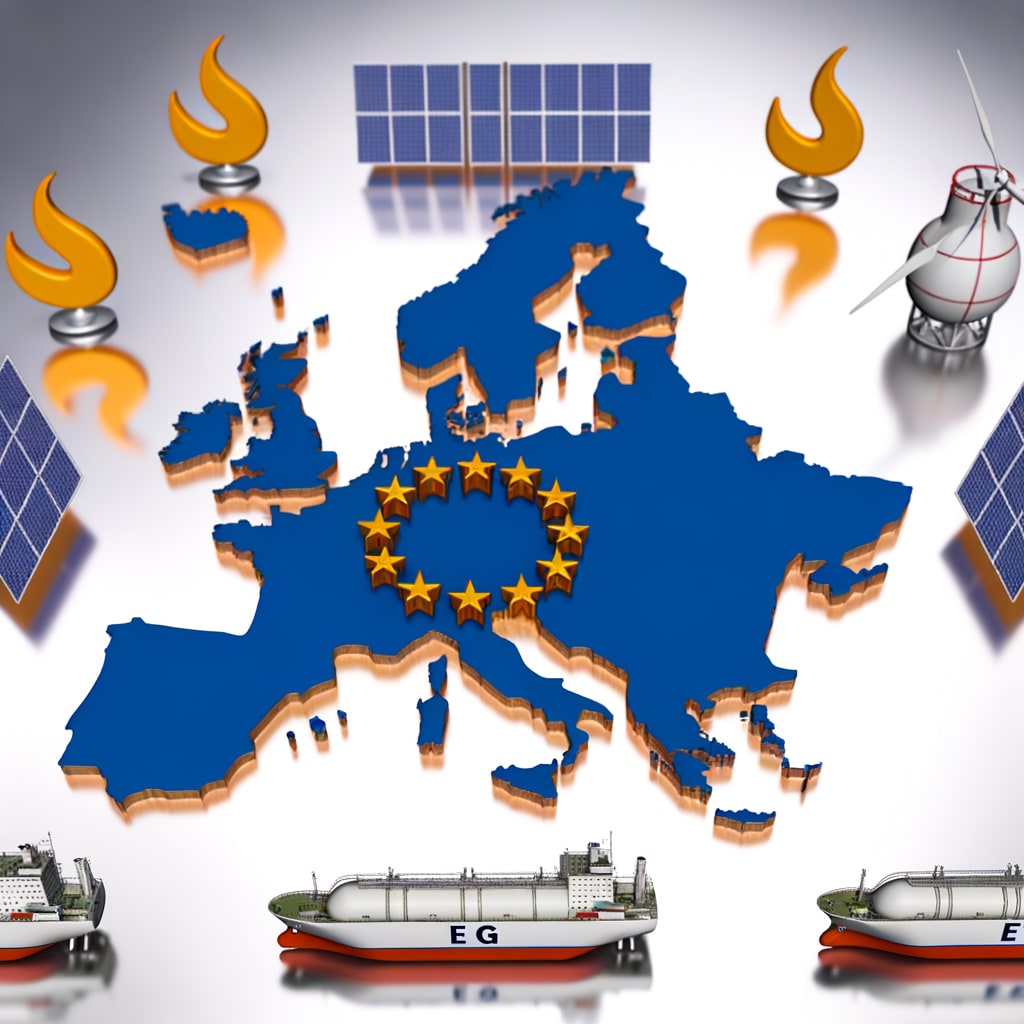
Europe to Phase Out Russian Gas Imports by 2027, Sets New LNG Import Record
The European Union (EU) has reached a landmark agreement to cease all Russian gas imports by autumn 2027, marking a significant shift towards energy independence. According to European Commission President, Ursula von der Leyen, the move represents the dawn of a new era
. Meanwhile, Europe has set a new record for LNG imports in November, with an overall increase of 28% since the start of the year.
A Strategic Move Towards Energy Independence
The phased ban on Russian gas imports comes as part of a larger European strategy to diversify energy sources and strengthen energy security. This decision follows significant reductions in Russian gas supplies amidst ongoing geopolitical tensions. A permanent ban on Russian gas imports indicates a gradual but definitive end of Russian gas imports to Europe, with LNG supplies phased out by December 31, 2026, and pipeline gas by September 30, 2027.
The European Commission has proposed a complete ban on Russian oil imports to the EU by early 2026. As per the deal, member states will have to submit national diversification plans outlining measures to diversify their gas and oil supplies by March 1, 2026.
Reactions and Implications
President von der Leyen hailed the decision as a historic day
for the EU. Despite this, she acknowledged that EU countries continue to purchase 13% of imported gas from Russia. Critics from the Kremlin suggest that Europe's move towards energy independence will make it dependent on expensive gas and may result in losing its leadership.
It is worth noting that the decision to cease Russian gas imports also aims to cut Russia's funding for its war in Ukraine. The EU has committed to covering Ukraine's financial needs in 2026 and 2027, with the European Commission previously estimating the cost at 135.7 billion euros. The European Commission will soon present a legal text of proposals for the expropriation of Russian assets.
The Dawn of a New Era
The decision signifies a robust move towards the full energy independence of Europe from Russia. With the ban on Russian energy marking a 'new era' of energy independence for the EU, the geopolitical and economic landscape of the region is set for significant changes. Europe's increasing reliance on LNG imports, as evident from the new record set in November, will play a crucial role in this transition.
Despite the ambitious goals, the road to energy independence will undoubtedly present challenges. Balancing the need for secure energy supplies, managing costs, and maintaining leadership in the global energy market will be critical factors in the success of this strategy. Nevertheless, the EU's commitment to energy diversification and security demonstrates a significant step towards a new era of energy independence.