
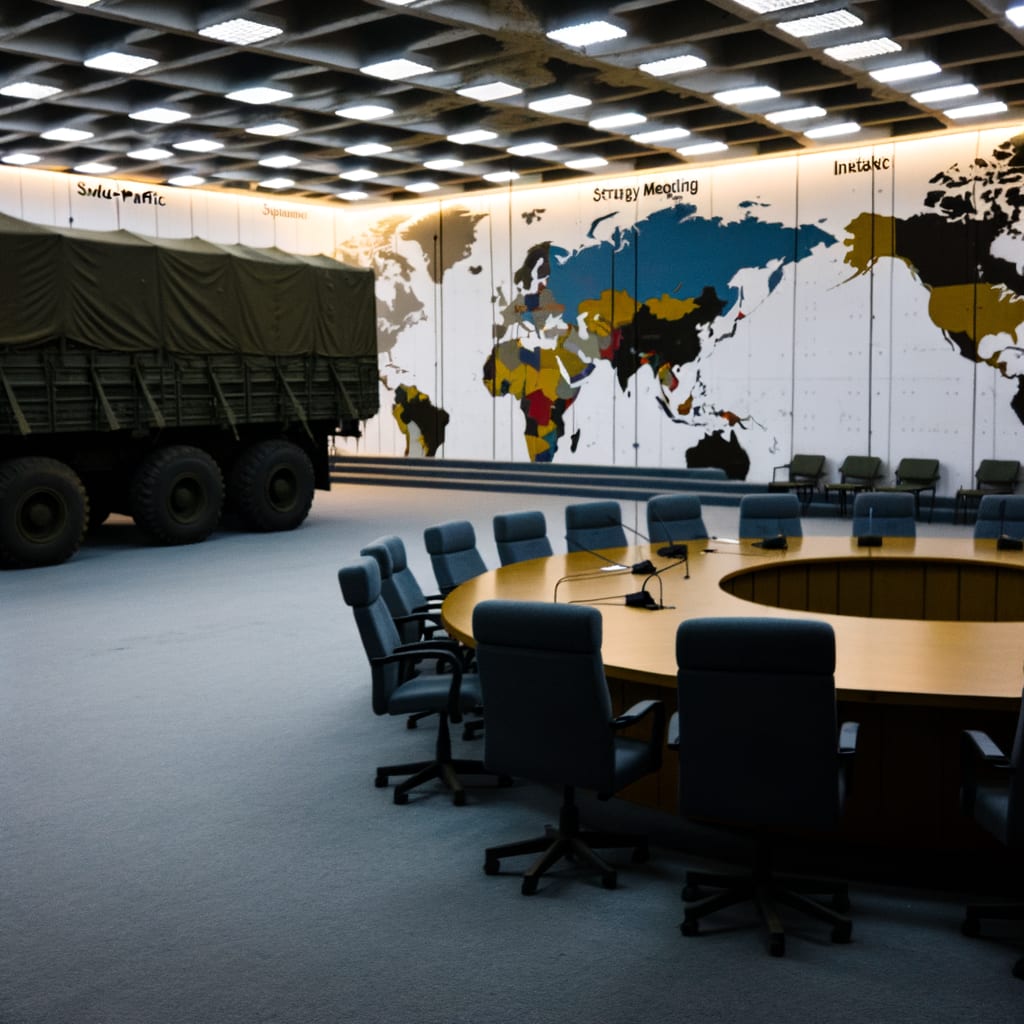
US to Reduce Troop Presence in Eastern Europe, Focusing on Indo-Pacific Region
The United States has announced plans to decrease its military footprint in Eastern Europe, specifically in Romania, a move that will reportedly affect the total number of US troops stationed in several NATO countries. The decision, which comes amid the ongoing conflict between Russia and Ukraine, is part of a broader strategy shift, according to multiple sources.
US Military Reassessment and Rotation Suspension
The reduction involves the suspension of rotation in Europe of a brigade that had units stationed in Romania, Hungary, Bulgaria, and Slovakia, announced the Romanian Ministry of Defense. The contingent in Romania will be reduced by about 700 personnel, leaving around 1,000 US troops remaining in the country. The U.S. Department of War also confirmed the redeployment of the 2nd Infantry Brigade combat team of the 101st Airborne division back to the United States on a permanent basis, with no replacement planned.
Romania’s Defense Minister, Ionut Mosteanu, stated during a press conference that European NATO members had been informed of the US decision on Monday. He emphasized that the decision was not a disaster
for the Eastern European nation's security, and it was unrealistic
to expect a large foreign presence.
Reactions and Implications
The US Army has denied that the move is a sign of lessened commitment to NATO. In a statement, US Army Europe and Africa clarified that the force posture adjustment is a positive sign of increased European capability and responsibility,
and not an American withdrawal from Europe.
US Permanent Representative to NATO Matthew Whitaker did not comment directly on the troop pullout but emphasized that Romania has been demonstrating increased capability and responsibility
over recent years.
The European Commission also commented on the US decision, stating that the troop reduction will not affect the EU's plans to build up its own defense capabilities under its roadmap extending to 2030.
However, the decision has drawn concern from some quarters regarding the security implications for NATO's eastern flank, particularly in light of the ongoing Ukraine-Russia war.
The Strategic Shift to Asia
The reduction of troops in Eastern Europe is part of a broader strategy of the US shifting its focus to the Indo-Pacific region, Mosteanu added. This aligns with the Trump administration's stance, which has repeatedly insisted that European allies boost military spending while the US pivots towards the Asia-Pacific region.
Conclusion
Despite concerns, the Pentagon has downplayed the impact of the decision, stating that it will not change the security environment in Europe.
The US maintains that the move is part of a balanced strategy that reflects the increased capability and responsibility of European nations within NATO, and is not indicative of a lessened commitment to the alliance. However, the decision has sparked a debate about the potential implications for the region's security, especially in the context of the ongoing Russia-Ukraine conflict.