
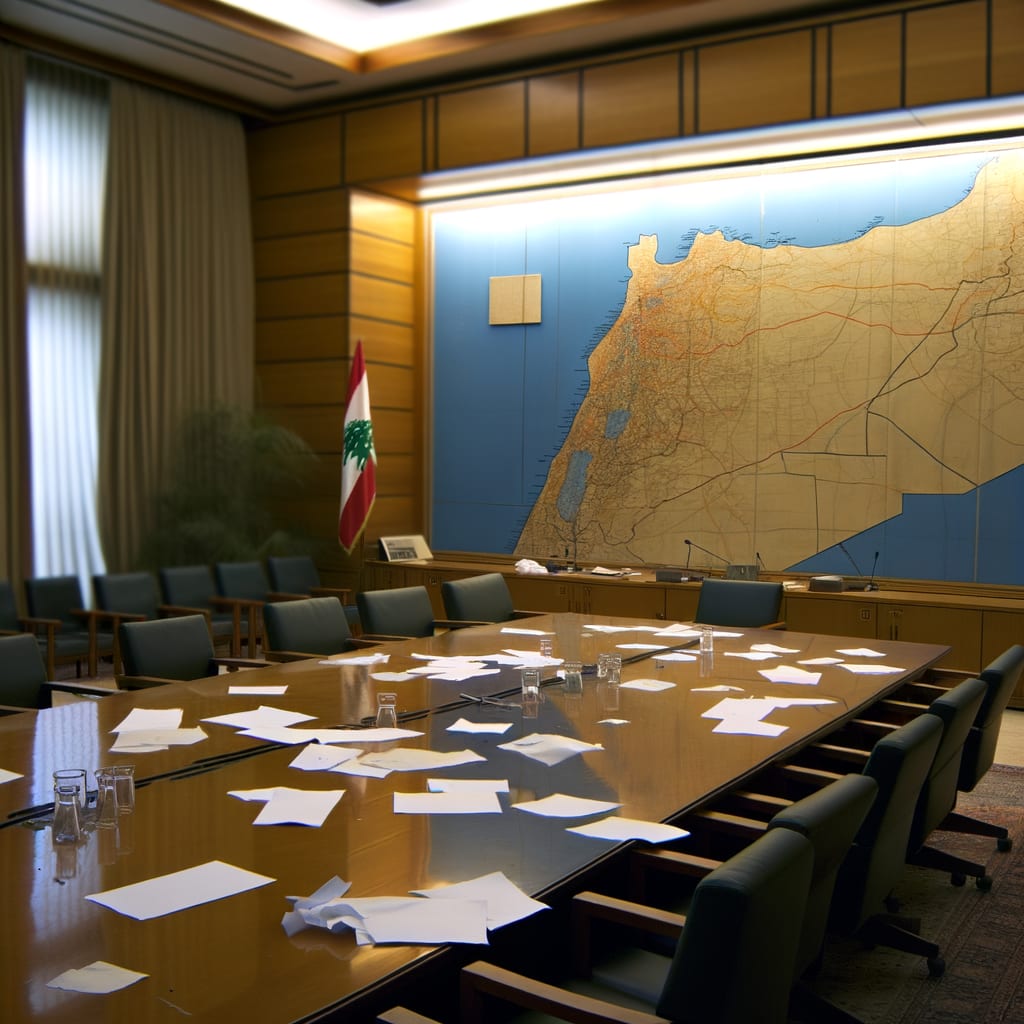
Lebanon in Crisis: Hezbollah-Israel Conflict Intensifies amid Political Uncertainty, Displacement Crisis
Lebanon finds itself in a precarious situation as the conflict between Hezbollah and Israel intensifies, causing a new displacement crisis and political turmoil. Pressure mounts on the Lebanese government from various fronts as the Middle East war expands, with Hezbollah returning to its guerrilla roots and the Lebanese state grappling with internal disagreements.
Background and Context
The Islamic Resistance Movement of Hezbollah has been under pressure from the Lebanese state to disarm after being significantly weakened in the 2024 war. The current conflict erupted following Hezbollah opening fire on Israel to avenge the killing of Iran's supreme leader, arguing to pre-empt an Israeli attack12. This has led to a series of Israeli attacks, resulting in over 570 deaths and approximately 700,000 displaced persons in Lebanon3.
Key Developments
In response to the escalating violence, Lebanese President Joseph Aoun has called for negotiations with Israel to end the Hezbollah conflict and outlined a path towards 'permanent security and stability'4. However, his stance faces a challenge from Hezbollah, which continues to fight against Israel5. The situation is further complicated by disagreements within the Lebanese government. Prime Minister Nawaf Salam is reportedly considering the dismissal of army chief Rodolphe Haykal due to conflicts over how to address Hezbollah2.
Meanwhile, Hezbollah continues to launch attacks on Israel, with Israeli warplanes bombing Beirut's suburbs in retaliation6. The escalating conflict has caused a wave of displacement, with many families seeking refuge in school shelters3.
International Reactions and Aid
The international community has responded with both concern and assistance. The Canadian government expressed alarm over the escalating violence, calling on all sides to uphold humanitarian law7. The European Union plans to provide €100m ($115.85m) in humanitarian aid to Lebanon, following a phone call with President Aoun2. The EU has already delivered 40 tonnes of supplies and plans to organize further humanitarian flights.
Simultaneously, Lebanon, Syria, and France held tripartite talks on regional security, discussing the situation in Lebanon and the wider spillover in the region2.
Current Status and Future Implications
As the conflict escalates, the fear of a wider war looms over Lebanon, with Beirut delaying parliamentary elections due to ongoing attacks8. The situation remains volatile, with analysts suggesting the Trump administration should pressure Lebanon to fulfill its commitments to disarm Hezbollah9. Amidst this, Lebanon continues to grapple with a displacement crisis, with the UN estimating around 700,000 people having been displaced from their homes3.
This crisis in Lebanon is a critical juncture in the wider Middle East conflict, with the outcome holding significant implications for regional stability and security.