
Lead
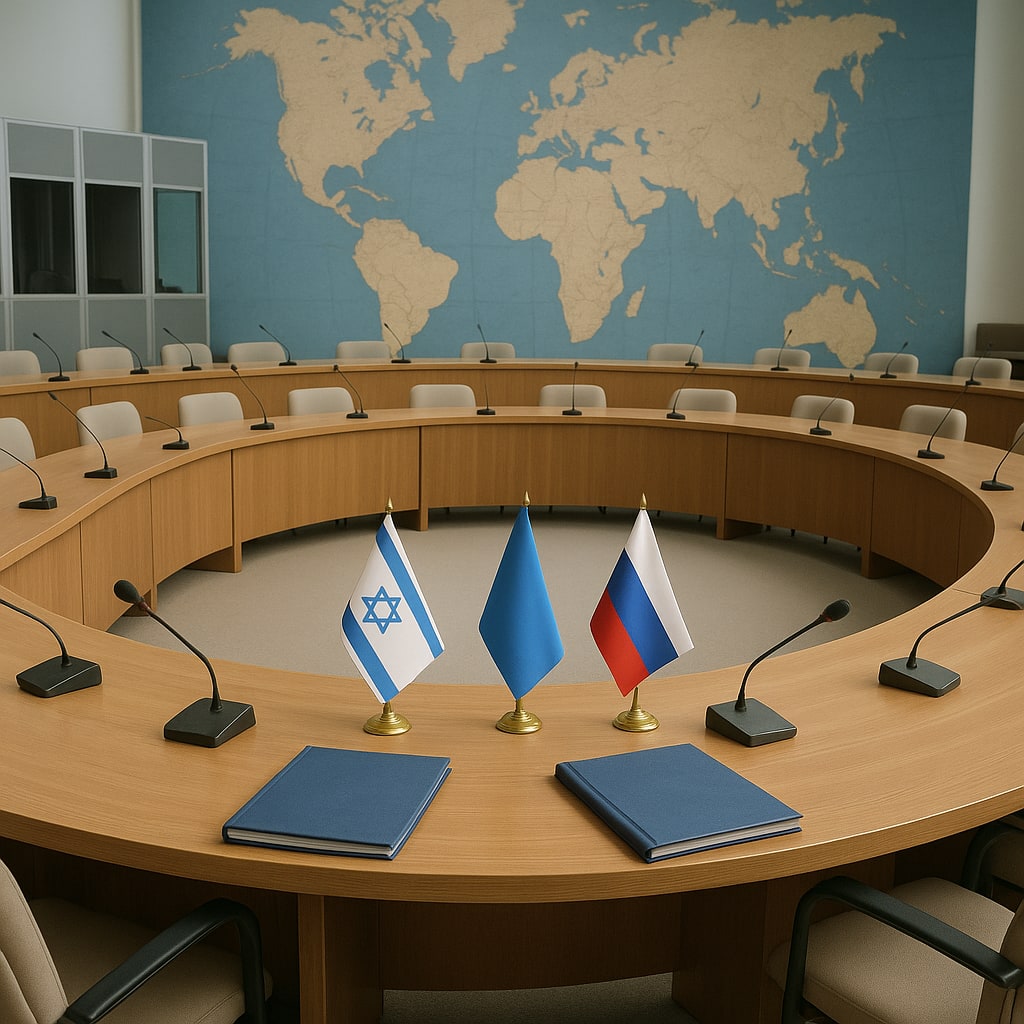
A United Nations annual report on conflict-related sexual violence has triggered a sharp diplomatic clash with Israel after the country’s security forces were listed for the first time in the report’s annex of parties credibly suspected of committing or being responsible for such abuses. Israel rejected the allegations and moved to sever working contact with UN Secretary-General António Guterres, while the report’s publication also drew denials from Russia, which was likewise added over abuses linked to its war in Ukraine. The episode has become a new flashpoint in already strained UN–Israel relations, and it has broadened into a wider argument about accountability, standards of evidence, and the politicization—real or alleged—of human-rights mechanisms during wartime.
What Happened
The UN’s latest report documenting conflict-related sexual violence worldwide recorded close to 10,000 cases globally over the previous year and named multiple state and non-state actors in an annex often described as a “blacklist.” Across outlets, the central, shared fact is that Israeli forces were included for the first time since the report series began more than a decade ago, and that Russia was also newly included in connection with reported sexual violence tied to the conflict in Ukraine.
In Israel’s case, the report’s focus—consistently described across international coverage—was alleged abuses against Palestinian detainees. Several outlets highlighted that the UN documentation referenced sexual abuse in detention settings, including allegations involving male detainees. The UN framing presented these as conflict-related violations linked to security forces, with an emphasis on patterns of abuse and the need for accountability.
Israel’s government response, widely reported, was unusually confrontational even by the standards of recent UN–Israel disputes. Israeli officials denounced the listing and announced that they would cut or freeze contact with Guterres personally. Israeli diplomatic messaging portrayed the UN action as baseless and defamatory, with some Israeli statements casting it as a moral inversion that placed Israel alongside groups it considers terrorist organizations. The decision to sever contact was presented as a political and reputational protest aimed at the UN leadership, not a withdrawal from the UN as an institution.
The report also drew immediate pushback from Russia. Coverage across European and North American outlets emphasized that the UN documented hundreds of cases linked to Russian forces in Ukraine, including against prisoners of war and civilian detainees, and that Moscow denied wrongdoing. Ukrainian-focused reporting centered on the victims described in the UN material—predominantly men among POWs and detained civilians—and treated the UN annex as international validation of long-standing Ukrainian claims.
Beyond Israel and Russia, some coverage noted that the report mentioned allegations involving Ukrainian actors as well, though the degree of emphasis varied. In the reporting that foregrounded this point, the mention served to argue that the UN approach was not exclusively aimed at Russia; in other coverage it appeared as a secondary detail.
Why It Matters
The UN’s conflict-related sexual violence annex is not a criminal verdict, but it carries diplomatic and reputational consequences. Placement can affect a country’s standing in multilateral forums, increase scrutiny of military and detention practices, and intensify pressure for investigations and prosecutions. For Israel, inclusion lands in the middle of a broader global debate over the conduct of its war and security operations and over conditions for Palestinian detainees. For Russia, the listing adds another layer to international condemnation of its conduct in Ukraine, complementing a wider body of allegations about abuses in occupied territories and detention contexts.
The immediate diplomatic consequence is the escalation between Israel and the UN Secretary-General. Israel’s decision to cut contact with Guterres signals that it sees the report not as a routine human-rights document but as a politically charged act by the UN’s top office. That choice risks complicating practical UN engagement that often depends on working-level coordination—ranging from humanitarian access issues to diplomatic mediation—though the extent of operational disruption was not uniformly described across coverage.
More broadly, the episode illustrates the growing contest over international fact-finding in wartime. The UN report draws on information channels that include UN offices and rights monitors. Yet the report’s authority depends heavily on whether states accept UN documentation as legitimate. When a government rejects the UN’s evidentiary standards and retaliates diplomatically, it raises the stakes for future reporting and for the UN’s ability to pursue its “naming” strategy as leverage for compliance and reform.
Finally, the report puts sexual violence—often under-reported and politically instrumentalized—back at the center of debates about detention and prisoner treatment. The prominence of alleged abuse against men, highlighted in several accounts, also challenges public assumptions about who is targeted and how these crimes function in conflict settings.
Diverging Narratives
Coverage aligned on the core developments—Israel and Russia added to the annex; both deny allegations; Israel retaliates against Guterres—but diverged sharply in what each outlet treated as the story’s main point.
1) Accountability versus politicization
International public broadcasters and European outlets tended to foreground the UN’s allegations and the report’s findings, presenting the listing as part of a standardized annual process and emphasizing the documented patterns of abuse and denials issued by the named states. By contrast, Israeli and pro-government framing emphasized the perceived political motive: the listing was portrayed as a deliberate attack on Israel’s legitimacy, with rhetoric underscoring reputational harm and objections to being grouped with non-state armed groups.
Some outlets went further, amplifying Israel’s characterization of the accusation as an old-style defamation—language that conveyed not only denial but also a claim of malicious intent. That rhetorical escalation was more prominent in state-aligned or strongly partisan coverage than in mainstream international reporting, which generally treated the dispute as a clash over evidence and process.
2) What is centered: detainees, diplomacy, or global totals
Several reports centered the alleged abuses against Palestinian detainees and explained that detention facilities were the key locus of the UN allegations against Israeli forces. Other coverage made the diplomatic rupture the primary headline: Israel cutting ties with the UN chief became the event, and the underlying allegations were summarized more briefly.
A third framing emphasized the global scale of conflict-related sexual violence, highlighting the nearly 10,000 documented cases worldwide and using Israel and Russia as major examples within a broader humanitarian problem. This approach tended to avoid lengthy detail on specific allegations, instead emphasizing the UN’s annual accounting function.
3) The Russia–Ukraine balance and the mention of Ukraine
Where the report’s mention of Ukrainian actors was highlighted, it was often used to complicate a simple binary of aggressor versus victim and to underline that the UN report scrutinized multiple sides. In other coverage—especially Ukraine-focused reporting—the dominant emphasis was on Russian abuses against Ukrainian POWs and detainees, treating the UN annex as a tool for strengthening international pressure on Moscow. The difference was less about disputing the report’s content than about what each outlet viewed as newsworthy or politically salient.
4) Portrayals of the UN’s evidentiary basis
Some reporting explained the UN’s sourcing more explicitly, referencing inputs from UN human-rights bodies and monitors. Others focused on the political impact and quoted government reactions, leaving the methodological basis less visible. This divergence matters because perceptions of rigor or opacity shape how audiences judge whether “blacklist” is an appropriate descriptor of an annex that is influential but not judicial.
Current Situation
As of the latest reporting, Israel’s official posture remains one of categorical rejection paired with a diplomatic boycott of the UN Secretary-General, framed as protest against what it calls a fabricated or politically motivated listing. The UN report stands as published, with Israel and Russia included in the annex and with renewed international attention on detention-related abuses and accountability mechanisms.
The immediate outlook is continued rhetorical escalation rather than quick resolution. The listing is annual and procedural, but the political fallout is ongoing: Israel’s freeze in contact with Guterres adds friction to already tense relations with UN institutions, while Russia’s denial fits a broader pattern of rejecting international human-rights allegations tied to its war in Ukraine. The report’s publication has also widened the space for other governments and political actors to use the UN findings either to demand investigations and reforms or to argue that UN mechanisms have become politicized—ensuring the document remains a live diplomatic instrument well beyond its release date.