
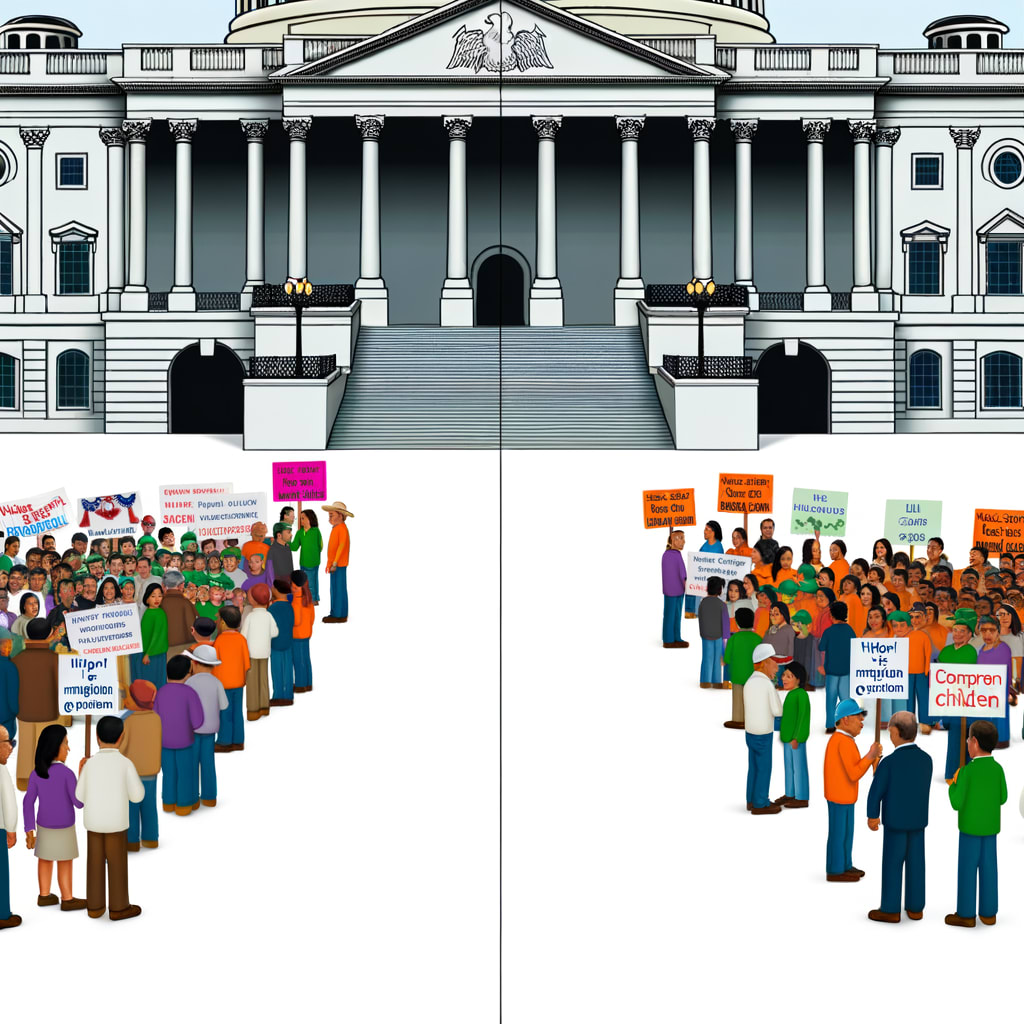
Immigration Policies Under Trump Administration: A Divisive Debate
In a recent comprehensive review of immigration policies under the Trump administration, the Department of Homeland Security (DHS) claimed that over 2.5 million illegal immigrants have left the country since President Trump resumed office, attributing this to a sweeping immigration crackdown, which they say led to the most secure border in American history
[Fox News]. However, these policies continue to spark intense debate on Capitol Hill, with GOP lawmakers introducing legislation to bolster resources for combating illegal immigration, while Democratic lawmakers push to limit the powers of Immigration and Customs Enforcement (ICE) [Fox News].
Background and Context
President Trump claimed that before his term, 25 million illegal migrants had come to the US, including drug dealers, gang members, and murderers [TASS]. To combat illegal immigration, the Trump administration has tightened visa scrutiny, revoked thousands of visas citing safety concerns, and terminated the green card lottery [Fox News, Middle East Eye]. The administration has also been preparing for special immigration controls during the holiday season [Clarin].
Despite these measures, tragic incidents involving illegal migrants continue to occur. The mother of a 20-year-old girl murdered by an illegal migrant has criticized Democrats for dismissing her daughter's murder as a political stunt [Fox News].
Key Developments
Rep. Pat Harrigan, R-N.C., introduced the COPS Anti-Organized Crime and Cartel Enforcement Act of 2025, aiming to provide new resources to local communities combating cartels and other organized threats [Fox News]. However, Democratic lawmakers are vowing to use legislation to thwart federal law enforcement's immigration tactics [New York Times].
Furthermore, the Trump administration's stance on unaccompanied immigrant children has come under scrutiny. Border officials are allegedly pressuring these children to agree to return to their countries of origin or face prolonged detention [The Guardian].
Reactions and Implications
The enforcement of these policies has faced both criticism and support. The DHS has accused sanctuary politicians
in Northern Virginia of having blood on their hands
after an illegal immigrant with a criminal history was released and allegedly committed a murder [Fox News]. Meanwhile, attendees at AmericaFest have expressed their support for DHS's mass deportation
push and welcomed ICE operations in their hometowns [Fox News].
On the other hand, Democratic lawmakers have pushed back on these measures, with some state lawmakers vowing to use legislation to thwart federal law enforcement's immigration policies [New York Times]. The Biden administration has also been criticized for marking an illegal immigrant, an alleged murderer, as a 'non-enforcement priority' [Fox News].
Conclusion
The Trump administration's immigration policies and their enforcement remain a contentious issue in American politics. While some view these measures as necessary for national security, others see them as overly harsh and discriminatory. As debates continue, the future of these policies remains uncertain.