
Lead
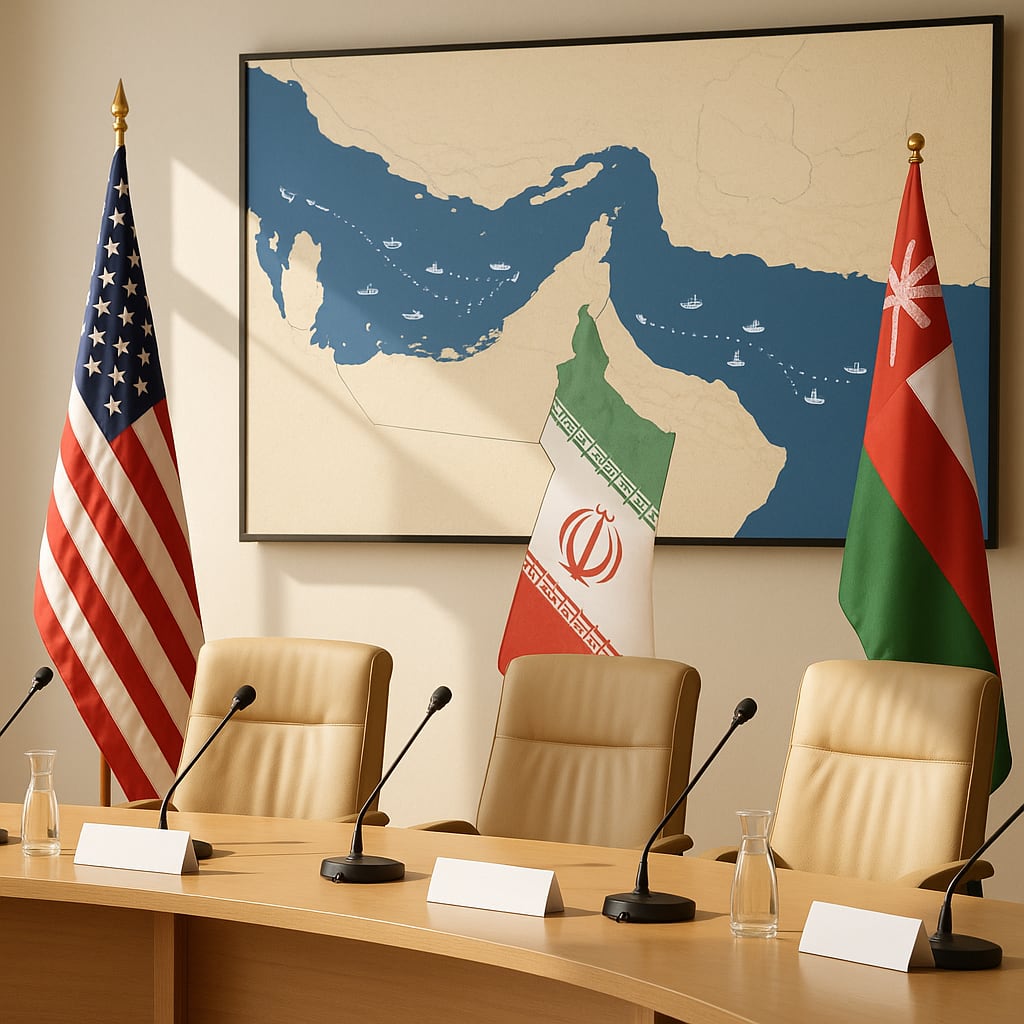
A fragile attempt to move from battlefield control to regulated passage in the Strait of Hormuz has become the newest flashpoint in the US–Iran confrontation, dragging Oman—normally a quiet intermediary—into the line of fire. As Iranian officials and the Revolutionary Guard signaled that post-war operations in Hormuz would not revert to the pre-war status quo, Washington responded with unusually blunt threats: the US president publicly warned Oman to “behave,” while the US Treasury vowed to target any effort to establish a “toll” system for ships transiting the strait. Beneath the rhetoric lies a more practical contest over who gets to define “freedom of navigation,” who provides maritime security, and whether Iran can convert leverage built during the conflict into a durable, recognized role in the waterway’s governance.
What Happened
In the final week of May, Iranian messaging converged on a single point: whatever arrangement emerges for the Strait of Hormuz will be “completely different” from before the war. Iranian officials and the Islamic Revolutionary Guard Corps (IRGC) framed the strait as an area under Iranian “control” and “management,” warning that violations would meet a “decisive response.” At the same time, Iranian statements sought to present this posture as compatible with international law and safe navigation rather than an outright closure.
A key element of the dispute is money and terminology. Iran faced widespread accusations that it intended to impose steep charges—figures of up to $2 million per transit circulated widely—prompting condemnation and legal debate in international coverage. Iranian-aligned messaging pushed back in two ways: first by rejecting the characterization of the charges as “tolls,” and second by recasting any fees as payment for “services” linked to oversight, security, or coordination in the strait. This distinction—toll versus service fee—became central because it touches directly on whether Iran is asserting sovereign control over an international waterway or providing optional, safety-related support.
Oman surfaced as the pivotal third party. Multiple outlets described Oman as negotiating with Iran over an arrangement connected to “control” or management of passage, and Washington’s reaction made clear that such cooperation would carry costs. The US Treasury secretary publicly threatened sanctions on any actors involved in establishing a tolling system, explicitly including Oman despite its status as a longstanding US partner in the region. In parallel, US rhetoric insisted the strait “must be open to everyone” and “no one can control it.”
The dispute unfolded amid continued military pressure. Reporting during the same period referenced new US strikes near Bandar Abbas, a critical Iranian port city close to the Hormuz chokepoint. Coverage also reflected ongoing uncertainty about the level of disruption at sea: Iran’s IRGC Navy said commercial traffic was transiting under “coordinated oversight,” citing 23 vessels—oil tankers and container ships—passing through, while US officials highlighted a much larger number of ships being “redirected” since the blockade began. The two figures are not directly comparable—one describes transits in a narrow time window, the other a broader operational response—but they point to the same underlying reality: shipping patterns are being shaped by a mix of security risk, political signaling, and competing claims of authority.
Diplomatically, Iranian officials elevated the issue to international forums. Iran’s UN ambassador argued that Iran’s actions in the strait were lawful and consistent with international law. Separately, Iran’s foreign minister reported discussions with his Omani counterpart about the strait’s future “management,” explicitly linking it to sovereign responsibilities and international principles. Meanwhile, American officials framed what was happening as illegal coercion; senior US figures publicly promised that Hormuz would reopen “one way or the other,” underscoring that Washington was not treating the issue as a normal bilateral dispute but as a challenge to global maritime order.
Why It Matters
The Strait of Hormuz is a strategic artery for global energy and trade, and even partial disruption quickly feeds into price volatility and broader economic anxiety. Markets responded to diplomatic signals as much as military moves: when talk of negotiations and de-escalation gained traction, crude prices showed signs of easing; when threats and strikes dominated, the sense of risk returned. The deeper consequence is that Hormuz is becoming a test case for whether leverage gained in war can be institutionalized in peacetime—through explicit rules, fees, escorts, or joint oversight—without triggering a direct confrontation with the US and its partners.
Legally, the row exposes a sharp boundary in international maritime governance: canals such as Suez and Panama can charge for passage in ways that are widely accepted as part of their legal and physical infrastructure, but a narrow strait used for international navigation is not easily treated as a revenue source. That distinction is why the semantics of “tolls” versus “services” matter: a toll implies a gatekeeper’s power over access; a service fee implies optional payment for added safety or coordination. The issue is not only whether ships can pass, but on whose terms and under which recognized authority.
Politically, Oman’s role is unusually sensitive. Muscat has historically served as a discreet channel between rivals, but the current confrontation places it in a precarious position: too close an alignment with Iran on Hormuz risks US sanctions and diplomatic rupture; too much distance could reduce Oman’s ability to influence outcomes in a crisis unfolding on its maritime doorstep. The fact that Washington publicly threatened an ally—rather than confining pressure to private diplomacy—signals how high the US stakes are in preventing any appearance that Iran has acquired legitimate control over the waterway.
Militarily, the episode shows that even after major exchanges, both sides can remain poised between de-escalation and renewed escalation. Coverage repeatedly emphasized that neither Washington nor Tehran appears eager to return to all-out conflict, yet both are operating with assumptions that renewed fighting remains possible. The strait is the ideal pressure point for such calibrated coercion: it allows Iran to demonstrate reach without necessarily firing a shot, and it allows the US to justify maritime and financial countermeasures in the name of global commerce.
Diverging Narratives
Across outlets, the facts largely align on the core points—Iran is asserting a new operational regime for Hormuz; the US is rejecting any Iranian “control” or tolling; Oman is involved in talks; and sanctions threats have been issued. The differences emerge in emphasis, moral framing, and the implied legitimacy of each actor’s actions.
Iranian and Iran-aligned framing foregrounds order and legality. The IRGC’s announcements highlight “coordinated oversight,” successful vessel transits, and deterrence against violations. Official statements elevate sovereign responsibility and international law, and they tend to present any payments as service-related rather than a restriction on passage. This framing seeks to normalize Iranian involvement as a security provider rather than an obstructionist.
US- and Europe-focused coverage tends to center the principle of open navigation and the illegitimacy of unilateral monetization. The sanctions threats are presented as a defense of international norms, and the legal question—why some waterways can charge but Hormuz cannot—receives extended treatment. This approach downplays Iran’s argument that it is providing “services” and instead treats the proposal as an attempt to impose a gatekeeper model on a global chokepoint.
Russian state coverage emphasizes the US Treasury’s intention to punish actors involved in tolls, spotlighting the coercive economic tools Washington uses and reinforcing a narrative of American extraterritorial pressure.
Regional and international broadcasters give more space to the military environment surrounding the strait—strikes near Bandar Abbas, the risk of renewed clashes, and the day-to-day operational uncertainty for shipping—while also noting that both sides appear reluctant to resume full-scale war.
On disputed facts, two points stand out:
- The scale of disruption at sea. Iran highlights a specific number of vessels that transited under its oversight; the US emphasizes a far larger number of ships redirected since the blockade began. These claims can coexist but pull audiences toward different interpretations: normalizing traffic versus depicting ongoing crisis-level disruption.
- Whether Iran is imposing “tolls.” Some coverage treats the toll concept as the central Iranian demand; Iranian messaging contests this, insisting on fees for services or denying toll claims outright. The disagreement is less about whether money is involved than about what that money represents—an access fee or a security/coordination charge.
The sharpest divergence is tonal rather than factual: in American political messaging, the strait is a matter of global entitlement and strategic dominance; in Iranian messaging, it is a matter of sovereignty, management, and deterrence; in Omani-linked coverage, it reads as crisis mediation with high diplomatic risk.
Current Situation
By the end of the period covered, commercial vessels were still moving through Hormuz in at least limited numbers, even as both Iran and the US described exceptional measures shaping maritime traffic. Iran continued to assert operational control and warn against violations, while presenting its actions as lawful at the United Nations and through public diplomacy. Oman remained engaged in discussions with Iran about future management, but faced explicit US threats of sanctions if it facilitated any tolling arrangement.
The immediate outlook is defined by two simultaneous tracks: continued military pressure around key coastal نقاط near the strait, and a diplomatic struggle over whether any new regime for Hormuz can be framed as legitimate “management” rather than coercive control. With Washington publicly signaling punitive measures and Tehran insisting the post-war order will not revert to the past, the strait remains both a negotiation table and a pressure valve—one where language, law, and naval power are being used to shape the same narrow stretch of water.