
Lead
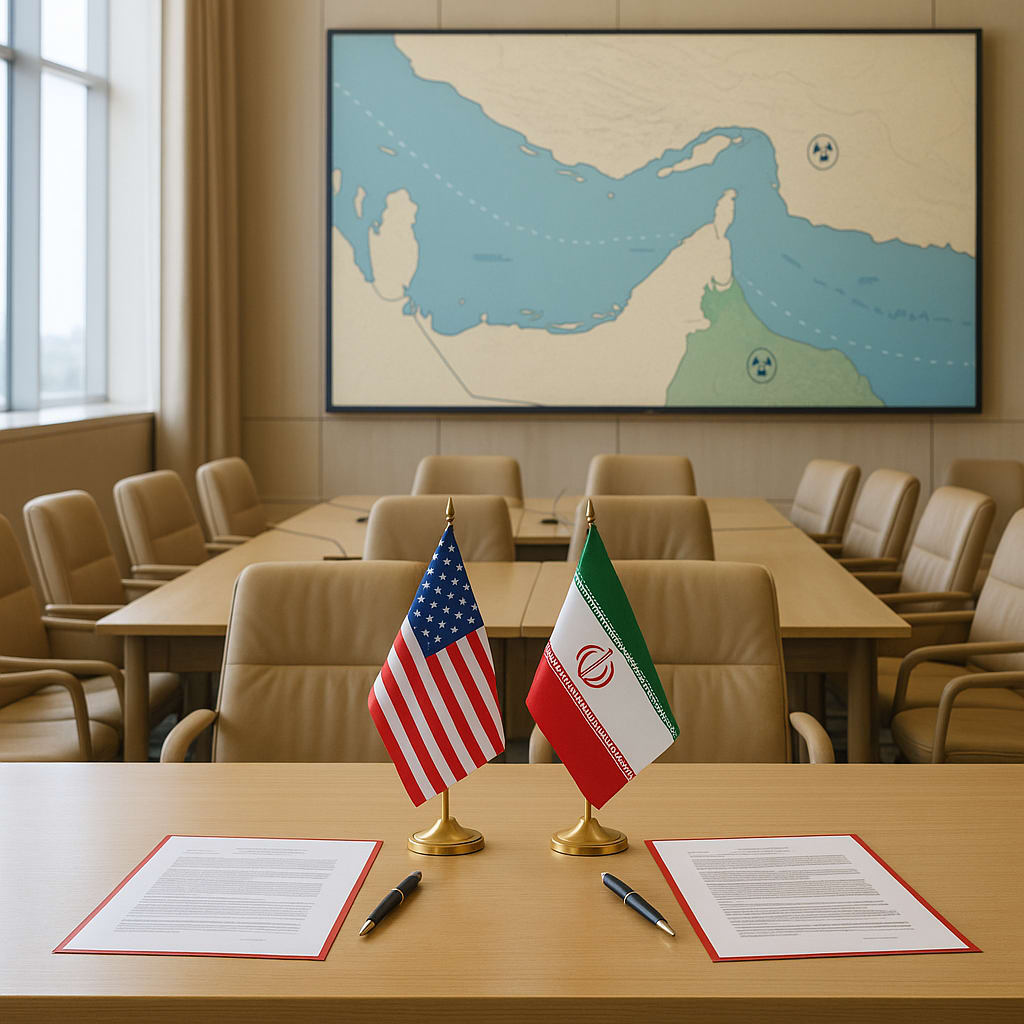
A tentative US-Iran framework to halt the fighting and unwind the naval pressure around Iran is now being renegotiated in public and in haste. Multiple outlets across the US, Europe, the Middle East and Russia converged on the same central development: President Donald Trump has sent Tehran a revised text with tougher terms and is demanding additional Iranian commitments—especially on nuclear issues and the Strait of Hormuz—while simultaneously insisting a deal is close. Iran, for its part, is signaling it will not accept unilateral rewrites and is preparing counter-amendments, keeping open both diplomatic and military paths as the blockade and its economic consequences grind on.
What Happened
The near-term drama centers on edits demanded by the White House to a draft understanding that had been circulating between Washington and Tehran. Across several major international outlets, the shared picture is of a “framework” or “memorandum” that is not yet finalized, and that has moved back to Iran after Trump intervened late in the process.
The most consistently repeated substance concerns two linked files:
- Nuclear commitments, with Trump claiming Iran has agreed to renounce nuclear weapons. In parallel, coverage in multiple countries highlighted a more specific, unresolved technical question: what happens to Iran’s stockpile of enriched uranium—whether it must be removed, handed over, or otherwise verifiably eliminated.
- Shipping and the Strait of Hormuz, where the draft’s language appears tied to reopening or securing maritime transit amid a US-led naval blockade or interdiction effort.
Several outlets reported that Trump’s requested changes included provisions touching Hormuz and the removal of highly enriched uranium. The thrust is not merely cosmetic: the edits were described as “toughened terms,” with US officials portraying the move as a way to pressure Tehran to accept the current framework rather than reopen negotiations endlessly.
Trump’s own messaging, carried widely, has been dual-track. On the one hand, he has said the parties are “close” and that an agreement could be finalized soon; on the other, he has coupled diplomacy with threats, warning that if the deal fails the US would be prepared to “finish it off militarily.” State Department language earlier in the week was similarly coercive regarding Hormuz—insisting the strait would reopen “one way or the other.”
Iranian signals in the same period point to conditional willingness to talk but firm “red lines.” Iranian official media carried commentary emphasizing that Iran prefers diplomacy yet is prepared for military outcomes. Reporting relayed via Russian outlets, citing Iranian sources, also described Tehran as ready to amend a potential deal in response to US changes and as prepared for the possibility the agreement is not signed.
Meanwhile, the coercive backdrop has remained active. One widely circulated data point from US Central Command—repeated by Russian state media—was that over 120 commercial vessels had been redirected or disabled during the naval blockade/interdiction effort. Separately, there has been coverage of US strikes on Iranian missile sites even amid a ceasefire context, framed by US officials as defensive measures to protect troops.
This is the context in which the draft has ping-ponged: a negotiation happening under military pressure, economic disruption, and political urgency.
Why It Matters
The immediate stakes are regional stability and global energy security. Hormuz is a chokepoint for oil and gas flows, and the reporting’s repeated focus on reopening or controlling maritime passage underscores the economic consequences of continued disruption. Even without detailed price figures in this coverage set, the scale of maritime interference—dozens upon dozens of vessels redirected—signals a systemic shock to commercial shipping patterns, insurance risk, and supply scheduling.
Diplomatically, the episode highlights a familiar pattern in US-Iran engagement: nuclear constraints are both the centerpiece and the tripwire. Trump’s insistence that Iran has agreed to renounce nuclear weapons is politically potent, but negotiators and analysts across outlets have treated it as insufficient without verification and disposal arrangements for enriched uranium. That technical question becomes existential in politics because it defines whether the deal is a symbolic pledge or a measurable rollback.
Politically, several outlets framed Trump’s urgency as domestic as well as strategic. Coverage in Europe stressed pressures on the White House—from public opinion, polling, and allies in the Gulf—pushing Washington to end an open-ended conflict while avoiding the appearance of conceding to Tehran. This tension helps explain why the administration’s messaging oscillates between imminent agreement and escalatory threats: it is trying to show leverage while closing a deal.
Militarily, the continued strikes and blockade statistics show that the “peace framework” is not emerging from a calm environment but from an active contest. That matters for durability: even a signed memorandum would have to survive operational incidents at sea, proxy dynamics, and the risk of unilateral enforcement.
Diverging Narratives
Different outlets largely agree on the core fact pattern—revised US terms sent to Iran, nuclear and Hormuz provisions central, response pending—but they diverge sharply in framing, emphasis, and implied causality.
1) “Peace framework” vs. “Iran war” vs. “blockade”
- Some international broadcasters and regional outlets consistently described the talks as a bid to end an ongoing “war” and stabilize the region, foregrounding ceasefire mechanics and the risk of renewed escalation.
- Other coverage, including Iranian official messaging and reporting amplified by Russian state media, emphasized the naval blockade and coercive pressure as the defining feature, implicitly positioning Iran as resisting an illegal or illegitimate restriction.
- US conservative-leaning coverage tended to frame the issue as enforcing Iranian nuclear concessions and deterrence, stressing military threats as a necessary backstop rather than a risk factor.
2) The nuclear claim: pledge vs. particulars
- Trump’s headline assertion—Iran agreed to renounce nuclear weapons—was repeated widely, including in Latin American and Russian coverage.
- Yet multiple outlets kept returning to a narrower, more consequential dispute: whether the draft actually compels Iran to relinquish enriched uranium, and how. This produced a second layer of contention: Trump later pushed back on the idea that the draft did not address the nuclear program, insisting that “most of the agreement” concerns nuclear issues. The disagreement here is less about whether nuclear issues are discussed and more about whether the draft contains enforceable, specific obligations.
3) Edits as “toughening” vs. “fine-tuning”
- European and Middle Eastern coverage generally presented Trump’s intervention as a substantive hardening of terms, potentially slowing finalization by sending the text back to Tehran.
- US administration-friendly narratives more often cast the changes as necessary clarifications—especially around uranium and maritime transit—aimed at ensuring Iran cannot exploit loopholes.
4) Attribution and sourcing gaps
- The most detailed descriptions of what the edits cover (Hormuz language, removal of highly enriched uranium) were attributed to unnamed US officials in major US reporting and then echoed abroad. Iranian positions on counter-amendments were also carried via sourced statements and Iranian-linked channels.
- That creates an asymmetry: the specifics of US demands are clearer in the public domain than Iran’s internal negotiating text, which encourages some outlets to frame Iran as the reactive party and others to stress that Washington is rewriting terms midstream.
5) Regional spillover and third-party dynamics
- Some European commentary elevated the role of regional allies and the broader theater—suggesting the US is balancing Gulf partner demands and the risk of widening conflict.
- Israeli-focused coverage emphasized uranium disposition and maritime escort dynamics in Hormuz, spotlighting operational details at sea and security implications.
- Iranian narratives, including parliamentary messaging, stressed sovereignty and red lines, presenting the end of the blockade as achievable either by talks or force.
Current Situation
The latest shared understanding is that the US has transmitted a revised draft to Iran and is awaiting a response that may take days, while Trump continues to publicly insist an agreement is near and could be finalized as soon as next week if remaining points are accepted.
Iran is signaling it will submit amendments and is not prepared to accept changed terms without negotiation. The blockade/interdiction posture remains a live pressure point, with official US military figures indicating extensive interference with commercial shipping to date. Alongside the diplomatic track, the threat environment persists: US leaders continue to pair negotiations with warnings of military escalation if talks fail.
What is immediate and concrete is the bottleneck: the draft’s credibility hinges on measurable nuclear steps—especially the fate of enriched uranium—and workable guarantees for maritime transit through Hormuz. Until those are reconciled in a text both sides will sign, the process remains a high-stakes exchange of revisions conducted under the shadow of coercion rather than a settled ceasefire.