
Pakistani-Afghan Conflict Results in Massive Civilian Displacement Amid Rising Tensions
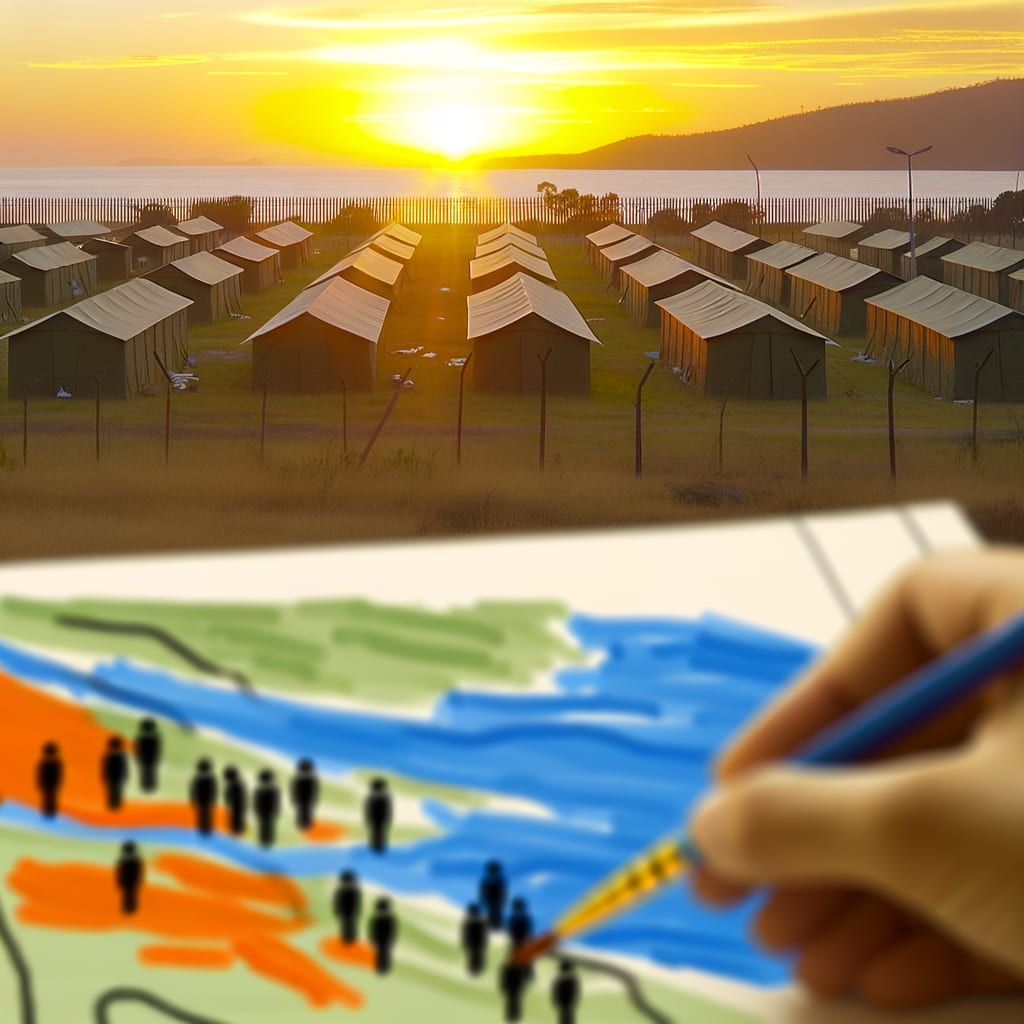
The conflict between Pakistan and Afghanistan continues to escalate, with both governments launching attacks on each other's territories, leading to the death of at least 81 civilians and the displacement of over 115,000 individuals. These recent developments, marked by the use of drones and airstrikes, have intensified regional tensions as the two neighbours enter their third week of hostilities.
Background and Context
The hostility between Pakistan and Afghanistan has been festering for weeks, with both sides accusing each other of targeting civilian areas and military installations. The Afghan Taliban government accused Pakistan's military of killing six civilians and injuring over a dozen in overnight airstrikes in Kabul and other areas. In retaliation, Afghanistan launched a precise drone attack on a command center and other critical installations in Islamabad, resulting in heavy casualties and substantial material losses.
Key Developments
Following the Afghan drone attacks, Pakistan claimed to have intercepted 'rudimentary drones' from Afghanistan, temporarily closing its airspace as a precautionary measure. Subsequently, Pakistan's military launched lethal airstrikes on Afghan territories, including Kabul and Kandahar Province, targeting militant hideouts, storage sites, and a tunnel allegedly used by the Taliban.
Pakistan's President, Asif Ali Zardari, warned the Taliban government that it had crossed a red line
by launching drone attacks on civilian areas in Pakistan, resulting in grave consequences.
Following this warning, Pakistan targeted a Kandahar facility in Afghanistan, intensifying the conflict further.
Civilian Impact and Reactions
The war has taken a heavy toll on civilians, with at least 75 reported deaths and over 115,000 individuals displaced in Afghanistan due to the Pakistani airstrikes. The Afghan government has accused Pakistan of trying to 'ignite the fire of war,' while Pakistan has referred to the conflict as an open war,
amplifying concerns about regional stability.
Meanwhile, Afghanistan's losses in the confrontation with Pakistan exceed 1,500, with more than 912 others injured, according to Pakistani minister Attaullah Tarar. These figures, however, are yet to be independently verified.
Current Status and Implications
As the conflict continues, both sides seem reluctant to negotiate, threatening further escalation. The cross-border clashes, which erupted late last month, show no signs of abating, adding to the already complex regional dynamics with the US-Israeli conflict with Iran escalating in the Middle East.
The continuation of hostilities poses a significant threat to regional stability and raises concerns about the potential humanitarian crisis due to the mass displacement of civilians. As the situation unfolds, the international community remains watchful, hoping for a swift resolution to prevent further loss of life and displacement.