
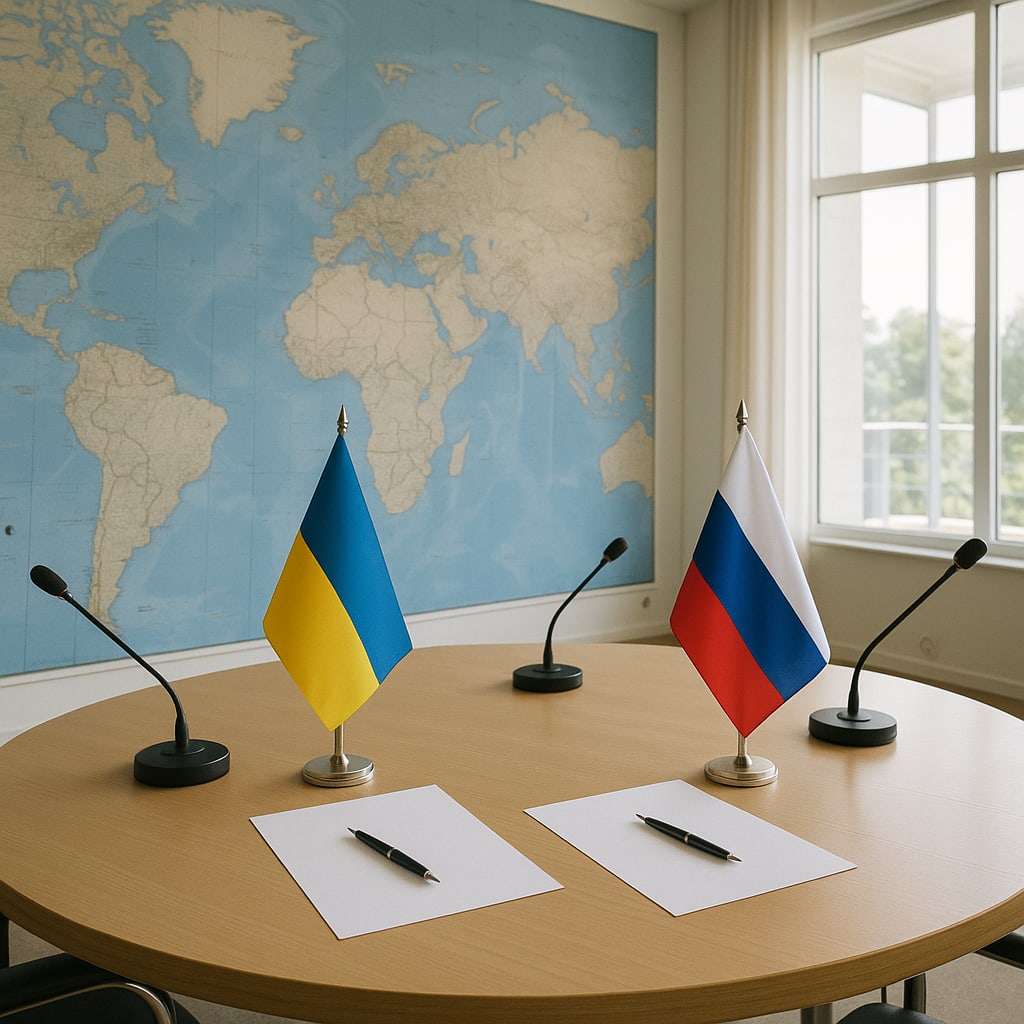
Zelensky proposes face-to-face talks and cease-fire; Putin refuses, calls letter ‘rude’
Narrative Snapshot
- Broad consensus: outlets report Zelensky’s open letter proposing direct talks and a cease-fire, and Putin’s public refusal from the St. Petersburg forum, where he dismissed the letter as rude and saw “no point” in meeting (BBC; Folha de S.Paulo; The Guardian; Le Monde; South China Morning Post).
- Competing emphases: Russian state agency TASS foregrounds commentary deriding the letter as a PR gambit (Nikolay Azarov; Guy Mettan), while European and US outlets probe Zelensky’s messaging strategy and Putin’s war posture (Le Monde analyses; New York Times).
- Political overlay: Several European reports highlight Donald Trump’s call for “compromises” and Putin’s praise for Trump, adding a US domestic angle to coverage (The Guardian; La Repubblica; Corriere della Sera).
- Audience targeting: Le Monde argues the letter was calibrated for Russian elites fatigued by the war, not only for the Kremlin, aligning with NYT’s portrait of forum attendees weighing costs as Putin signals continuation.
What Happened
On June 4, Volodymyr Zelensky published an open letter urging a face-to-face meeting with Vladimir Putin in a neutral country and proposing a cease-fire (Folha de S.Paulo, June 4; The Guardian, June 4; BBC, June 4; Clarín). The Kremlin’s initial response, reported in Brazil’s Folha, was that Zelensky could come to Moscow (Folha de S.Paulo, June 4). The next day at the St. Petersburg International Economic Forum, Putin rejected the meeting, calling the letter rude or disrespectful and saying there was “no point” in talks (Le Monde live, June 5; BBC, June 5; The Guardian, June 5; South China Morning Post). He used his remarks to address frontline soldiers and restated Russia’s war aims (TASS, June 5; The Guardian, June 5; The Hindu, June 6). Zelensky responded that Putin “does not want to end the war,” with some outlets noting he called Putin weak (Kyiv Independent; The Hindu). Separately, Trump urged both sides to compromise; Putin publicly thanked him (The Guardian, June 4; La Repubblica; Corriere della Sera).
Why It Matters
The exchange tests whether any channel for direct talks exists and illustrates how wartime diplomacy often doubles as public persuasion. Zelensky’s letter presented direct engagement as necessary, amid his assertion that the US is focused elsewhere, specifically Iran (BBC, June 4). Putin’s refusal and reaffirmation of objectives suggest policy continuity rather than de-escalation (The Guardian, June 5; The Hindu, June 6). Le Monde interprets the letter as aimed at Russian elites weary of the conflict, a reading that aligns with reporting from the St. Petersburg forum where figures discussed the costs of continuing versus halting the war (Le Monde analysis, June 6; New York Times, June 5). European coverage that spotlights Trump’s comments and Putin’s embrace of them underscores how US political rhetoric is filtering into the conflict’s diplomatic theater (The Guardian, June 4; Corriere della Sera; La Repubblica).
Diverging Narratives
- Ukrainian framing: Zelensky portrays direct talks as the only path to end the conflict, telling Putin “you can stop your war,” and later accusing him of avoiding peace (The Guardian, full text; Kyiv Independent; The Hindu).
- Russian framing: Putin characterizes the letter as rude and the meeting as pointless, addresses soldiers rather than the letter’s “authors,” and reiterates war aims (Le Monde live; TASS, June 5; South China Morning Post; The Guardian, June 5).
- Critical commentary amplified by Russian media: Former Ukrainian PM Nikolay Azarov calls the letter a PR stunt designed to disrupt talks; Swiss journalist Guy Mettan questions its sincerity (TASS, June 5; TASS, June 5).
- Analytical lenses: Le Monde argues the outreach targets Kremlin-adjacent elites fatigued by the war, while an interview with Farida Rustamova describes Putin as stuck—unable to win or quit—even as she sees signs of a negotiation “dynamic” (Le Monde analysis, June 6; Le Monde, June 7). The New York Times depicts forum elites weighing whether to halt the war or sacrifice more, contrasting with Putin’s signal of more war (NYT, June 5).
- International angle: Trump’s call for “compromises” is noted by European outlets, with Corriere reporting Putin’s public thanks; by contrast, BBC highlights Zelensky’s argument that US attention is on Iran (The Guardian, June 4; Corriere della Sera; BBC, June 4).
What Happens Next
No meeting is planned; Putin publicly ruled out face-to-face talks for now (Le Monde live, June 5; BBC, June 5; Folha de S.Paulo, June 5). Zelensky continues using public addresses to press for an end to the war (Kyiv Independent). Analysts differ on whether the letter may influence Russian elites or public opinion; its effects remain unproven (Le Monde analysis, June 6; Le Monde, June 7). Inside Russia, debate over the war’s trajectory continues among business and political figures, but Putin’s stance at the forum points to pursuing existing goals (New York Times, June 5; The Hindu, June 6). While Zelensky proposed a neutral venue, and the Kremlin earlier said he could come to Moscow, no mediation framework or location has been agreed (BBC, June 4; Folha de S.Paulo, June 4; The Guardian, June 4).