
Lead
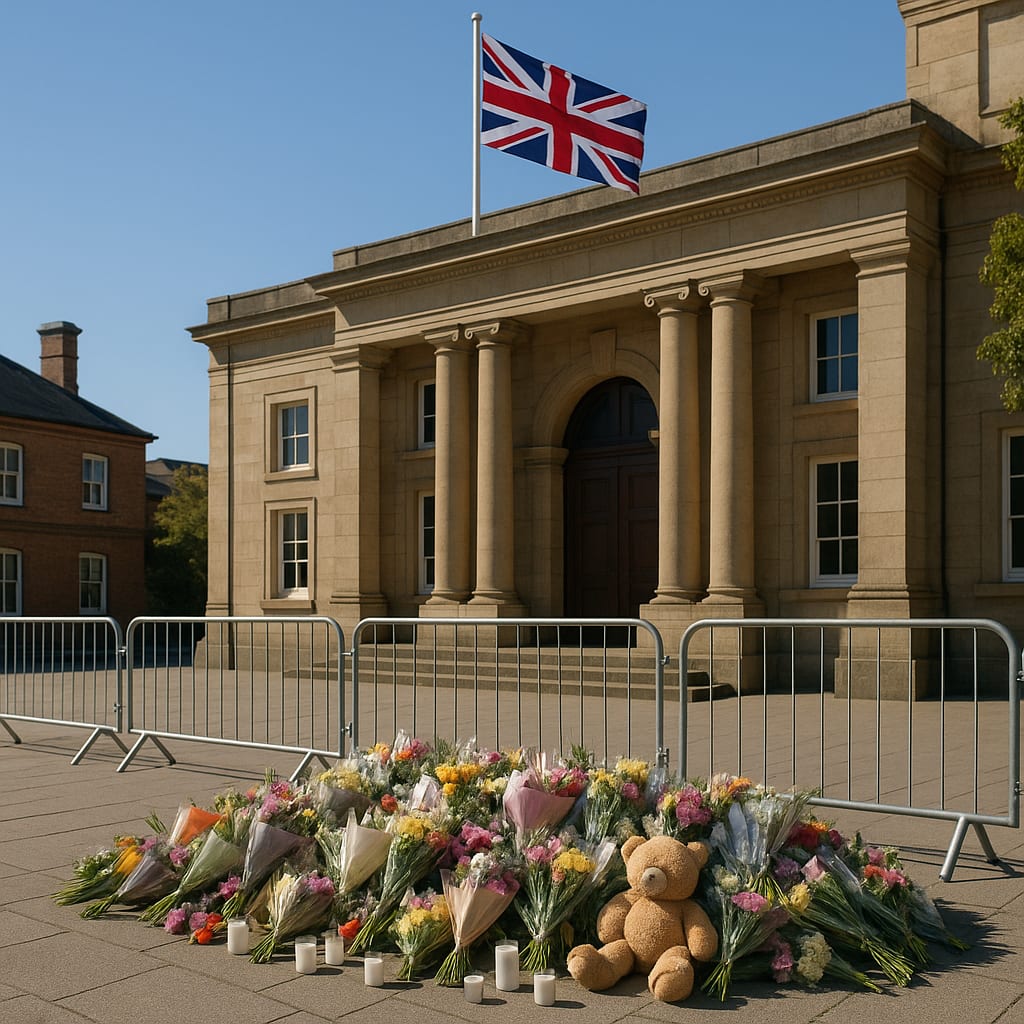
A murder in Southampton that was already legally resolved has re-erupted as a national political flashpoint in the UK after police released body-worn video showing officers handcuffing 18-year-old Henry Nowak while he was fatally wounded and repeatedly saying he could not breathe. The footage, combined with courtroom findings that the attacker falsely portrayed himself as the victim of racist abuse, has triggered street protests, clashes with police, and a rapid escalation into wider arguments over policing culture, “anti-racism” guidance, and the long-standing legal accommodation that allows Sikhs to carry a ceremonial blade, the kirpan. With senior politicians urging calm and community leaders warning against scapegoating, the case has become a test of the government’s ability to contain public anger while addressing legitimate questions about police conduct.
What Happened
The underlying crime dates to December, when Nowak, described across coverage as a university student, was stabbed to death in Southampton. The assailant, Vickrum Digwa, a 23-year-old Sikh man, was later convicted of murder and sentenced to life imprisonment, with reporting converging that he must serve at least two decades before being eligible for parole. Prosecutors argued he lied in the aftermath and attempted to justify the attack by claiming self-defence; courts rejected that account. A recurring detail across outlets is that the knife used was portrayed by the attacker as linked to Sikh faith—an element that has since shaped public debate over exemptions and safeguards.
What moved the case from courtroom to nationwide controversy was the release of police video and related material showing officers responding immediately after the stabbing. In the footage widely described by multiple international and UK outlets, officers treat Nowak as a suspect, restrain and handcuff him, and do not appear to accept his insistence that he had been stabbed and was struggling to breathe. The phrase “I can’t breathe,” captured on video, has become the shorthand for public outrage.
That outrage became physical. Demonstrations gathered outside a Southampton police station and, in parts of the city, escalated into clashes with officers. Reporting from several countries describes violent scenes and confrontations, while also noting a split character: some protests were framed as anti-police anger at apparent misjudgment, while others became vehicles for far-right activists and personalities who travelled to Southampton and sought to attach broader political claims to the case. The protests also broadened geographically online, where slogans such as “White Lives Matter” trended in some circles, and “anti-White racism” became a rallying line for some politicians on the right.
In parallel, the case prompted renewed political pressure for a review of knife policy as it relates to religious blades. A senior local policing figure in Hampshire publicly urged the prime minister to revisit rules around religious knives, casting the death as a “national tragedy” and arguing that the legal settlement needs reconsideration in light of this case. Government figures, meanwhile, faced competing demands: condemn disorder, defend communal cohesion, and respond to public concern about policing decisions caught on camera.
Why It Matters
The Nowak case sits at the intersection of three combustible issues in contemporary Britain: trust in policing, the politicisation of race and identity, and the balance between religious accommodation and public safety.
First, policing legitimacy. The video shows officers apparently misidentifying the victim as the aggressor at a moment when seconds matter. Even for audiences accustomed to messy, chaotic scenes, the visual evidence has a uniquely corrosive effect: it turns abstract debates about procedure and bias into a visceral public judgment about competence and care. The fact that the murder conviction has already been secured does not reduce the impact; if anything, it concentrates attention on the question of how the state behaved in the immediate aftermath and what that implies for emergency response, triage, and decision-making under pressure.
Second, the politics of race and grievance. The attacker’s alleged false claim—that he had been racially abused—has been used by far-right figures and sympathetic commentators to argue that institutions are primed to believe allegations of racism against white Britons, and to suggest an official double standard. That framing has resonance in a media environment where short clips travel faster than full context, and where political entrepreneurs compete to turn anger into mobilisation. At the same time, senior national leaders have echoed the victim’s family in urging the public not to use the case to target communities, a sign that officials see real risk of retaliatory hostility toward Sikhs and other minorities.
Third, religious freedom and security policy. The kirpan is not a new controversy in the UK; Sikh exemptions and practical accommodations have long been part of a broader multicultural settlement. But the killing, and the knife’s association in the public mind with religion—even if the court narrative emphasised the attacker’s “weapon obsession” rather than faith—has sharpened demands for review. For British Sikhs, the worry is collective punishment: a criminal act by an individual becoming the pretext for restricting a practice many consider integral to identity. For those pressing for reform, the argument is not about Sikhism in general but about closing perceived loopholes that can be exploited.
Diverging Narratives
Across outlets and countries, the same core facts recur: a fatal stabbing in December; the killer’s conviction and life sentence; the release of bodycam footage showing the wounded victim being handcuffed; and subsequent protests and political reaction. The differences lie in what each emphasizes, what it treats as the central scandal, and how it assigns causality.
Policing failure vs. culture-war proof. UK-centric reporting tends to place the police response—and the wider institutional environment around it—at the centre, including debate over operational guidance and training. Some coverage highlights ministerial criticism of police “anti-discrimination” guidance, arguing it creates the “wrong impression” that suspects should be treated differently by race. In this telling, the scandal is partly procedural: whether guidance, risk-aversion, or fear of reputational damage led officers to default to believing an allegation of racism. International coverage often keeps the focus more tightly on the dramatic imagery—“I can’t breathe,” the handcuffs, the collapse—presenting it as a plain miscarriage of judgment.
Far-right exploitation vs. public anger. European and UK outlets devote significant attention to the way far-right actors and populist politicians moved quickly to frame the case as evidence of “anti-White racism,” using it to compete for attention and to inflame tensions. The same events—crowds outside a police station, clashes in the city—are sometimes framed primarily as disorder driven by extremist mobilisation, and sometimes as an organic eruption of anger at the police. Both elements appear across the reporting; emphasis varies with editorial lens.
The knife question: religious right vs. public-safety loophole. Some reporting foregrounds calls to review the legal allowance for Sikh ceremonial blades and presents this as a natural policy consequence of the case. Other coverage foregrounds Sikh community responses defending the kirpan as a sacred article and warning against conflating it with offensive weapons. The disagreement is less about what the law currently permits than about what the killing is taken to “prove”: either that exemptions are inherently risky, or that the crime was committed by an individual whose actions should not be used to rewrite minority rights.
Language and identity cues. Several outlets outside the UK make Nowak’s whiteness and the attacker’s identity central to the narrative, tying the story to broader global arguments about race, migration, and identity politics. Some UK reporting is more cautious in foregrounding those descriptors, instead emphasising public order, policing standards, and political opportunism—reflecting a sensitivity to inflaming communal tensions.
Media ideology and attribution of blame. Right-leaning and state-linked outlets place heavier weight on the idea that “wokeness” or institutional deference to racism claims caused the police error, presenting the footage as definitive proof of systemic bias against whites. Other outlets, especially those focused on extremism, stress that the most immediate risk now is retaliatory violence and community targeting, with the footage functioning as a trigger rather than the full explanation.
Current Situation
Digwa has been sentenced to life imprisonment, closing the criminal case, but the governance questions are opening. Protests in Southampton have prompted official condemnation of violence and renewed appeals for calm from national leaders and community figures. Political pressure is building on two fronts: scrutiny of police decision-making captured on bodycam, and calls—particularly from local policing leadership and some national politicians—for a review of policy and guidance touching both racial discrimination and the carrying of Sikh blades.
The immediate outlook is shaped by whether authorities can separate legitimate accountability—how officers assessed the scene and why—from the broader politicised campaign to treat the case as a proxy battle over race and national identity. With video now circulating globally and activists already mobilised, the UK faces a familiar but acute dilemma: respond decisively enough to restore trust in policing without allowing a single tragedy to be repurposed into collective blame.