
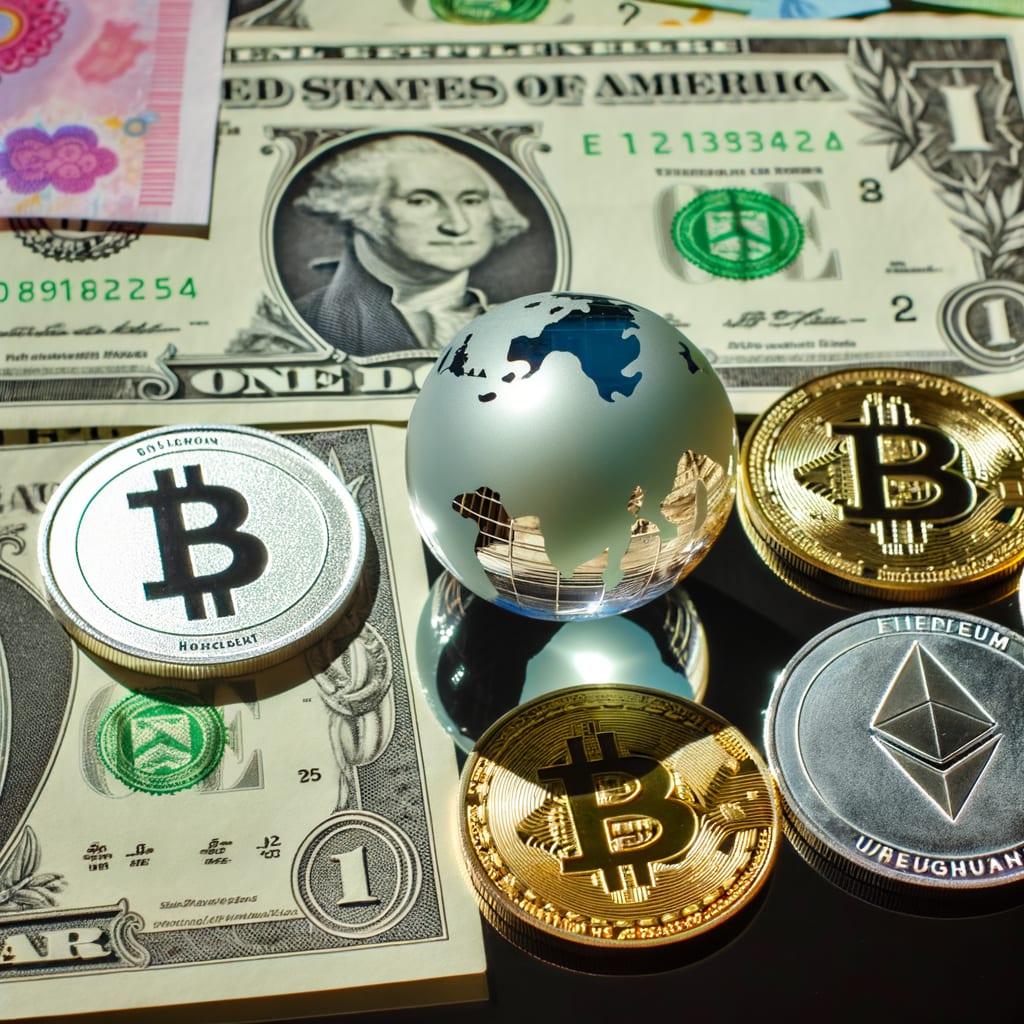
The Global Economy's Complex Dance with the Dollar, Crypto, and National Currencies
As 2025 draws to a close, the global financial landscape is seeing a shift in attitudes towards the dollar, cryptocurrencies, and national currencies. Uruguay is seeking to strengthen the use of the peso, while the U.S. dollar's dominance is being questioned. Meanwhile, China's yuan is gaining strength and cryptocurrencies face a downturn despite increased acceptance.
Shifting Attitudes to the Dollar
Uruguay's central bank president has launched an offensive to discourage the use of the dollar, aiming to strengthen the peso by lowering the dollar's participation in its reserves and planning new measures (Clarin). This move comes as the U.S. stock market is predicted to underperform in 2025 due to investors diversifying their portfolios amidst concerns over elevated valuations and the radical economic policies of Donald Trump (Folha de S.Paulo).
The Central Bank of Argentina, however, suggests a different approach, expressing a willingness to loosen currency controls when there is fluid access to external markets
(Clarin). Meanwhile, the U.S. dollar's future as the global reserve currency is being gambled, with threats of high U.S. inflation and increasingly fragmented global trade with the U.S. (Japan Times).
Cryptocurrency's Rising Acceptance and Decline
Cryptocurrencies, despite facing a slump towards the end of 2025, are seeing increased acceptance. Trip.com has started accepting stablecoin payments for prepaid bookings, signaling a growing acceptance of US dollar-pegged tokens (South China Morning Post). Yet, the end of 2025 saw a $1tn drop in value from the digital asset market (The Guardian).
The October price peak was short-lived. Bitcoin’s price tumbled just days later after Trump’s announcement of 100% tariffs on China sent shockwaves across the market.
(The Guardian). Despite the downturn, the debate on whether crypto is an opportunity or a threat continues as private digital assets widen the gap between private and social interests (Japan Times).
The Strengthening of the Yuan
In contrast, China's central bank has set the yuan’s daily reference rate at its strongest level in 15 months, as the currency strengthened in offshore trading and briefly broke through the seven-per-US-dollar threshold. (South China Morning Post). The move followed a recent rally in the Chinese currency, suggesting a rise in confidence in the yuan.
Conclusion
As we head into 2026, the global financial landscape continues to shift. The dance between the dollar, cryptocurrencies, and national currencies continues, with countries like Uruguay seeking to strengthen their own currencies, while others like Argentina consider a return to international markets. Meanwhile, the yuan gains strength and cryptocurrencies face a downturn despite increased acceptance, showing the complexity of the global economic landscape.