
Israel, Lebanon and the United States sign a Washington framework to halt hostilities; Hezbollah rejects as strikes resume
Narrative Snapshot
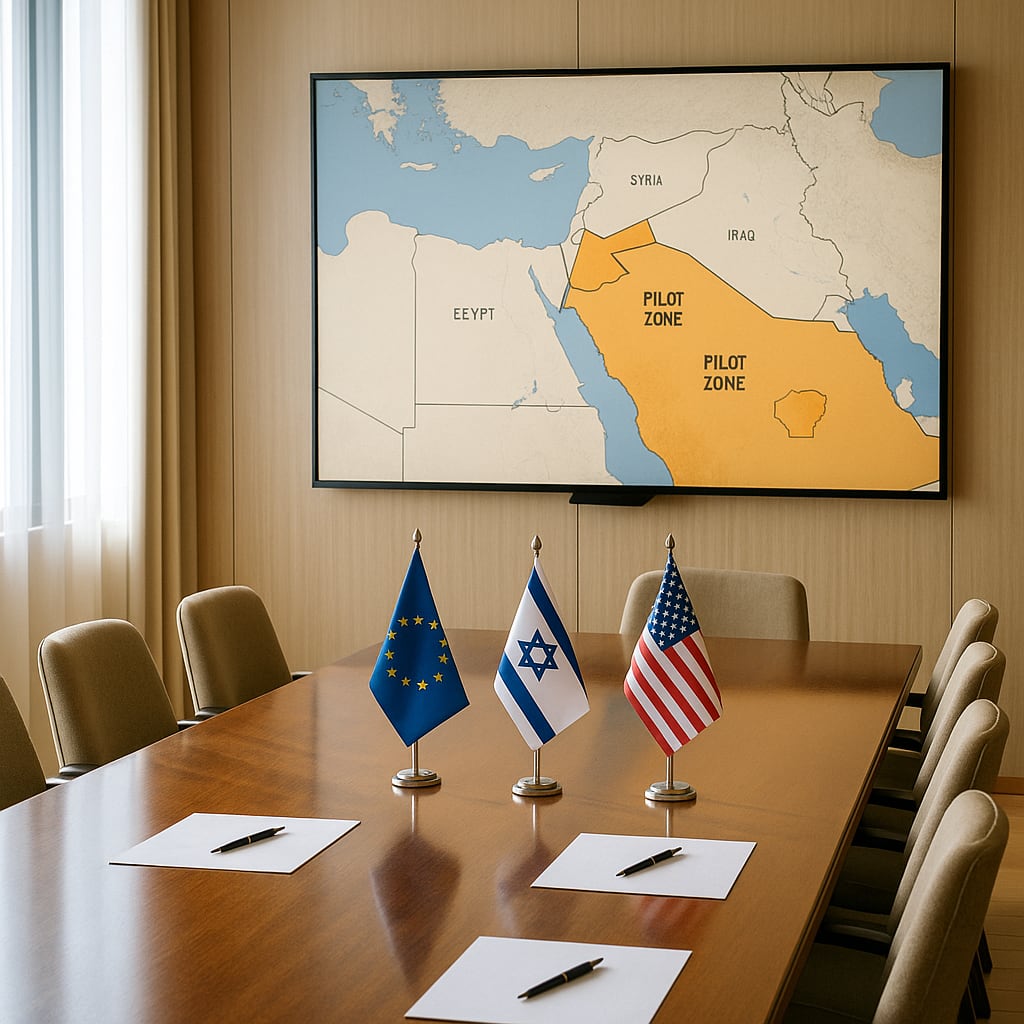
- Broad alignment: Most outlets confirm a US-brokered, trilateral framework signed in Washington by the Lebanese and Israeli ambassadors and the US (Folha de S.Paulo; Le Monde, 26 Jun; BBC; Middle East Eye, 26 Jun). The agreement’s full terms were initially undisclosed (Le Monde, 26 Jun), but the Times of Israel published the text indicating a slight IDF pullback and two pilot zones to be secured by the Lebanese Armed Forces (ToI; Le Monde, 27 Jun; TASS).
- Divergent emphases: Israeli officials present continued presence in southern Lebanon as contingent on Hezbollah disarmament (The Hindu; Al Jazeera; Japan Times). The EU frames next steps as disarmament of non-state groups and protection of Lebanese sovereignty (MEE, 27 Jun). Al Jazeera underscores that Israel “continues to occupy Lebanese land” and highlights divisions within Lebanon (Al Jazeera, 26–27 Jun).
- Contestation and legality: Hezbollah deems the accord “null and void” and a surrender of sovereignty (ANSA; Le Monde, 27 Jun; The Hindu). Fox News casts the deal as a check on Iran, while experts warn Tehran may try to sabotage it (Fox). Legal experts cited by the Guardian warn the deal could impede accountability for alleged war crimes and future ICC jurisdiction in Lebanon (The Guardian).
- Ground truth checks the paper deal: Strikes in southern Lebanon less than 24 hours after the signing and a subsequent Israeli soldier fatality illustrate the fragility of implementation (Folha de S.Paulo, 27 Jun; MEE, 27–28 Jun; BBC, 27 Jun). BBC notes prior ceasefire arrangements failed to stop near-daily cross-border fire.
What Happened
Lebanon, Israel, and the United States signed a framework agreement in Washington on 26 June after several days of direct talks, described as the first such engagement in decades (Le Monde, 26 Jun; BBC; MEE, 26 Jun). The Lebanese and Israeli ambassadors signed at the US State Department (MEE, 26 Jun). While initial statements did not disclose full terms (Le Monde, 26 Jun), the published text outlines a slight Israeli pullback and two pilot zones to be secured by the Lebanese Armed Forces, with the accord envisioned as an initial step toward ensuring both states’ sovereignty and security (ToI; Le Monde, 27 Jun). TASS reports the agreement provides for a gradual Israeli withdrawal and addresses “underlying causes” of conflict (TASS). Jordan and the European Commission president welcomed the accord (MEE, 27 Jun). Hezbollah rejected it as illegitimate (ANSA; Le Monde, 27 Jun). Within a day, Israeli strikes hit southern Lebanon, and clashes later killed an Israeli soldier (Folha de S.Paulo, 27 Jun; MEE, 27–28 Jun; BBC, 27 Jun).
Why It Matters
- Institutional reach: The framework tests whether US-facilitated, direct Lebanon–Israel talks—revived for the first time in decades—can produce enforceable security arrangements when non-state actors retain coercive power (Le Monde, 26 Jun; BBC; ToI). The pilot-zone concept relies on the Lebanese Armed Forces’ capacity to hold territory, a recurring constraint in Lebanese state-building (ToI; Le Monde, 27 Jun).
- Norms and accountability: Legal experts warn the deal may undercut avenues for war-crimes accountability and complicate potential ICC jurisdiction in Lebanon, raising questions about conflict-resolution trade-offs and international justice access (The Guardian).
- Regional alignments: EU support conditions next steps on disarming non-state groups and preserving Lebanese sovereignty (MEE, 27 Jun). Israeli leaders condition any pullback on Hezbollah’s disarmament and prepare for an “extended stay,” signaling hard sequencing that collides with Hezbollah’s outright rejection (The Hindu; Al Jazeera; Japan Times). Fox News foregrounds the Iran dimension and the risk of sabotage, an interpretation mirrored by Hezbollah-aligned media emphasizing resistance principles (Fox; Tehran Times).
- Implementation credibility: Immediate post-signing strikes and casualties stress-test the accord’s deterrent and verification architecture (Folha de S.Paulo, 27 Jun; BBC; MEE, 27–28 Jun).
Diverging Narratives
- “First step” vs. “grave error”: US and Israeli officials present the accord as an initial step toward peace and security (Le Monde, 26 Jun; ToI), while Hezbollah labels it a “grave mistake” and “null and void,” calling on Beirut to reverse course (Le Monde, 27 Jun; ANSA; The Hindu).
- Scope and sequencing of withdrawal: The text and reporting point to a slight IDF pullback and pilot zones under the Lebanese army (ToI; Le Monde, 27 Jun), and TASS references gradual withdrawal. In contrast, Prime Minister Netanyahu and Defense Minister Katz stress Israel will remain in southern Lebanon until Hezbollah disarms, preparing for an “extended stay” (The Hindu; Al Jazeera; Japan Times). Al Jazeera underscores that occupation continues (Al Jazeera, 26 Jun).
- State authority vs. armed non-state actors: EU messaging prioritizes disarmament of non-state groups to safeguard sovereignty (MEE, 27 Jun). Hezbollah’s rejection and continued hostilities challenge the Lebanese state’s ability to operationalize the pilot zones (ANSA; Le Monde, 27 Jun; BBC).
- Legal architecture vs. political expediency: The Guardian reports expert concerns that the agreement could impede victims’ pursuit of accountability and future ICC jurisdiction in Lebanon, potentially trading legal recourse for political stabilization (The Guardian).
- On-the-ground durability: BBC notes precedents of ceasefires that did not halt daily strikes, a pattern seemingly recurring with immediate Israeli strikes and subsequent casualties after signing (BBC; Folha de S.Paulo, 27 Jun; MEE, 27–28 Jun).
What Happens Next
- Pilot-zone implementation: Will the Lebanese Armed Forces assume control of the two pilot areas identified in the framework? Indicators include LAF deployments and publicized handover protocols (ToI; Le Monde, 27 Jun). Failure would signal state-capacity or political-consent gaps.
- Israeli posture: Do Israeli forces enact the “slight pullback” in the text, or does the declared “extended stay” prevail until Hezbollah disarms (ToI; The Hindu; Japan Times; Al Jazeera)? Watch for formal IDF orders and geolocated force dispositions.
- Hezbollah’s operational stance: Does Hezbollah tolerate LAF control or escalate? Signals include leadership rhetoric reiterating nullification (ANSA; Le Monde, 27 Jun) and the tempo/location of claimed or attributed attacks (BBC; MEE).
- External support and conditionality: EU follow-through tying assistance and political backing to disarmament and sovereignty protections (MEE, 27 Jun). Fox-cited expert warnings about Iranian sabotage suggest monitoring Tehran- and Hezbollah-aligned media and militia activity (Fox; Tehran Times).
- Accountability track: Any Lebanese governmental or parliamentary moves that affect victims’ access to justice or ICC-related steps will test the Guardian’s reported concerns (The Guardian).