
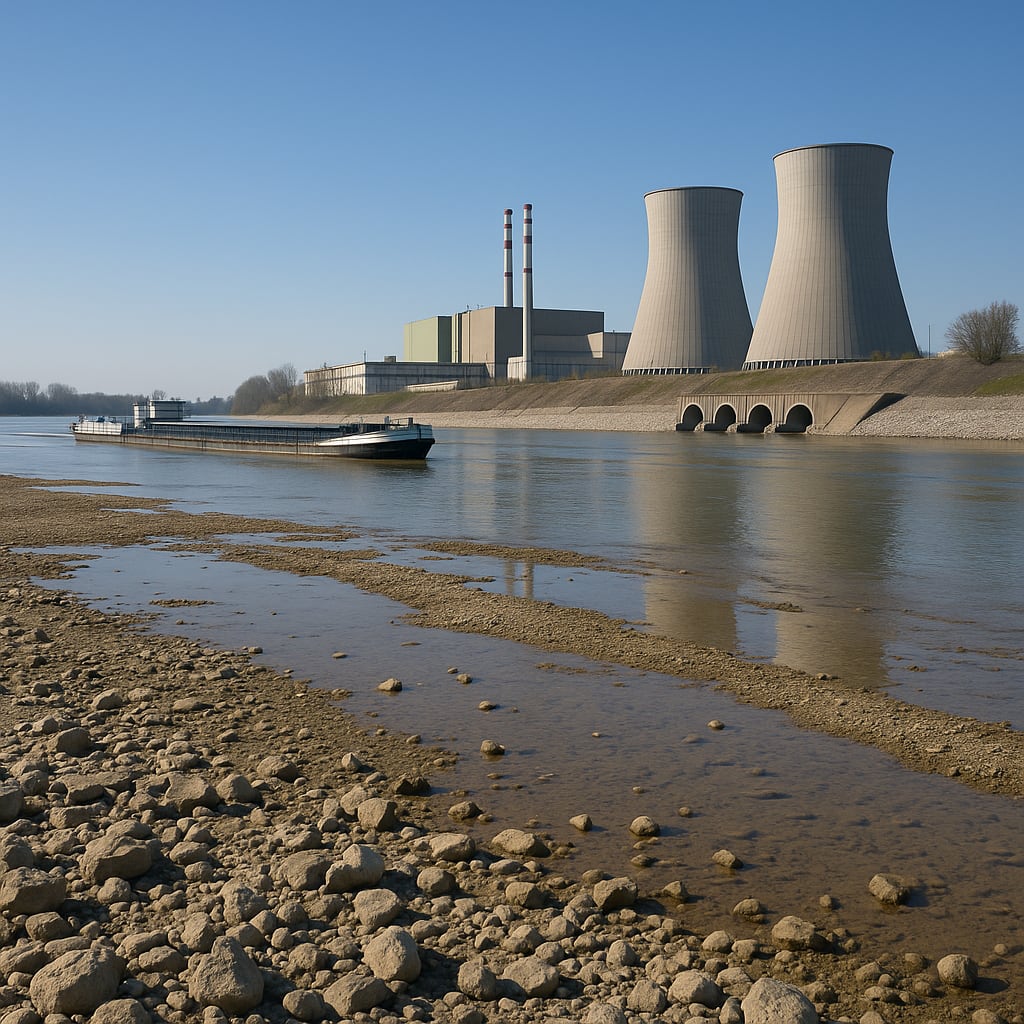
Record-low Danube forces Hungary’s Paks nuclear plant offline as heatwave exposes relics and strains transport
Narrative Snapshot
Across outlets, there is consensus that exceptional heat and drought have driven the Danube to record lows, with systemic knock-on effects. International and regional reporting converge on the vulnerability of river‑cooled power in Hungary, where coverage from Al Jazeera, the Guardian, the Japan Times, Sky News, and Serbia’s Politika focuses on the forced curtailment and expected full shutdown of the country’s sole nuclear station at Paks. Parallel strands emphasize riverine disruption and unusual exposures: RT highlights sunken World War II vessels emerging near Prahovo, while Corriere della Sera documents mammoth remains surfacing in Bulgaria.
The interpretive weight differs. The Guardian and CGTN embed the event in a broader climate and heatwave arc, citing new heat records in central Europe and expert attribution of Western Europe’s heightened warming and wildfire risk. RT’s framing stresses the functional disruption of trade arteries across both the Danube and the Rhine, and adds Romania’s nuclear output cuts. Business‑and‑policy angles vary as well: the South China Morning Post notes Hungary’s call for voluntary power demand reductions, while the Toronto Star’s AP report and Telesur focus on tourism, industry, and transport impacts as river levels fall.
Uncertainty centers on the operational status of Paks. The Guardian reports most of the plant already offline with a complete power‑down expected later in the week; Al Jazeera describes a shutdown; Japan Times and Sky News cite Prime Minister Peter Magyar’s warning of a critical five days as the facility is halted for the first time in over four decades. Politika underscores water falling below a critical threshold near the plant, with experts ready for a first reactor stoppage in 44 years, capturing the same inflection point from a regional vantage.
What Happened
A severe heatwave pushed central European temperatures toward 40C, setting new July records in Austria and prolonging an already extreme summer, according to the Guardian’s weather desk. As the Danube dropped to historic lows, Politika reported levels near Hungary’s Paks nuclear station fell below a critical threshold. Al Jazeera said low river flow disrupted cooling, prompting Hungary to shut down its largest—and only—nuclear plant. The Guardian added that most capacity was already switched off and a full power‑down was expected later in the week; the Japan Times and Sky News quoted Prime Minister Peter Magyar warning of a “critical five days” as the plant halted for the first time in over four decades. RT tied broader drought impacts to near‑halting river transport in Hungary and exposed WWII wrecks near Prahovo, while Corriere showed mammoth remains surfacing in Bulgaria. SCMP reported Hungary’s appeal for voluntary electricity demand cuts.
Why It Matters
This episode exposes infrastructure dependencies that bind energy security, river hydrology, and climate extremes. Multiple outlets report Paks, Hungary’s sole nuclear asset, was forced offline because Danube flows could no longer safely cool the plant—an archetypal risk where thermal generation hinges on water availability. The Guardian’s live coverage flags the potential for an energy crunch as heat intensifies demand while capacity drops. RT points to simultaneous constraints on the Danube and Rhine—two of Europe’s main commercial corridors—suggesting compounded stress on supply chains when waterways become unreliable. CGTN’s expert commentary that Western Europe is warming faster, alongside new heat records in central Europe noted by the Guardian, places these failures within a trend of more frequent, intense heatwaves. For policymakers, the confluence of grid reliability, river management, and transport resilience is immediate and cross‑border, with decisions on demand curbs, operational standards for river‑cooled plants, and contingency logistics becoming central under recurrent drought conditions.
Diverging Narratives
Outlets diverge in how they describe the status and sequencing of the Paks shutdown. Al Jazeera reports a shutdown as a fait accompli. The Guardian says most of the plant is already off and expects complete power‑down later in the week, while the Japan Times and Sky News cite the prime minister describing a critical five‑day window as the plant halts for the first time in decades. Politika, focused on hydrology at the plant site, underscores that the Danube fell below a critical level and that experts are prepared for a first reactor stoppage in 44 years. These differences reflect timing and emphasis rather than contradiction.
Causal framing also varies. CGTN explicitly links persistent heatwaves and wildfire risk to climate change, and the Guardian situates central European heat records within the broader summer pattern. By contrast, several outlets center operational consequences without explicit attribution: RT highlights disrupted navigation and “near halt” of river transport in Hungary, adds Rhine disruption and Romania’s nuclear power‑down, and emphasizes high‑impact visuals of resurfaced WWII wrecks; Corriere similarly spotlights striking exposures, in this case mammoth remains in Bulgaria. Telesur and the Toronto Star’s AP piece foreground impacts on tourism, industry, and transport across central Europe, while SCMP surfaces policy responses such as Hungary’s voluntary electricity demand reductions.
What Happens Next
Three decision points emerge. First, the operational trajectory at Paks: the Guardian reports a complete shutdown expected later in the week, and Japan Times/Sky News quote the prime minister calling the next five days critical. Analysts should watch Danube hydrological readings near Paks, operator advisories, and grid-balancing measures. Second, demand management: SCMP notes Hungary’s call for voluntary consumption cuts; subsequent government or grid communications will indicate whether voluntary steps persist or are supplemented. Third, transport continuity: RT reports river transport has nearly come to a halt in Hungary; statements from transport ministries and navigation authorities will signal routing adjustments, draft restrictions, or temporary closures as low water persists. Broader heat and wildfire conditions highlighted by CGTN and the Guardian’s live coverage remain an ambient risk variable that will shape all three arenas over the coming week.