
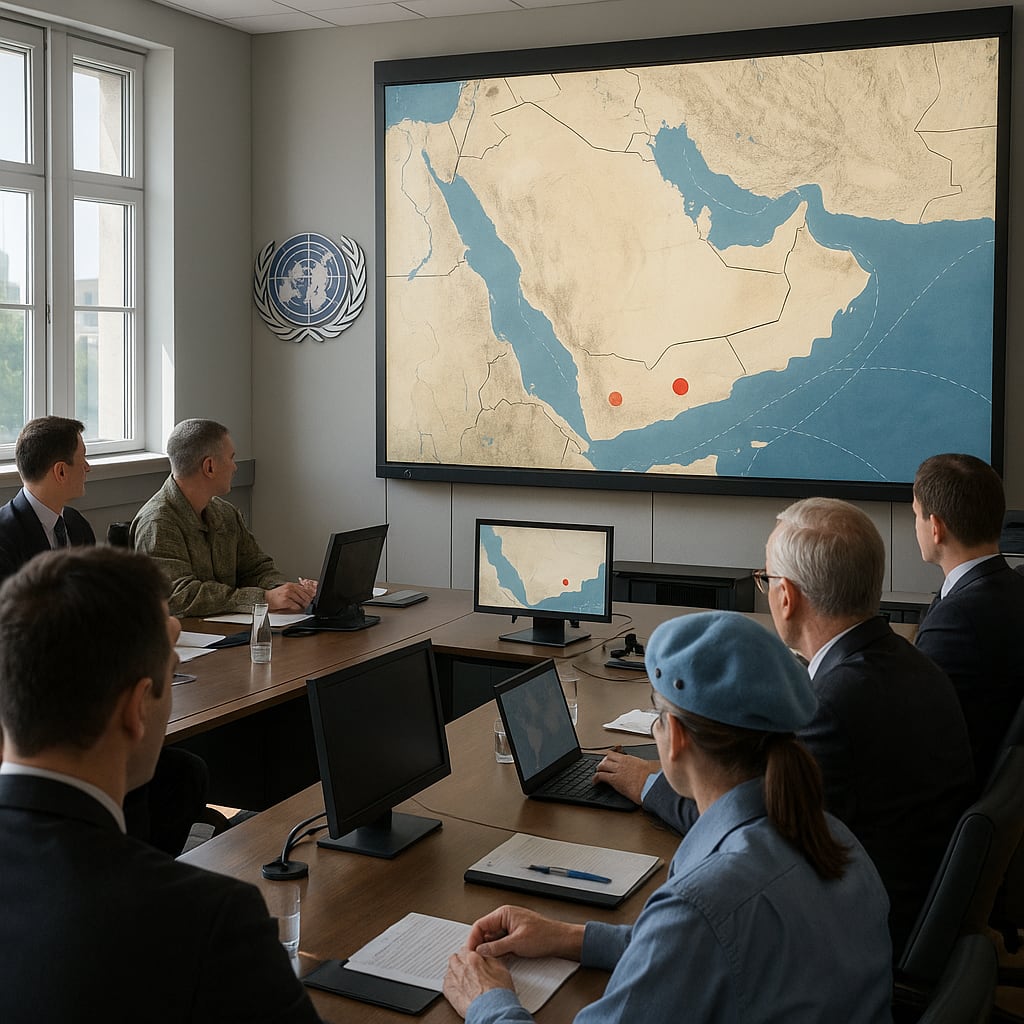
Houthis launch drone and missile strikes in Marib and Hadramawt, with reported deaths among Yemeni government forces ranging from 30 to 58
Narrative Snapshot
Across outlets, coverage converges on a coordinated Houthi operation employing drones and ballistic missiles against positions aligned with Yemen’s internationally recognized, Saudi‑backed government in Marib and Hadramawt. The Houthis frame the action as retaliation against “Saudi military build-ups,” a rationale carried prominently by BBC, Al Jazeera, Middle East Eye, and France 24 through statements attributed to Houthi military spokesman Yahya Saree.
The most consequential divergence is the death toll. Reports span at least 30 fatalities cited by Yemeni government officials to the Associated Press (Toronto Star) and BBC, 38 from medical sources (France 24 and Le Monde), 45 reported by TASS citing television, and 58 attributed to a military source speaking to AFP and carried by Middle East Eye, the South China Morning Post, The Hindu, and the Bangkok Post. While most outlets date the attacks to Thursday, TASS notes the precise timing was not specified.
A second divide is interpretive. Several outlets situate the violence largely within Yemen’s front-line dynamics and a recent uptick in hostilities, including a July incident near Hodeida (Le Monde). Others emphasize broader regional linkages: the South China Morning Post reports civilians wounded in Saudi Arabia and casts the escalation as part of Yemen’s increasing entanglement with the US‑Israel‑Iran confrontation; RT foregrounds risks to regional shipping amid what it describes as a wider war; The Hindu links the episode to oil price gains and concerns around the Strait of Hormuz. Together, these frames elevate the stakes beyond the immediate battlefield.
What Happened
Yemen’s Houthi movement claimed coordinated strikes on Thursday against Saudi‑backed government forces in the central and eastern provinces of Marib and Hadramawt, saying it used drones and ballistic missiles against “Saudi military deployments” and camps amid a reported buildup by coalition-aligned units (BBC; Al Jazeera; France 24; RT; Middle East Eye). Reported fatalities vary: Yemeni officials told the Associated Press that at least 30 soldiers were killed and 50 wounded (Toronto Star), medical sources cited by France 24 and Le Monde put the toll at 38, TASS reported at least 45 through a television source with no precise timing, and AFP‑sourced figures relayed by Middle East Eye, the South China Morning Post, The Hindu, and the Bangkok Post said at least 58 were killed. The South China Morning Post additionally reported civilians wounded in Saudi Arabia during the same escalation. Le Monde noted a July attack south of Hodeida that killed 16 soldiers.
Why It Matters
Multiple outlets describe this as among the deadliest days in Yemen’s conflict in roughly four years (South China Morning Post; Bangkok Post), suggesting a meaningful break from the relative lull many actors had treated as a baseline for managing risk. The Houthis’ explicit linkage of their operation to “Saudi military build-ups” reframes deterrence dynamics along the Marib–Hadramawt axis and tests Saudi Arabia’s calculus in supporting government-aligned formations (BBC; France 24; Middle East Eye). If casualty figures consolidate toward the higher estimates carried by AFP and others, political pressure for visible responses will increase on both sides.
The episode also intersects with regional systems risk. Coverage by RT and The Hindu highlights concerns about maritime security and energy markets, with The Hindu noting oil price gains alongside anxiety around the Strait of Hormuz. The South China Morning Post’s report of civilians wounded inside Saudi Arabia underscores the potential for cross‑border spillover, complicating crisis management for Riyadh, a key US ally backing Yemen’s internationally recognized government. Collectively, these threads raise the salience of coordination among regional partners and crisis‑monitoring institutions.
Diverging Narratives
The central factual gap is the death toll. Lower-end figures of at least 30 killed come from Yemeni government officials speaking to AP (Toronto Star) and are echoed by BBC’s cautious framing. France 24 and Le Monde cite medical sources for a toll of 38. TASS reports at least 45 deaths while noting that the timing was unspecified. AFP’s higher estimate of 58 fatalities, carried by Middle East Eye, the South China Morning Post, The Hindu, and the Bangkok Post, makes this one of the deadliest days in years. These discrepancies reflect differing sourcing—government officials, medical staff, AFP’s military source, or broadcast accounts—and the early, fluid nature of battlefield reporting.
How to interpret the strikes also varies. Several outlets foreground Houthi claims of retaliation against “Saudi military build-ups” and focus on Yemen’s internal fronts in Marib and Hadramawt (BBC; Al Jazeera; France 24; Middle East Eye). Le Monde adds continuity with July’s fatal attack near Hodeida, emphasizing a renewed cycle of hostilities with Saudi Arabia. By contrast, RT links the flare‑up to fears of wider Middle East bloodshed and threats to shipping, and the South China Morning Post explicitly connects Yemen’s escalation to the US‑Israel‑Iran confrontation while noting civilians wounded in Saudi Arabia. The Hindu brings in market dynamics, pointing to oil price movements and Hormuz‑related concerns. Together, the casualty variance and geopolitical framing differences indicate unsettled facts on the ground and competing risk lenses.
What Happens Next
Two decision points emerge from the reporting. First, Saudi‑backed forces and Riyadh must decide whether to reinforce, reposition, or de‑escalate in Marib and Hadramawt—postures the Houthis have explicitly tied to their targeting rationale. Analysts should watch for official coalition statements, visible troop movements, or announcements of counter‑operations, as well as updated casualty figures that could shape political incentives (BBC; France 24; Middle East Eye; RT).
Second, the potential for cross‑border spillover bears monitoring after the South China Morning Post reported civilians wounded in Saudi Arabia. Indicators include claims and counterclaims of cross‑border strikes, air‑defense activity, and any Saudi messaging on civilian protection. Market and maritime signals also matter: The Hindu’s note on oil price gains and Hormuz concerns, and RT’s emphasis on shipping risks, suggest tracking energy price moves, shipping advisories, and port or corridor security notices for signs that this episode is affecting regional trade routes.