
DR Congo Ebola outbreak outpaces response amid unpaid health worker strikes; WHO urges escalation
Narrative Snapshot
Across outlets there is broad agreement that the outbreak’s trajectory is steep and worrisome, but emphasis differs. International broadcasters foreground the acceleration and the World Health Organization’s call to scale up, with WHO leadership warning infections are doubling in some hotspots and describing the crisis as the fastest-growing Ebola epidemic on record. Several reports place cumulative deaths above 1,700, with some citing more than 1,800, while case counts are variously described as nearing or surpassing 4,000.
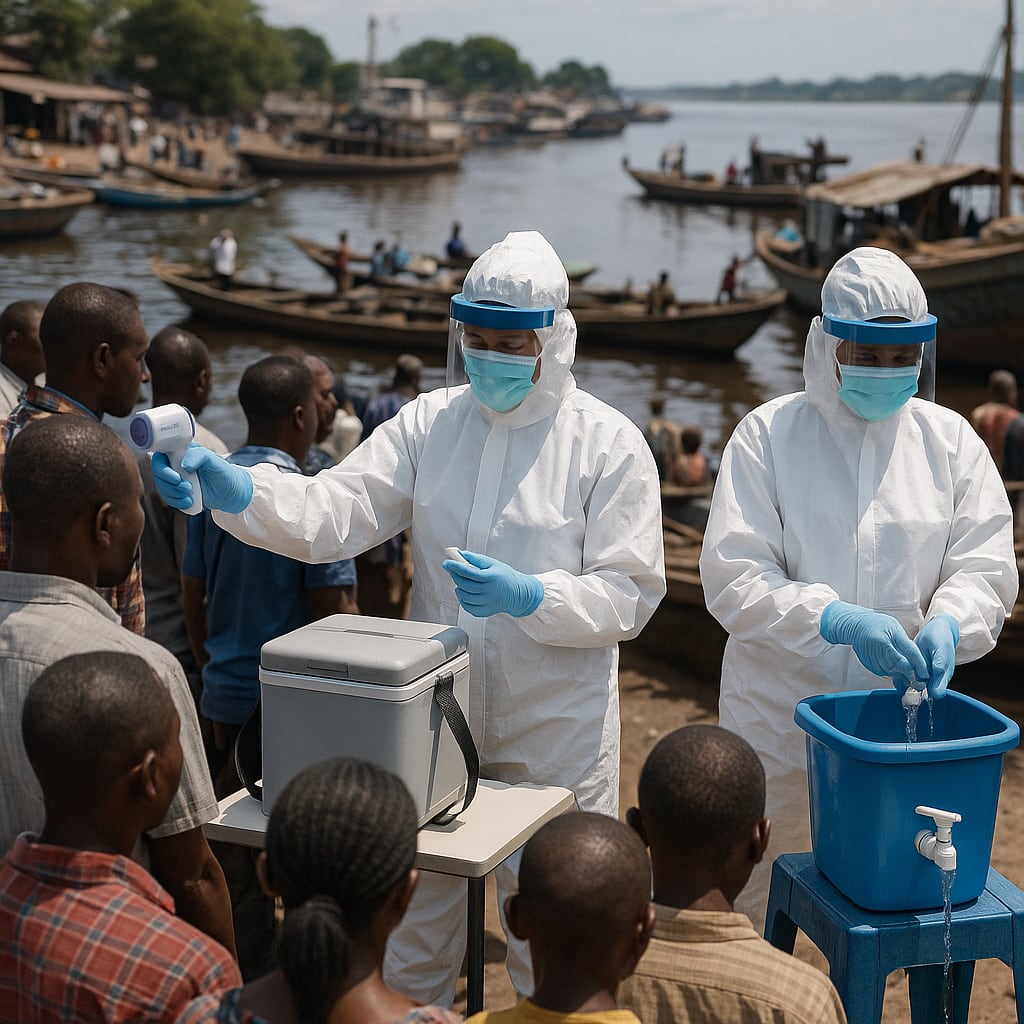
Two strands of coverage map the operational risks. One focuses on front-line capacity: strikes by unpaid health workers at the epicenter are disrupting care and response activities, and both WHO and Africa CDC publicly press for a community-led scale-up to strengthen early detection, contact follow-up, and support for frontline staff. The other tracks transmission risk along mobility corridors and in vulnerable settings, noting screening of a river boat near Kinshasa after multiple deaths and confirmed infections among internally displaced people.
Outlets also differ in how they frame scientific uncertainty and tools. Reporting ranges from officials’ concern that the virus may be mutating to Africa CDC’s plan to deploy a vaccine developed for a different Ebola strain alongside ongoing trials. Meanwhile, UNICEF highlights a collateral crisis: a more than 40 percent drop in routine services in the outbreak’s epicenter, including childhood immunizations and safe deliveries, as child deaths attributed to Ebola pass 300.
What Happened
Health workers in the epicenter of the Democratic Republic of the Congo’s Ebola outbreak staged protests over unpaid wages, abandoning facilities and disrupting care, according to wire reports and regional media. WHO Director-General Tedros Adhanom Ghebreyesus, visiting the country, said the epidemic is outpacing the response, with cases doubling in some hotspots, and urged an intensified effort. Broadcaster reports put deaths at more than 1,700 to over 1,800 and cases near or above 4,000. Africa CDC and WHO jointly called for urgent, community-led action to bolster early detection, contact follow-up, access to care, and frontline worker support. UNICEF warned that the outbreak is degrading essential health services, with over 40 percent declines in immunizations and safe deliveries and more than 300 child deaths. Separately, a river boat near Kinshasa was quarantined for screening after five deaths; authorities deployed a mobile lab and tested over 300 passengers.
Why It Matters
The episode exposes structural limits in epidemic response capacity and governance. Labor disruptions at the epicenter underscore how frontline workforce financing and administration can become failure points when caseloads surge, directly affecting containment operations reported by multiple outlets. The joint WHO–Africa CDC call for community-led escalation signals a pivot toward locally anchored surveillance, care access, and contact management, an approach that may shape how African public health bodies and UN agencies operationalize responses beyond this outbreak. Scientific and policy tools are in flux: trials for an effective vaccine continue even as Africa CDC plans to deploy a vaccine designed for a different strain, setting a precedent for cross-strain use under pressure. UNICEF’s documentation of steep declines in routine services highlights the secondary health impacts that multilateral and national planners must weigh, particularly as transmission risks intersect with displacement and major transport routes.
Diverging Narratives
Coverage diverges on pace and spread. Some reports emphasize sustained transmission without further geographic expansion, while others stress spread into remote areas and flag potential exposure along the Congo River corridor, illustrated by the quarantined boat near Kinshasa and large-scale onboard testing. Totals vary by outlet—some cite more than 1,700 deaths with cases near 4,000, others report deaths surpassing 1,800 and cases above 4,000—reflecting reporting cutoffs and differing official updates.
On etiology and countermeasures, officials cited by one outlet raise the possibility of viral mutation, prompting a contemplated door-to-door search as part of a scaled response, while another highlights Africa CDC’s plan to use a vaccine formulated for a different Ebola strain alongside continuing vaccine trials. These accounts frame uncertainty differently: virological change versus reliance on imperfect but potentially protective tools. Meanwhile, operational framings split between worker conditions—unpaid wages and strikes undermining field operations—and system-wide knock-on effects, with UNICEF quantifying sharp declines in immunizations and safe deliveries and UN agencies confirming infections among internally displaced people.
What Happens Next
Several decision points will shape the trajectory. First, resolving wage disputes at the epicenter will determine whether strikes continue to disrupt care and surveillance; outlets directly link work stoppages to operational slowdowns. Second, the scope and speed of the WHO–Africa CDC push for community-led escalation—early detection, contact follow-up, support for frontline workers—will indicate whether response capacity can match reported doubling of cases in hotspots. Third, authorities’ management of mobility-linked risks bears watching: outcomes of mass screening on the quarantined river boat and any extension of testing along river routes will signal the response to potential urban exposure. Fourth, vaccine strategy choices matter: Africa CDC’s planned deployment of a vaccine for a different strain, alongside ongoing trials, will hinge on field performance and supply. Finally, UNICEF’s indicators on routine service coverage will show whether collateral health system declines can be reversed amid containment efforts.