
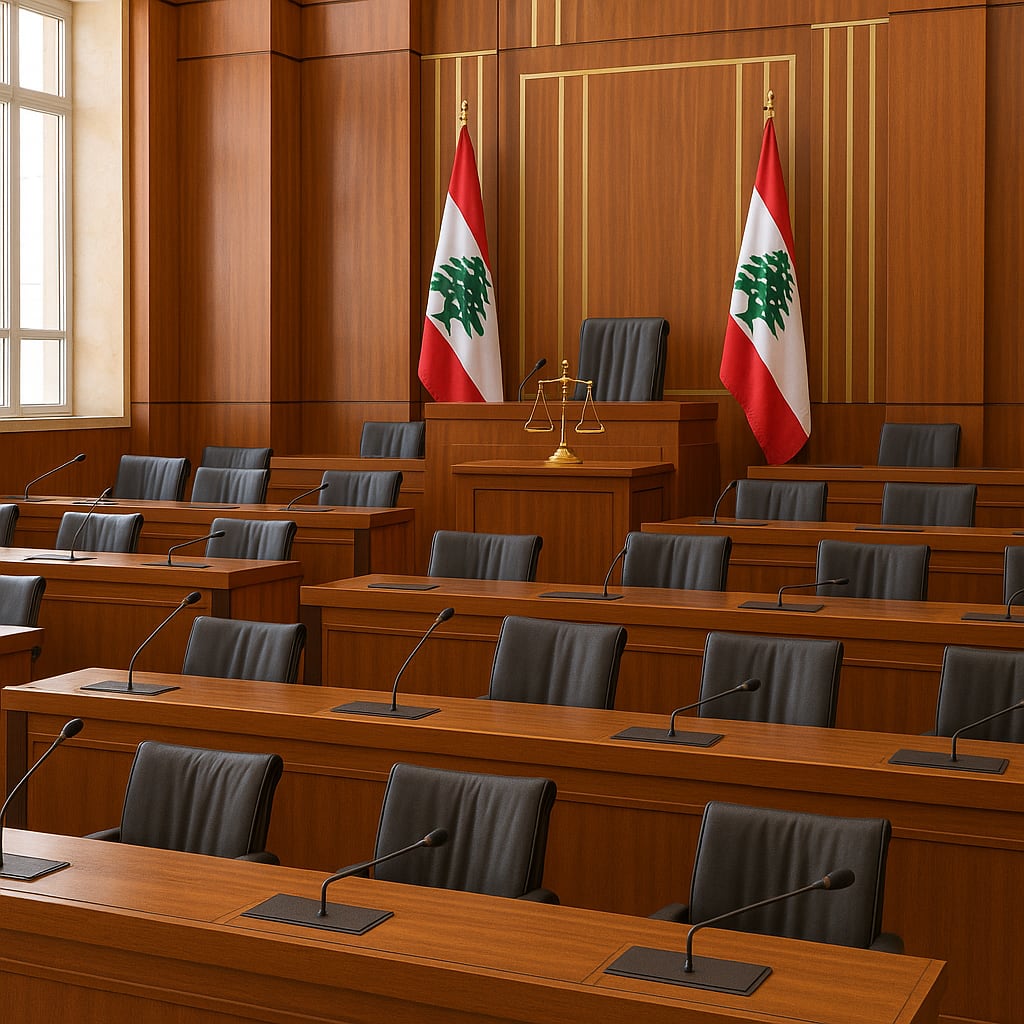
Lebanon votes to abolish death penalty, first in the Arab world
Narrative Snapshot
Across outlets, coverage converges on two elements: the regional first and the substitution of capital punishment with life imprisonment entailing aggravated hard labour. Canadian, Hong Kong, Italian, Israeli, Qatari, and French reporting all foreground the “first” status, though they vary in framing it as the first in the Arab world, the Middle East, or both. Several accounts emphasize that Lebanon had already observed a de facto halt to executions since 2004, situating the move as a legal formalization of an entrenched practice.
Where reporting diverges is over process, politics, and the reform’s scope. The BBC underscores that the law next requires cabinet approval, implying a remaining procedural step, while most other outlets treat the parliamentary vote as the decisive act. The Times of Israel singles out Hezbollah’s opposition during the vote, introducing a domestic political cleavage that others omit. A follow-up analysis in Le Monde and France 24 notes that courts continued to issue death sentences as recently as the day before the vote and that at least 85 people remained on death row, shifting the frame from symbolism to implementation and institutional capacity. Al Jazeera’s global data point, citing Amnesty International’s finding that three-quarters of states have abolished the death penalty in law or practice, places Lebanon’s move within an international trendline rather than an isolated national pivot.
What Happened
Lebanon’s parliament voted on Tuesday to abolish the death penalty and replace it with life imprisonment with aggravated hard labour, according to multiple outlets citing the session and the state-run National News Agency. Justice Minister Adel Nassar, who attended the session, called the decision “historic.” Reporting by the Times of Israel states the measure passed by a majority of the 128-member chamber, with the Hezbollah bloc opposing it. Le Monde and France 24 note that Lebanon has not carried out an execution since 2004, though courts continued to hand down death sentences, with France 24 adding that the latest such sentence was issued on Monday. Both outlets also report that at least 85 people were on death row as of January. The BBC adds a procedural detail: the new law now goes to the cabinet for approval. Multiple outlets characterize Lebanon as the first country in the Arab world or Middle East to end capital punishment.
Why It Matters
Regionally, Lebanon sets a novel precedent: multiple outlets describe it as the first Arab or Middle Eastern state to abolish the death penalty outright, marking a departure from regional norms. Internationally, Al Jazeera, citing Amnesty International, situates the step within a broader trajectory in which three-quarters of countries have abolished capital punishment in law or practice, aligning Lebanon with an expanding abolitionist consensus. Domestically, the move codifies a two-decade halt in executions but also intersects with ongoing judicial practice; Le Monde and France 24 underline that death sentences were still being issued and that 85 inmates remained on death row, making implementation choices consequential. Politically, the Times of Israel’s account of Hezbollah’s opposition indicates that the reform does not command universal elite consensus, which could shape subsequent procedural steps flagged by the BBC and the pace at which related criminal justice practices are harmonized with the new statute.
Diverging Narratives
Outlets differ on whether this is primarily a juridical milestone or a systemic reform. The Associated Press report carried by the Toronto Star, ANSA, the South China Morning Post, and Al Jazeera stress the replacement penalty and the “historic” framing attributed to the justice minister, presenting a clean legislative outcome. Le Monde’s subsequent analysis and France 24’s reporting complicate that view by underscoring continued sentencing up to the eve of the vote and the residual cohort on death row, suggesting that practical effects hinge on how the law is applied within Lebanon’s strained justice system.
There is also variance in how final the decision is portrayed. Most outlets describe parliament’s action as abolition, while the BBC highlights a remaining procedural step in cabinet, implying a still-moving process rather than a fait accompli. Political context surfaces unevenly: the Times of Israel notes Hezbollah’s bloc opposed the motion and frames the law as formalizing a 2004 moratorium, while other reports emphasize the regional first without detailing intra-parliamentary alignments. Finally, the regional framing itself varies—some label Lebanon the first in the Arab world, others the broader Middle East, and Le Monde spans both—reflecting different geographic lenses rather than disagreement on substance.
What Happens Next
Two decision points emerge from the coverage. First is procedural completion: the BBC reports the law proceeds to the cabinet. Endorsement would cement the parliamentary vote; delay or modification would extend uncertainty. Analysts should watch for cabinet communiqués and timelines for promulgation. Second is application to existing cases: Le Monde and France 24 identify at least 85 people on death row and note that courts issued death sentences as recently as Monday. Implementation will turn on how authorities commute existing sentences and instruct courts on pending capital cases, as implied by the law’s substitution of penalties reported across outlets.
Domestic politics remain a variable. The Times of Israel reports Hezbollah’s opposition, which could influence debate over implementing measures or related penal code adjustments. Regionally and internationally, Al Jazeera’s reference to global abolition trends provides a benchmark for external scrutiny; responses from rights groups to Lebanon’s follow-through will indicate whether this is seen as normative alignment in law and practice.