
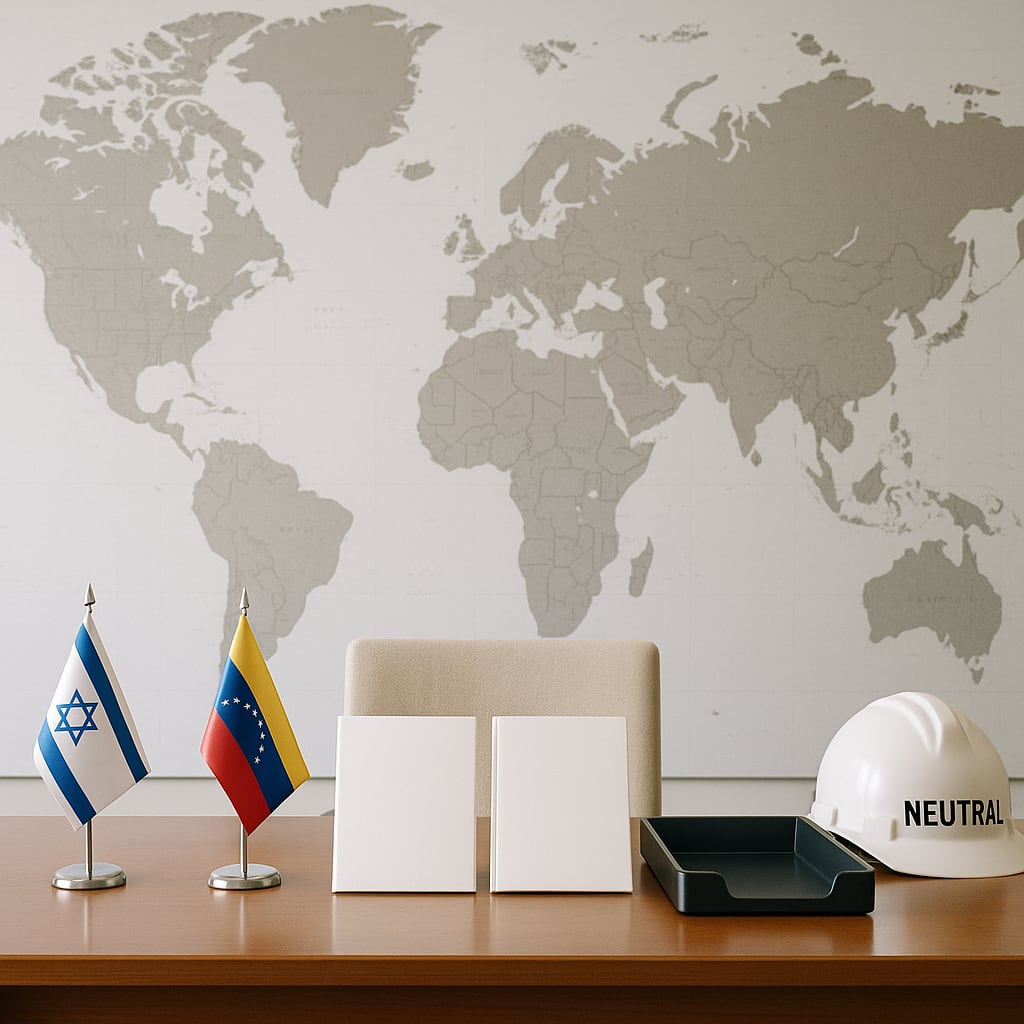
Israel and Venezuela renew consular relations after 17 years
Narrative Snapshot
Across outlets, the core development is framed as a limited, practical reopening of channels rather than a wholesale political embrace. Israeli and several international reports stress the sequence linking Israel’s June disaster-response mission after twin earthquakes to the consular step and prospective technical cooperation, presenting humanitarian engagement as a catalyst for re-engagement. Coverage from Hong Kong and the UK centers the January removal of Nicolás Maduro by the United States and the subsequent realignment under acting/interim President Delcy Rodriguez as the enabling context. Chinese state media adds institution-focused detail on foreign-minister–level talks and the role of Venezuela’s Jewish community as a bridge. A Palestinian outlet situates the move amid American pressure and notes popular rejection. The principal point of variance concerns scope: most outlets report a restoration of consular services, while one describes a broader restoration of “official diplomatic relations.”
What Happened
Israel and Venezuela announced the renewal of consular relations for the first time since Caracas severed ties in 2009. Multiple outlets link the step to Israel’s aid and disaster-response mission after June’s deadly earthquakes in Venezuela and to political change in Caracas following the January US removal of President Nicolás Maduro, with Delcy Rodriguez now serving as acting or interim president. Israel’s Foreign Minister Gideon Sa’ar said the parties agreed to set up a coordination mechanism to provide consular services, and reports from Venezuela’s foreign ministry referred to restoring consular services and maintaining bilateral technical cooperation. Chinese coverage said Sa’ar spoke with Venezuelan Foreign Minister Felix Plasencia and highlighted official recognition of the Jewish community as an “historical bridge.” An Israeli outlet noted Venezuela’s chief rabbi publicly urged restoration of ties a day before the announcement.
Why It Matters
Outlets broadly frame the move as a signal of Caracas’s external realignment after January and as a test of how far humanitarian diplomacy can open space for incremental normalization. Reports tie the consular step to closer alignment with Washington, indicating potential recalibration of Venezuela’s longstanding posture toward Israel since 2009. The emphasis on a coordination mechanism and technical cooperation points to a functional track that could expand or stall based on political signals, while explicit recognition of Venezuela’s Jewish community as a bridge underscores a constituency that both governments now reference in official messaging. For policymakers, the case illustrates how crisis-response engagement can translate into limited institutional rebuilding, and how shifts in Venezuela’s leadership are already reverberating through its bilateral configurations in the Americas and the Middle East.
Diverging Narratives
The clearest divergence is over the level of restoration. Most reports specify consular ties and mechanisms to deliver services in the absence of full diplomatic relations, while one outlet characterizes the move as a restoration of “official diplomatic relations,” even as it cites the same consular coordination language from Israel’s foreign minister. Attribution of causality also varies. Israeli and several international outlets stress the sequencing from Israel’s June humanitarian mission to the consular announcement and note prospective cooperation linked to that mission. Others foreground the January US operation that removed Maduro and describe Venezuela’s subsequent shift toward Washington as the decisive context, using terms ranging from “military raid” to “abduction” and “capture.” A Palestinian outlet places the step under “American pressures” and notes “popular rejection,” introducing a domestic-constraint frame absent elsewhere. One Chinese report emphasizes formal ministerial talks and institutional recognition of the Jewish community, highlighting process and constituencies rather than geopolitical realignment.
What Happens Next
Two decision points emerge from the reporting. First is whether consular coordination evolves into full diplomatic normalization. Most outlets describe a consular reopening, while one implies a broader restoration; movement toward embassies and ambassadorial appointments would clarify scope. Analysts should watch for formal communiqués from both foreign ministries specifying diplomatic status, as well as any announcements on reopening missions. Second is whether “bilateral technical cooperation” and “cooperation stemming from” the June aid mission materialize into specific projects. Concrete agreements or MOUs would indicate institutionalization beyond symbolism. Given several outlets’ emphasis on Venezuela’s shift toward Washington and references to American pressure, official US messaging and Venezuelan policy signals under Acting/Interim President Rodriguez will be relevant indicators of how far Caracas intends to take this track. Engagement with Venezuela’s Jewish community, cited as a bridge, is another practical marker of follow-through on the stated rationale for re-engagement.