
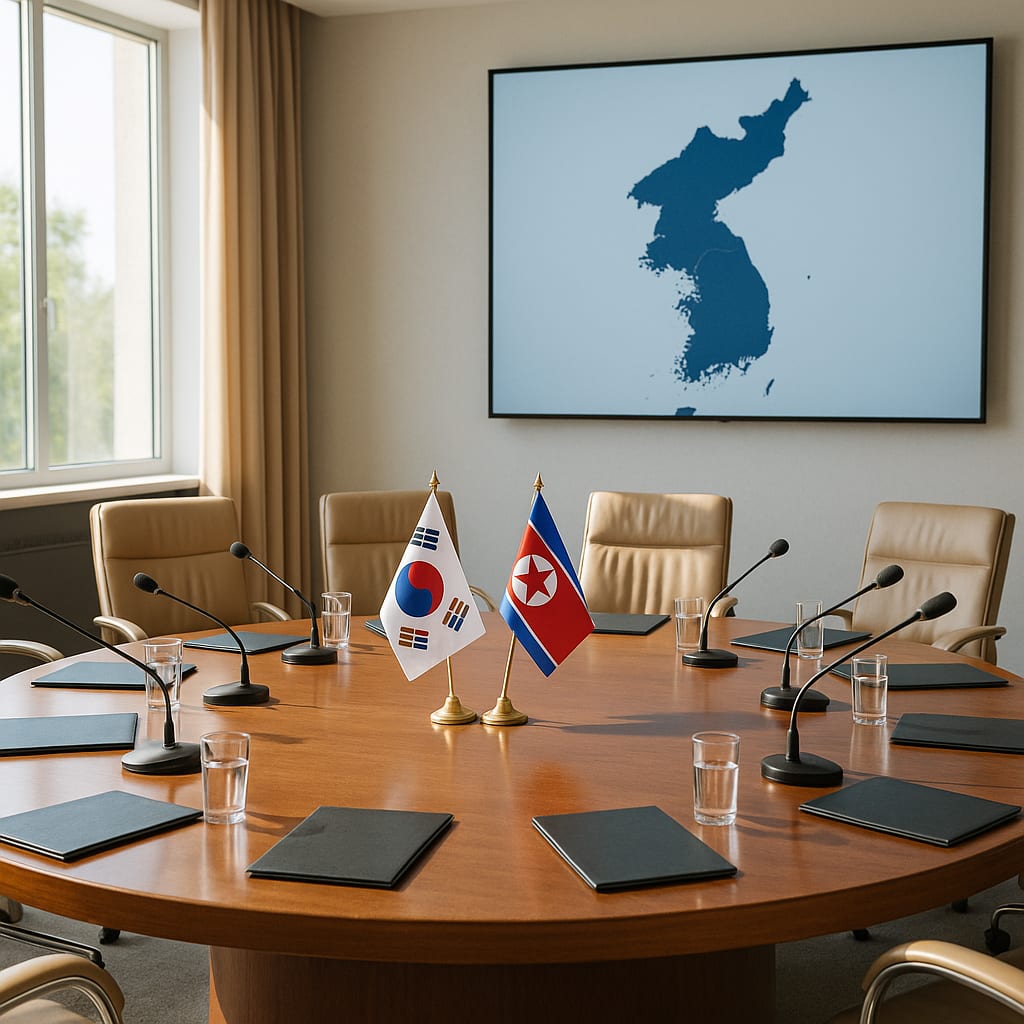
South Korea’s president proposes talks with North Korea to formally end the Korean War
Narrative Snapshot
Across outlets, the basic development is uncontested: Lee Jae Myung used a Liberation Day address to invite Pyongyang to talks aimed at replacing the 1953 armistice with a formal end-of-war arrangement. Where coverage diverges is in how much strategic context is attached and which policy levers are foregrounded. South China Morning Post and the Bangkok Post situate the initiative amid North Korea’s deepening ties with Russia and Pyongyang’s assertion that its nuclear status is “irreversible,” underscoring constraints on any diplomacy that seeks to alter the peninsula’s security equilibrium. Telesur extends the frame by highlighting Lee’s call for a “lasting peace regime,” conflict-prevention mechanisms, and negotiations that could include curbing the DPRK’s nuclear capabilities, with “other concerned parties” involved.
By contrast, BBC, France 24, and Al Jazeera deliver concise notices that emphasize the invitation to talks without additional geostrategic or domestic overlays. RT adds two elements largely absent elsewhere: an emphasis on discussing “practical ways” to halt North Korea’s nuclear advancement and a domestic political backdrop that includes claims about Lee’s predecessor and outreach to China. The Diplomat provides an analytical lens, distinguishing an “armistice regime” from a “peace regime” and urging a mindset shift that preserves workable arrangements while tackling unresolved issues—framing that helps interpret the breadth of what Seoul signaled.
What Happened
In an August 15 address marking Korea’s liberation from Japanese colonial rule, South Korean President Lee Jae Myung proposed talks with North Korea to replace the 1953 armistice with an agreement that would formally end the Korean War. He urged Pyongyang to engage on mechanisms to prevent renewed conflict and reduce tensions and called on the DPRK and “other concerned parties” to negotiate a permanent peace framework. Lee indicated that negotiations could include measures to curb North Korea’s nuclear capabilities, with Seoul committing to sustained steps to ease tensions and embed safeguards against escalation. The proposal comes as tensions persist over military exercises and North Korea’s nuclear and missile programs, while Pyongyang has deepened ties with Russia and asserted its nuclear status as “irreversible,” according to multiple outlets. Several international media summarized the initiative, with some emphasizing its strategic context.
Why It Matters
Moving from an armistice to a “peace regime” would alter the peninsula’s risk architecture by shifting from ceasefire management to a negotiated end-of-war framework. The Diplomat’s call for a new mindset—preserving what works while targeting unresolved issues—aligns with Lee’s pairing of conflict-prevention measures and potential steps to curb the DPRK’s nuclear capabilities. The timing intersects with North Korea’s claims of an “irreversible” nuclear status and reported deepening ties with Russia, factors that complicate enforcement incentives and verification pathways. For decision-makers, the initiative tests whether structured de-escalation and safeguards can advance alongside a constrained nuclear agenda, rather than hinging on wholesale disarmament. It also signals potential roles for “other concerned parties,” implying a broader diplomatic configuration for any formal end-of-war accord and the institutional arrangements that would need to underwrite it.
Diverging Narratives
Outlets differ on whether to center the initiative’s legal-diplomatic goal or its potential as a platform for nuclear risk management. Telesur and RT explicitly emphasize discussions on curbing or halting the advancement of North Korea’s nuclear program, portraying the end-of-war talks as bundled with practical arms-control steps and safeguards. BBC, France 24, and Al Jazeera largely confine themselves to the formal end-of-war proposition, without elaborating prospective negotiating baskets. SCMP and the Bangkok Post foreground the external strategic headwinds—Pyongyang’s tightening linkages with Russia and its assertion of an “irreversible” nuclear status—signaling the constraints under which any talks would unfold. RT alone threads in a domestic political narrative around Seoul and notes outreach to China; it also references a separate conciliatory episode involving drone incursions in a sidebar. The Diplomat reframes the debate around institutional design—armistice versus peace regime—and a calibrated problem-solving approach, rather than a single sweeping settlement.
What Happens Next
Key decision points turn on scope, participation, and sequencing. First, Pyongyang’s response will determine whether discussions open at all; indicators include public statements acknowledging the proposal and any movement toward working-level contacts. Second, agenda-setting will be pivotal: Telesur and RT report that Seoul is prepared to discuss measures to curb or halt the advancement of the DPRK’s nuclear program alongside conflict-prevention safeguards, so watch for explicit reference to such baskets in official communiqués. Third, the inclusion of “other concerned parties,” raised by Telesur, would shape process design; signals could include consultations or invitations beyond the two Koreas. Finally, context setters matter: SCMP and the Bangkok Post highlight North Korea–Russia ties and the “irreversible” nuclear claim, while Telesur notes tensions over military exercises. Shifts on any of these axes would affect the negotiating space and the durability of any peace regime under discussion.