
US defends USS Abraham Lincoln deployment as relief ship moves in amid reports of crew strain and congressional scrutiny
Narrative Snapshot
Across outlets, there is broad agreement on two facts: the USS Abraham Lincoln’s deployment has stretched far beyond typical rotations, and multiple reports describe strain on sailors, including mental health concerns and degraded living conditions. UK and US mainstream coverage foregrounds the welfare concerns and policy accountability angles. The Guardian and BBC cite reports of water and food shortages, broken plumbing, and sailors considering or attempting to jump overboard, with veterans and health experts warning about cumulative stress from prolonged at-sea operations. Al Jazeera frames the episode within a wider “crisis aboard” narrative.
Where outlets diverge is in official framing and geopolitical emphasis. US officials push back: Defense Secretary Pete Hegseth calls the reporting “completely misrepresented” and stresses both continuous support and the Navy’s ability to sustain a blockade through rotation, while President Donald Trump dismisses family concerns and downplays deployment length even as he confirms a near-term relief. By contrast, state-linked and regional outlets emphasize operational strain and political fallout: CGTN details a Senate letter listing supply and safety issues; RT highlights “extreme mental exhaustion” and shortages; Tehran Times amplifies calls for Hegseth’s ouster. Haaretz and Al Jazeera place the carrier episode within the coercive strategy against Iran, underscoring claims of “indefinite” blockade capacity and escalating economic measures.
What is most at stake varies by vantage point. US and European outlets stress force readiness, sailor welfare, and civilian oversight; Middle Eastern coverage connects morale and logistics to the feasibility of enforcing a blockade in the Strait of Hormuz; Iranian media highlight US vulnerability and domestic political rifts. Le Monde underlines a governance dimension: selective disclosure and shifting objectives around a conflict the White House has not fully accounted for.
What Happened
Reports from multiple outlets state the USS Abraham Lincoln has been deployed for over eight months, including more than 200 consecutive days at sea without a significant port call, after being redirected from the Pacific to support US operations against Iran (The Guardian; BBC; RT; Tehran Times). Media accounts describe food and water shortages, plumbing issues, and mental health crises, including attempts to jump overboard (BBC; The Guardian; CGTN referencing Navy Times and Stars and Stripes; Middle East Eye). Defense Secretary Pete Hegseth rejected these portrayals as “completely misrepresented,” while also asserting the US can sustain an Iran blockade “indefinitely” through ship rotations (The Guardian; DW; TASS; Al Jazeera; CGTN). President Trump dismissed concerns and said the Lincoln would soon be relieved (South China Morning Post; France24; Bangkok Post; New York Times). Several outlets report a replacement is en route, with some naming the USS George Washington (BBC; CGTN; Middle East Eye).
Why It Matters
The episode tests the US Navy’s capacity to sustain extended high-tempo deployments while maintaining force readiness and sailor welfare—core determinants of credible coercive maritime strategy. Hegseth’s claim that an Iran blockade can be maintained “indefinitely” via rotations collides with reported morale and logistics strain aboard a flagship asset, raising questions about the operational costs embedded in persistent presence missions (TASS; CGTN; Middle East Eye). It also intensifies congressional oversight pressures on the Pentagon over deployment management and transparency, issues Le Monde links to broader information control and fluctuating objectives around the Iran conflict.
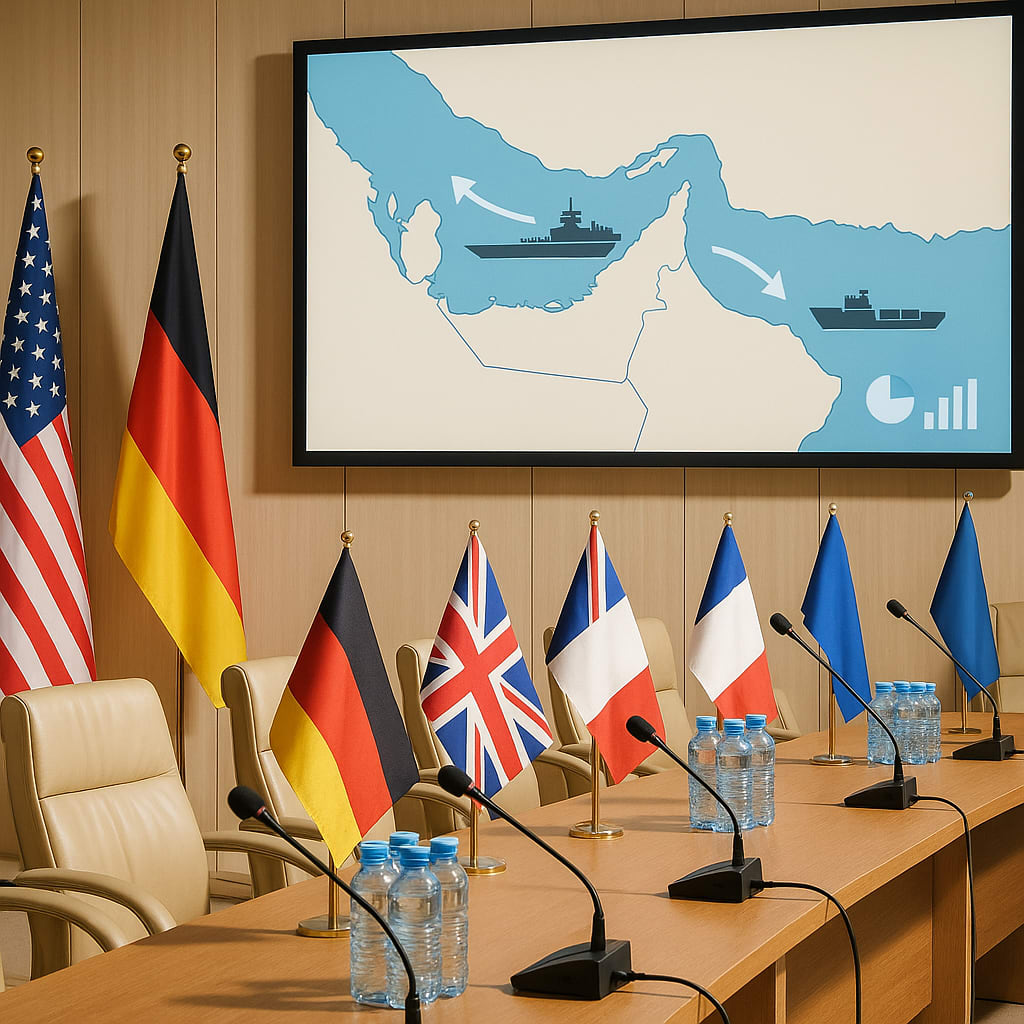
Regionally, the carrier’s condition and rotation intersect with contested control of the Strait of Hormuz. Iran’s moves to formalize governance of the strait and US pledges of unprecedented economic isolation heighten the salience of maritime enforcement credibility and endurance (Middle East Eye; CGTN; Haaretz). For decision-makers, the balance between coercive leverage and sustainable deployment practices will shape both military options and political support at home.
Diverging Narratives
US executive branch messaging stresses resilience and continuity. Hegseth says reports are distorted and insists each crew is fully supported, while also asserting the Navy can rotate ships to sustain a blockade “indefinitely” (The Guardian; DW; TASS). Trump publicly minimizes concerns—saying families are not worried and that nine months is “not nearly long enough”—yet simultaneously confirms the Lincoln will rotate out soon (South China Morning Post; France24; New York Times; Bangkok Post).
News organizations vary in evidentiary emphasis. The Guardian and BBC cite specific onboard issues and suicide attempts or considerations, while veterans and experts flag cumulative stress from prolonged sea time (The Guardian; BBC). CGTN relays a Senate letter enumerating shortages, water contamination, plumbing, deck safety, and mail disruptions, and DW notes senators seeking an investigation. Middle East Eye reports plummeting morale and an overboard incident, citing other media, and says the USS George Washington will replace the Lincoln. RT amplifies a picture of “meager meals,” exhaustion, and supply failures. Iranian and regional outlets use the episode to question US sustainability: Tehran Times and Middle East Eye foreground Senator Schumer’s call for Hegseth’s removal, while additional Middle East Eye reporting and CGTN highlight Iran’s leverage in Hormuz and US threats of escalatory economic pressure (Haaretz; CGTN). Le Monde frames the carrier controversy as part of a broader pattern of information withholding and shifting goals in the Iran war.
Unresolved are the scale and root causes of the reported conditions, the scope of any formal inquiry, and whether the relief reflects planned rotation or a response to welfare concerns—issues that different outlets characterize differently.
What Happens Next
Key decision points cluster around relief, oversight, and strategy. First, carrier rotation: Trump and multiple outlets indicate the Lincoln is being relieved and returning home; whether relief proceeds on the accelerated timeline reported and whether the USS George Washington takes station, as cited by Middle East Eye, will signal how the Navy balances mission continuity and crew welfare (South China Morning Post; Bangkok Post; BBC; CGTN; Middle East Eye). Second, congressional action: senators have sought investigation and Senator Schumer has called for Hegseth’s ouster; watch for committee inquiries, hearings, or formal tasking of the Navy to report on conditions (DW; CGTN; Middle East Eye; Tehran Times). Third, blockade sustainability: Hegseth’s “indefinite” posture will be tested by rotation pacing, logistics, and shipping patterns through Hormuz, alongside any new US economic measures (TASS; CGTN; Haaretz). Finally, regional dynamics: Iranian legislative steps to formalize control of Hormuz and positions on conditions for reopening the waterway will shape operational requirements and escalation risks (Middle East Eye; CGTN).