
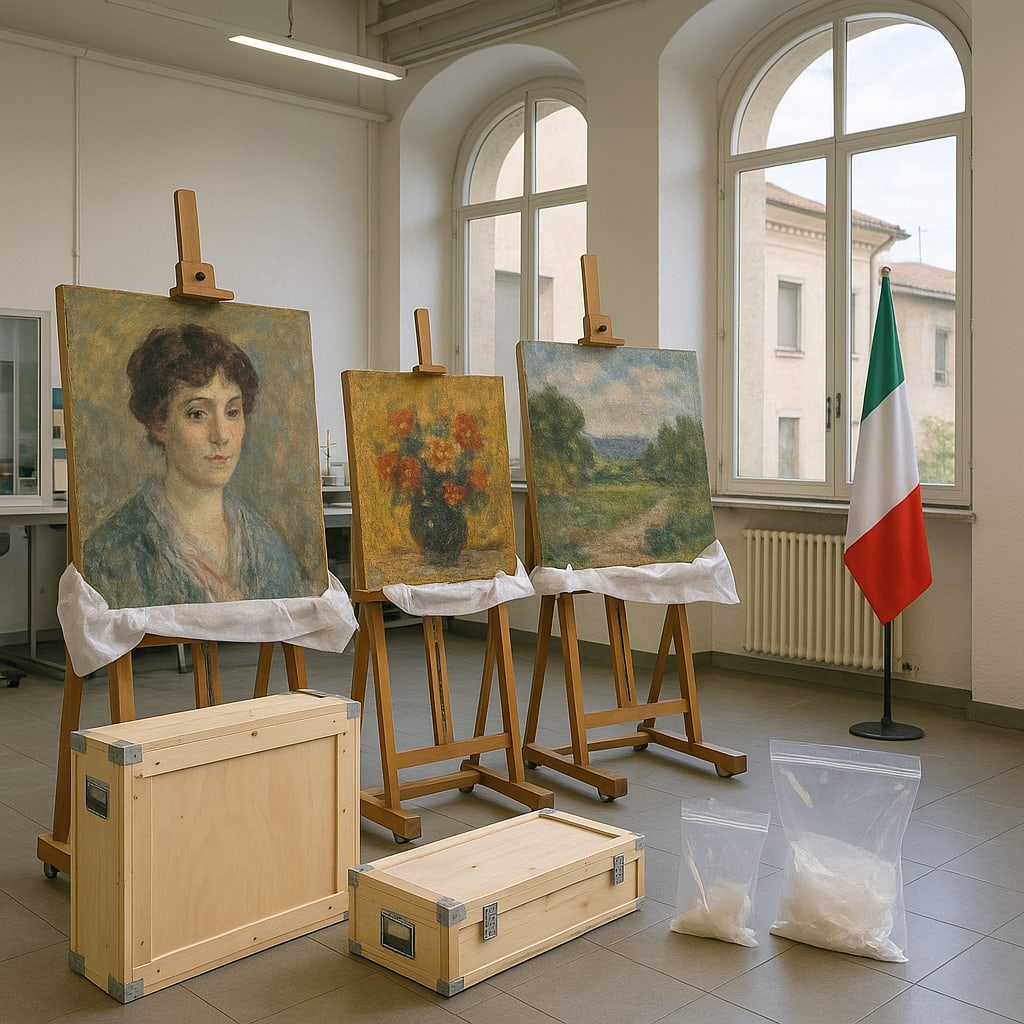
Italian police recover stolen Cézanne, Renoir and Matisse works from Parma-area heist
Narrative Snapshot
Across outlets, core facts align: Italian authorities recovered three works by Cézanne, Renoir and Matisse, stolen in March from the Magnani Rocca Foundation near Parma, with valuations reported as more than €9 million or over $10 million. International wire-driven pieces prioritise the recovery and headline valuations, while Italian press adds locality and procedural detail, including references to searches in Parma and a larger pool of suspects.
Emphases diverge in meaningful ways. The Hindu identifies the specific works and their mediums, foregrounding cultural significance. The Guardian situates the case amid a series of high-profile European museum thefts, drawing attention to systemic risk. France24 introduces operational detail on the gang’s capacity to disable security systems and reports detentions, while Al Jazeera and La Repubblica stress the number and nationality of those under investigation.
The suspect picture is unsettled: nine Moldovans are being investigated according to Al Jazeera, La Repubblica cites nine suspects, and France24 reports five Moldovan detentions. Meanwhile, the South China Morning Post notes that the Carabinieri’s art recovery squad found the works during prosecutor-ordered searches but says no details were released and that the investigation is ongoing.
What Happened
Italian military police recovered three artworks stolen in a nighttime raid from the Magnani Rocca Foundation, a private museum near Parma, following searches ordered by prosecutors. Authorities announced the recovery on Friday, months after the heist, which occurred overnight on 22–23 March. The works comprise “Fish” by Pierre-Auguste Renoir, “Still Life with Cherries,” a pencil and watercolour by Paul Cézanne, and “Odalisque on the Terrace,” a colour aquatint by Henri Matisse. Coverage places the total value at more than €9 million or over $10 million. Italian outlets report the pieces were recovered during a search in Parma. The South China Morning Post cites a Carabinieri statement that the investigation continues. On suspects, La Repubblica notes nine under investigation, Al Jazeera reports nine Moldovans being investigated, and France24 says five Moldovan suspects have been detained, describing a gang equipped to disable the museum’s security systems.
Why It Matters
The operation underscores the institutional capacity of Italy’s specialist Carabinieri art recovery unit, which located the works during prosecutor-led searches and is continuing the investigation. It also lands against a backdrop of other high-profile European museum thefts, highlighting persistent vulnerabilities in cultural property protection. With multiple outlets reporting suspects of Moldovan nationality and detentions, the case bears markers of cross-border criminality that typically require sustained prosecutorial coordination and information-sharing, even when public details remain limited.
For private museums like the Magnani Rocca Foundation, France24’s reporting that the gang was prepared to defeat security systems points to specific risk vectors rather than opportunistic theft, an assessment consistent with the Guardian’s placement of the case within a broader climate of art crime. For policymakers and law enforcement, the combination of targeted tactics, international suspect profiles, and high-value portable assets reinforces the need to align investigative tools, judicial processes, and preventive standards across jurisdictions.
Diverging Narratives
Outlets converge on the recovery and the March heist but report different investigative contours. Al Jazeera cites nine Moldovans being investigated, and La Repubblica references nine suspects; France24 reports five Moldovan suspects detained and adds police assertions that the gang carefully planned the raid and had equipment to disable security systems. These differences suggest varying stages of legal procedure and disclosure rather than contradiction, but they leave the size and status of the alleged network unresolved.
Detail levels also vary. The South China Morning Post quotes the Carabinieri’s art recovery squad as giving no details beyond prosecutor-ordered searches and an ongoing investigation, while France24 provides operational detail on the security systems. The Hindu names the three recovered works and specifies their mediums, a level of art-historical specificity absent from wire-led updates that stress valuation and recovery. The Guardian frames the case within a series of recent European museum thefts; others treat it as a discrete recovery, offering limited context beyond monetary value and location.
What Happens Next
Key decision points lie with prosecutors and the Carabinieri. The South China Morning Post indicates the investigation is ongoing after prosecutor-ordered searches; further official disclosures about where and how the works were found will signal the maturity of the case. Watch for clarification of suspect status and numbers—whether the nine suspects mentioned by La Repubblica and Al Jazeera translate into formal detentions or charges consistent with France24’s report of five detained Moldovans.
Analysts should also monitor whether authorities publicly link the Parma heist to the broader pattern of museum thefts referenced by the Guardian, or keep it compartmentalised. Any additional searches, arrests, or court filings would show how far the network extends and what prosecutorial strategy is being pursued. If police release more on the methods used to defeat security systems, that would inform risk assessments for similarly configured institutions while the investigation continues.