
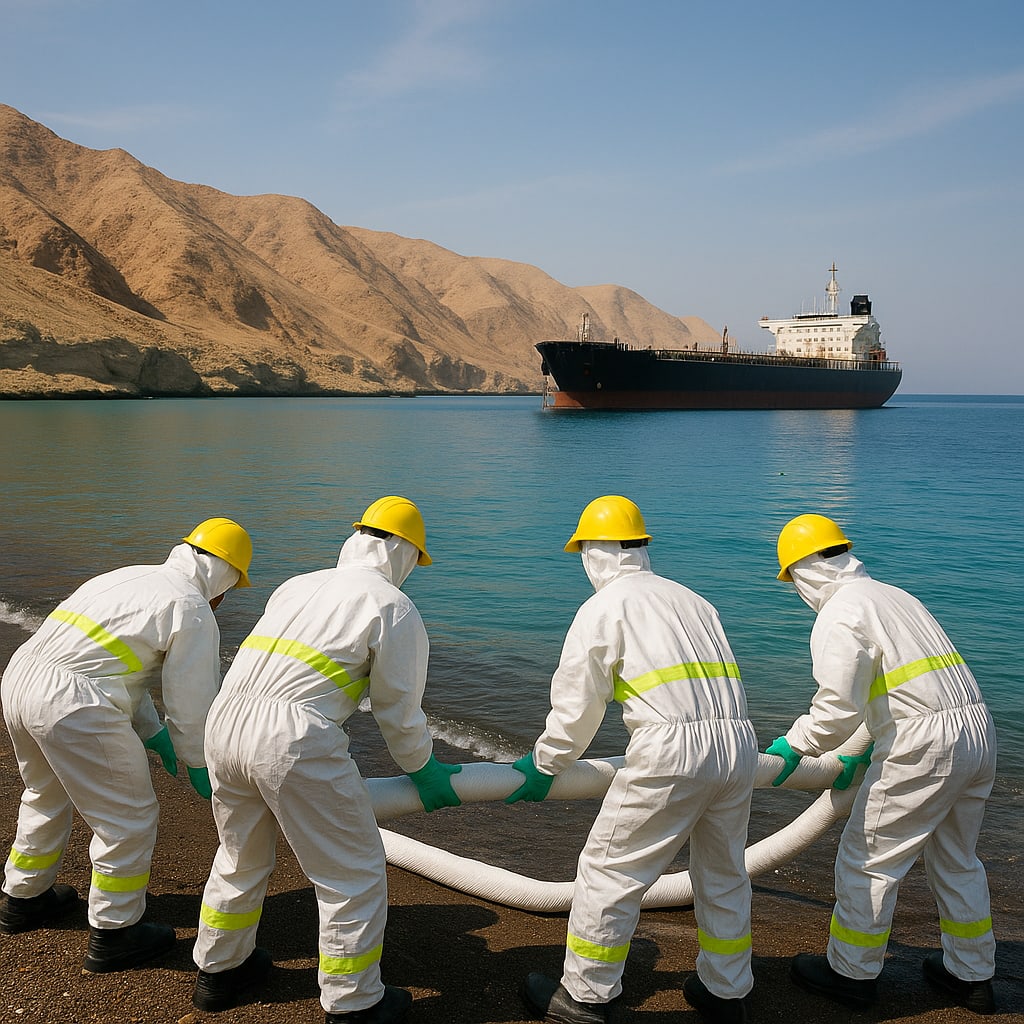
Salvage and cleanup accelerate as grounded tanker off Oman leaks oil linked by Western governments to Russia’s ‘shadow fleet’
Narrative Snapshot
Across outlets, there is broad agreement that a British firm has begun a salvage and containment operation on the grounded tanker Caroline Bezengi off Oman and that oil has reached the country’s coastline, prompting cleanup. Coverage from Middle East Eye and Al Jazeera centers the ship’s reported role in moving sanctioned Russian crude, while the Associated Press account carried by the Toronto Star pairs that sanction context with immediate wildlife risk along Oman's shore. TASS diverges by elevating Iran’s claim of vast environmental damage costs and its call for shared legal and moral responsibility without addressing the sanction-evasion angle. A notable inconsistency appears in vessel status: English-language reports describe the tanker as grounded or immobilized, whereas Italy’s Corriere della Sera uses the term “sunk.” The stakes highlighted most consistently are environmental impact along Oman's coast and the policy consequences of alleged “shadow fleet” activity moving sanctioned oil through a strategic waterway.
What Happened
British maritime security company Ambrey said it had been engaged to salvage the tanker Caroline Bezengi off Oman, with specialist personnel boarding to assess conditions and begin cargo stabilization, and additional support vessels en route; the firm also contracted a major oil-spill response company (Middle East Eye; Toronto Star/AP). The tanker, flagged to Cameroon, has been immobilized since 8 June after its crew reported an explosion, the cause of which remains unidentified (Middle East Eye). Oman's environment authority reported oil ashore, with up to 40 km of coastline affected, while cleanup operations were later described along 12 km of shoreline as response teams mobilized (Middle East Eye; Al Jazeera, 15 Aug). Al Jazeera released aerial footage underscoring the scale of the slick (14 Aug). Several Western governments have said the vessel is part of Russia’s “shadow fleet” moving sanctioned oil (Middle East Eye; Toronto Star/AP). Iran, via TASS, estimated environmental damage in the trillions of dollars and urged shared responsibility for remediation.
Why It Matters
This incident sharpens the policy focus on how sanctioned oil moves and the risks that alleged “shadow fleet” operations pose to maritime safety and coastal environments, a theme underscored by reporting that the Caroline Bezengi was carrying sanctioned Russian crude (Middle East Eye; Al Jazeera; Toronto Star/AP). The spill’s reach onto Omani shores and the need for international salvage capacity, including Ambrey’s deployment and contracted oil-spill specialists, point to cross-border response demands when accidents occur along critical Gulf sea lanes (Middle East Eye; Toronto Star/AP; Al Jazeera). TASS’s relay of Iran’s insistence on legal and moral responsibility and its outsized damage estimate signal potential contention over liability and cost recovery should regional states seek remediation (TASS). For decision-makers, the event illustrates how sanctions enforcement, maritime risk management, and environmental protection can collide in a strategically sensitive corridor, with consequences for coastal states’ preparedness and for actors implicated in sanction-linked logistics.
Diverging Narratives
Outlets differ in framing cause and culpability. Middle East Eye, Al Jazeera, and the Toronto Star/AP foreground Western government claims that the tanker is part of Russia’s “shadow fleet” and that the oil is sanctioned, linking the incident to sanctions-evasion dynamics (Middle East Eye; Al Jazeera, 14 Aug; Toronto Star/AP). TASS omits that dimension, instead amplifying Iran’s position that “everyone involved in commercial shipping operations” bears responsibility and citing a “trillions of dollars” damage estimate, shifting attention to broader accountability and remediation (TASS). Assessments of impact vary: Oman’s authority was cited as saying up to 40 km of coastline was affected, while a subsequent Al Jazeera report described cleanup along 12 km, and an earlier Al Jazeera piece emphasized the spill’s “huge scale” via aerial imagery (Middle East Eye; Al Jazeera, 14–15 Aug). There is also inconsistency on the vessel’s status, with multiple reports calling it grounded or immobilized and Italy’s Corriere della Sera using “sunk,” an unresolved discrepancy alongside Middle East Eye’s note that the explosion’s cause remains unidentified.
What Happens Next
Two operational decisions will shape near-term trajectories. First is the scope and effectiveness of Ambrey’s salvage and cargo stabilization. Indicators include the arrival and activity of support vessels and whether on-board assessments enable transfer or containment that slows leakage, as the company has initiated specialist boarding and contracted spill-response support (Middle East Eye; Toronto Star/AP). Second is how authorities characterize the spill’s extent: Oman-linked figures have ranged from 12 km of active cleanup to up to 40 km affected, and further updates will guide shoreline priorities and resources (Al Jazeera, 15 Aug; Middle East Eye). On accountability, Iran’s call for shared legal and moral responsibility and its damage estimate set a marker for potential claims or diplomatic pressure; watch for public positions from Gulf littoral states or flag authorities responding to that framing (TASS). Finally, if Western governments’ “shadow fleet” characterization drives enforcement steps, any stated actions could influence insurance, routing, and inspection practices around similar tankers (Middle East Eye; Toronto Star/AP).