
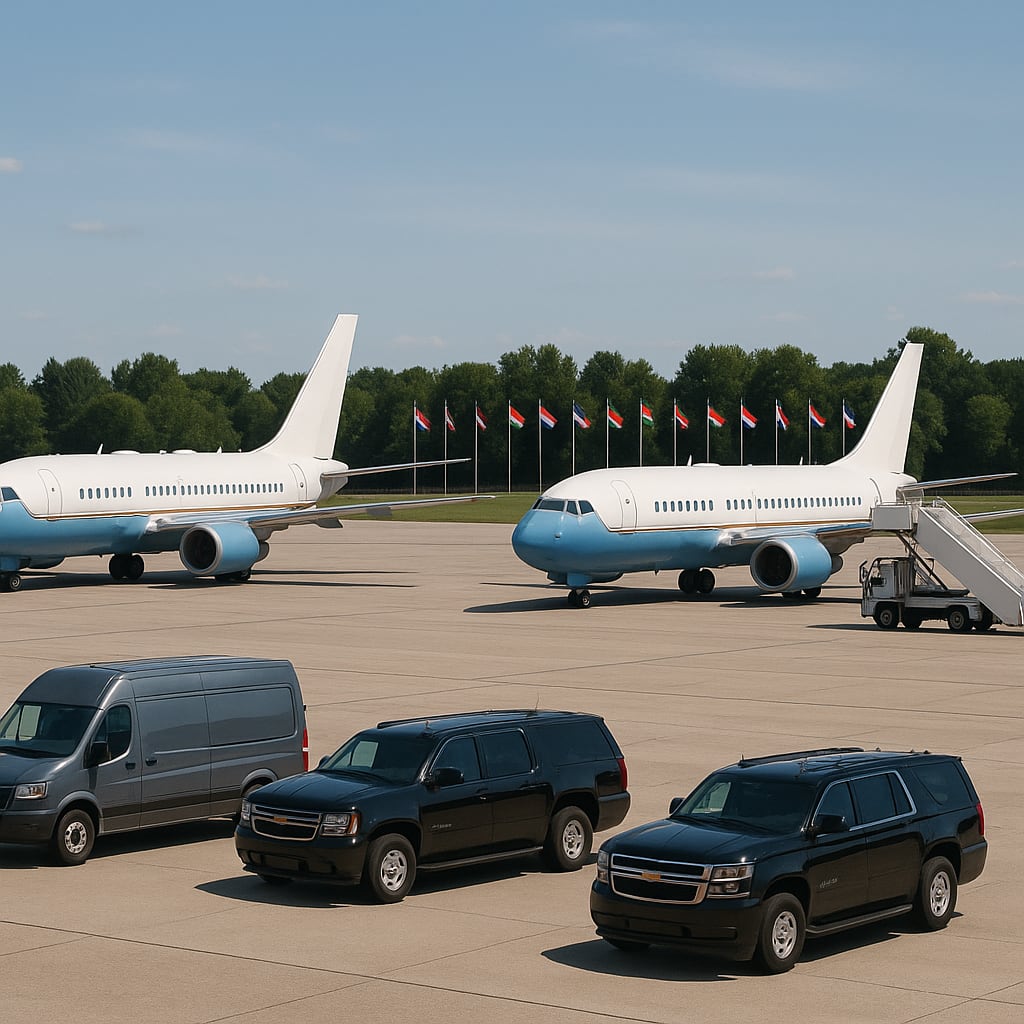
Secret Service moved Trump off Air Force One in Ankara amid reported missile threat, leaving press and officials on a decoy flight
Narrative Snapshot
Across outlets, there is broad acknowledgment that a covert swap unfolded after the NATO summit in Ankara: President Donald Trump publicly boarded Air Force One and then secretly transferred to another aircraft while the plane associated with the presidency continued with staff and press on board. Where accounts diverge is less about whether the ruse occurred than about the credibility of the threat that drove it, how informed those left on the decoy aircraft were, and whether sufficient safeguards were in place for them.
Several reports emphasize the provenance and confidence of the intelligence. RT and Clarin, citing the Washington Post, report the alert was Israeli-derived and assessed with “low confidence” by U.S. intelligence, even as the Secret Service proceeded with the operation. Daily Nation underscores unease about direct Israeli briefings to the White House. By contrast, Telesur, citing CNN, frames the warning as specific and credible, tied to a possible man-portable missile threat and Iranian knowledge of preparations.
Coverage also splits on the treatment of the traveling press and senior officials who remained on the decoy aircraft. The Times of Israel, CGTN, the New York Times and RT describe reporters as unaware at the time and effectively used as decoys. Fox News counters with an administration account that the decoy aircraft flew under U.S. fighter escort and that some aboard, including cabinet officials, knew Trump was not on board. U.S. outlets also differ in tone: Fox News highlights a longstanding security playbook and warns against exposing tradecraft, while the Guardian notes Democratic calls for a congressional briefing and the WHCA moves to protect pool credibility; the Toronto Star calls the gambit dangerous, while Tehran Times and RT characterize it as embarrassing or based on shaky intelligence.
What Happened
Following the July 8 NATO summit in Ankara, Trump appeared to board the older Air Force One, then covertly exited via an airport catering truck and transferred to a smaller Air Force C-32A that flew to the United Kingdom, where he rejoined the older Air Force One to preserve the impression he had remained aboard throughout (CGTN; RT; Fox News). Journalists and staff continued on the decoy aircraft; multiple outlets say they believed the president was on board, with one account quoting Trump telling reporters, “But if I go, you go. Right?” (The Times of Israel; New York Times; CGTN). The maneuver followed reports of a possible portable missile threat linked to Iran, with intelligence reportedly originating from Israel and viewed skeptically by the CIA (Telesur; RT; Clarin). After the story broke, the White House Correspondents’ Association engaged the administration on protocols to preserve pool credibility (Fox News). Trump said the decision was the Secret Service’s (Al Jazeera; the Guardian).
Why It Matters
The episode sits at the intersection of presidential protection, press transparency, and allied intelligence channels. It tests how U.S. institutions balance operational deception with the safety and credibility of the protective detail, cabinet principals, and the traveling press. WHCA’s push for procedures underscores the institutional need to reconcile mandatory secrecy with accurate contemporaneous reporting of a president’s movements (Fox News). It also spotlights how threat intelligence—especially when sourced from allies and assessed as low confidence by U.S. agencies—feeds into high‑stakes protective decisions (RT; Clarin; Daily Nation).
Internationally, the Ankara ruse reflects the security burdens accompanying NATO gatherings and the contingency planning required in host nations. It also plays into the politics of U.S.-Iran confrontation, with some outlets describing the warning as specific to man-portable missiles (Telesur). Finally, former presidential aides warn that public disclosure of such methods can compromise future operations, raising a persistent policy tension between accountability and safeguarding tradecraft (Fox News).
Diverging Narratives
Two fault lines are prominent in the coverage. First is the reliability and origin of the threat reporting. Telesur, citing CNN, describes a “credible” and “specific” alert about a portable missile attack with indications of Iranian insight into preparations. RT and Clarin emphasize that the CIA conveyed “low confidence” in Israeli-derived reporting even as the Secret Service executed the plan. Daily Nation flags concern over direct Israeli briefings to the White House. These differences shape whether the operation is framed as prudent risk mitigation or an extraordinary response to unverified intelligence.
Second is the treatment and risk calculus for those on the decoy aircraft. The Times of Israel, CGTN, the New York Times, and RT say reporters were unaware and thus functioned as decoys, fueling criticism in U.S. and international coverage. Fox News reports a senior official’s claim that the decoy aircraft had U.S. fighter escort and that Secretary of State Marco Rubio and Treasury Secretary Scott Bessent were aboard and aware Trump was not. Earlier reporting in Fox News raised questions about whether such protections existed and who was on board. Media framing diverges accordingly: Fox News highlights established decoy tactics and decries “manufactured scandal,” while the Guardian reports Democratic demands for a briefing and the WHCA’s credibility concerns; the Toronto Star calls the maneuver dangerous; Folha praises the deception as impressive, comparing such stratagems to Russian practice; and Tehran Times mocks the episode as humiliating.
What Happens Next
Three decision points emerge. First, congressional oversight: Democrats have called for a briefing, which could clarify the intelligence basis, interagency assessments, and risk mitigation for those on the decoy aircraft (the Guardian). Analysts should watch for committee requests to the Secret Service, CIA, and White House, and whether assessments of Israeli-derived reporting are formally documented (RT; Clarin; Daily Nation).
Second, press pool protocols: The WHCA has opened discussions with the administration to preserve pool credibility during security contingencies (Fox News). Indicators include updated pool guidance, on‑background procedures when deception is necessary, and any commitments about after‑action transparency.
Third, protective tradecraft disclosure: Former officials warn that publicizing methods endangers future operations (Fox News). Future statements from the Secret Service or White House about limits on operational detail, and whether claims such as fighter escorts are confirmed or withheld, will signal how the administration balances accountability with safeguarding tactics. Trump’s stance that the decision rests with the Secret Service suggests continued operational latitude (Al Jazeera).